


CLACSO inaugurates an observatory to interpret the phenomenon of the global pandemic.
With the conviction that the social sciences and humanities play a central role, CLACSO offers society a set of reflections on an event that affects all dimensions of life in common.
Scientific knowledge is today, more than ever, an indispensable source of information for analyzing social effects and warning about new forms of inequality that may arise from the crossroads we face due to the COVID-19 pandemic.
The observatory is organized into 11 dimensions traversed by the various social inequalities and into 3 types of formats in which the materials are presented.
Bulletin #3 Gender and (In)equalities. Tensions in Debate
#3 Beyond the green wave: contemporary challenges regarding IVE, ILE and abortion in Latin America
Newsletter #4 Food and Community
#4 Combat hunger and promote food sovereignty
Bulletin #3 Territory and freedom
#3 Food sovereignty and autonomy. PART II
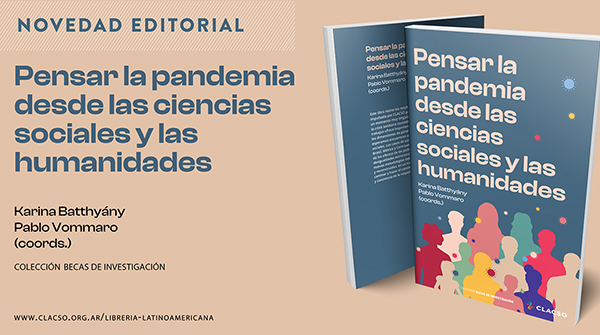
Thinking about the pandemic from the perspective of the social sciences and humanities
Research Grants Collection
Bulletin #2 Health and Society. Latin American Critique
#2 Latin America and the Caribbean between pandemics: inequality and COVID
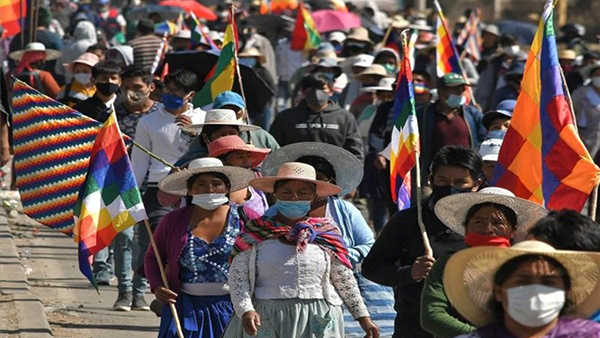
Challenges of the health system in combating inequalities in the context of the COVID-19 crisis in the Plurinational State of Bolivia
María Bolivia Rothe

Covid-19 expert committees had links to pharmaceutical companies in Latin America
Gonzalo Basile
Organizations, laws and youth surveys: towards a Latin American and Caribbean cartography
Research Report, Year 2, No. 4

Political Socialization and the Construction of Subjectivities in Times of Pandemic
Methodological, Ethical and Political Reflections
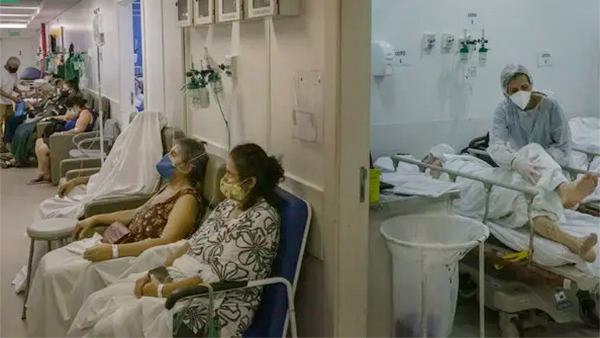
Mercosur: Pandemic and the Development of Poverty
Carlos Fidel
Dossier "Workers and social reproduction"
Dossier "Workers and social reproduction", Volume 15 Sudamérica Magazine
The three "D's" of SARS COV2 vaccines in Latin America and the Caribbean: determination, dependence and lack of coordination
Special Edition. Dossier on South-South International Health
Bulletin #2 Gender and (In)equalities. Tensions in Debate
#2 Gender inequalities in times of COVID-19 in the region. Part two
Bulletin #6 21st Century Transitions and China
#6 China and post-pandemic prospects V
Determination, Dependence and Lack of Coordination in SARS-CoV-2 Vaccines in Latin America and the Caribbean
Gonzalo Basile and Oscar Feo
Newsletter #3 Food and Community
#3 Alternative Agro-Food Systems and Food Safety. SECOND
Newsletter #2 Food and Community
#2 Alternative Agrifood Systems and Food Safety: contributions from two social movements. FIRST PART

The municipalities of Greater Buenos Aires face the second wave
Argentina - Rodrigo Carmona (compiler)
Bulletin #12 (Trans)Border
#12 Territorial inequalities and global agriculture in Central America and the Caribbean

The Pandemic and the Right to Housing
Diego Fidel Doat and Carlos Fidel
Bulletin #2 Territory and freedom
#2 Food sovereignty and autonomy. PART I
Bulletin #5 21st Century Transitions and China
#5 China and Post-Pandemic Perspectives IV
Bulletin #6 United States: Critical Perspectives from Our America
#6 Biden's mixed record in Latin America and the Caribbean
Bulletin #11 (Trans)Border
#11 Pandemic governance of borders and mobility. Comparative realities at the level
Bulletin #2 Collective Violence in Latin America: A Critical Look
#2 Vigilantisms in tension: between categories and conjunctures
Bulletin #5 Sport and physical activity Reflections from Latin America
#5 Politics, Gender and Dissent in Sport [SPECIAL EDITION. PART TWO]
Bulletin #5 Agricultural work and ruralities in transformation
#5 Agribusiness, food security and gender
Bulletin #4 Agricultural work and ruralities in transformation
#4 Agricultural work and territories
Bulletin #2 Global environmental change, local social metabolism, governance and alternatives
#2 Pandemic, extractivism and climate change: challenges of a deteriorating planet
Newsletter #2 Fragments. Feminist Memoirs
#2 A Tide of Green Fire: Memoirs for the Right to Abortion in Latin America

