
Dossier "Workers and social reproduction"
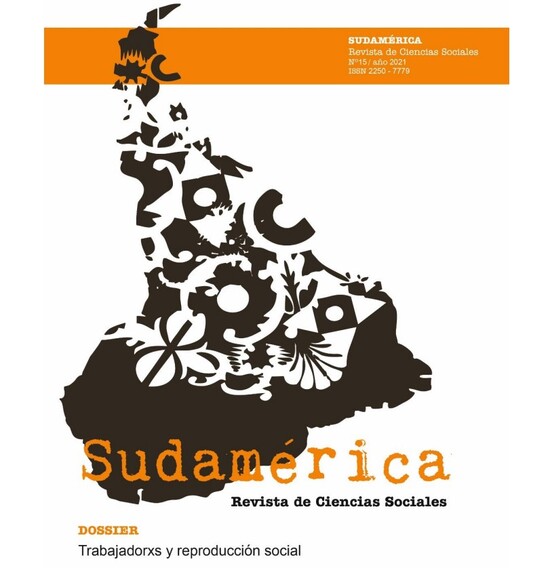
Working Group on Workers and the Reproduction of Life
The CLACSO Working Group on Workers and the Reproduction of Life presents the Dossier "Workers and Social Reproduction" published in Volume 15 of the Journal of Social Sciences South America.
This dossier aims to understand the challenges faced by popular, social-solidarity, and feminist economies in the context opened by the SARS-CoV-2 pandemic and their potential for a more promising future. Drawing on Latin American debates that encourage moving beyond hegemonic models for thinking about work, the article situates these economies as part of the struggles for the recognition and distribution of wealth. With expressions that vary according to diverse factors, these experiences are dynamic, taking place in dynamic fields, both in academia and in organizations, policies, and public institutions. Alongside debates on nomination and structural description, the role of political subjectivation, organizational processes, antagonisms, and alliances in moving toward the transformation of these structures stands out. While the State acquires a central role in these actions, the demands for a “life worth living” transcend it, as they cannot be entirely addressed through this channel, and even less so through market-centered discourses. The demands of these organizations continue to position work as a social organizing principle and are linked to the demand for infrastructure in urban working-class neighborhoods and rural areas, as well as the struggle for food sovereignty. Above all, during the pandemic, experiences have made it clear that hegemonic Latin American models contradict the well-being of the population and social justice, and that the commons/collective constitute a path to building more egalitarian societies.
Access the full text: https://fh.mdp.edu.ar/revistas/index.php/sudamerica/issue/viewIssue/265/163

