
Mercosur: Pandemic and the Development of Poverty
Carlos Fidel[1]
INTRODUCTION
In this reflection, we will address the problem of the COVID-19 pandemic as an issue that unfolded across various concrete and symbolic dimensions of social reproduction. The intention is to present the main aspects and connections that influenced the problem of poverty in Latin America and, specifically, within the framework of the Southern Common Market (MERCOSUR).
We will focus on the issue of poverty as a phenomenon that has several layers that extend from the determinants of the formation and insertion into the labor market, income levels, to living conditions, education, health and environment.
To analyze and explain all dimensions of “poverty”, one must examine the set of mechanisms of the socio-economic organization and direction that a country adopts and shapes, considering its human and natural heritage, and political and cultural tensions.
This work is a first approach to the topic and focuses on finding ways to address the issues of the pandemic and its impact on the poorest segments of society. This population suffered the most from the consequences of the pandemic in the most unequal region of the world.
PANDEMIC ENVIRONMENT
In early 2020, from unknown origins, a new virus called COVID-19 emerged. It caused an illness that spread rapidly worldwide and affected humans in different ways. Currently, experts agree that it is a highly contagious and potent virus that multiplies, adopting different variants over time.
Currently, experts have named the predominant variant of the virus the omicron, which apparently includes multiple viral families.
Using the bodies of airplane passengers as the main means of transport[2]The virus spread rapidly throughout the world, causing deaths and suffering of varying severity, depending on the cultural, social, and material conditions of the locations, as well as the extent of existing data on the situation. immunological .
This new phenomenon that affected human health put a strain on, and in some cases caused closures or interruptions in, different dimensions of material, social and symbolic reproduction in all countries of the world.
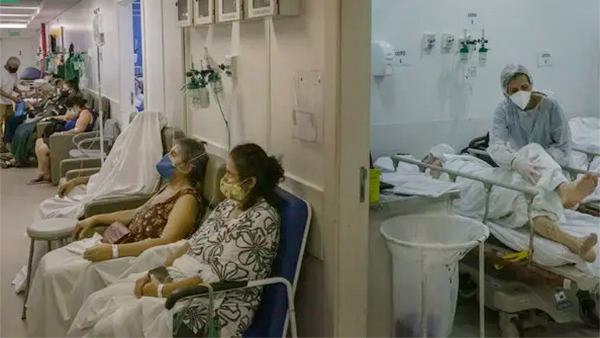
The first sector affected by the pressure of the new phenomenon was the healthcare system, both public and private. In most countries, the state played a central role in organizing healthcare and coordinating the flow of people, goods, and services, and, in many cases, in regulating the functioning of economic and social activities. Initially, in many places, the set of public measures aimed to expand isolation and social distancing, with the goal of preventing human contact and its contagious consequences.
In principle, closing or restricting transit across borders would seem to be a old measure, But it was highly effective in preventing the spread of the pandemic, if it could be sustained over time. This was one of the few measures on which most Latin American countries agreed.
Another predominant style of public sector action was that each nation-state designed and implemented its own health and socio-economic strategy. This distanced itself from pre-established agreements with other countries and international blocs; agreements between countries that generally envisioned pooling efforts to obtain joint advantages and benefits, overcoming differences of various political and institutional dimensions, territorial scales, and the actual actors involved. The MERCOSUR member countries, like other international blocs, did not develop a unified and coordinated strategy to address the pandemic.
Government responses in the health sector generally focused on expanding the capacity of hospitals and medical centers, increasing the number of beds, refocusing patient care priorities, and strengthening the specialized workforce in various branches of healthcare. Meanwhile, large pharmaceutical companies rapidly increased the production of new vaccines, advanced large-scale manufacturing, and researched new treatments.
EVOLUTION OF POVERTY
During the two years of the pandemic, extreme poverty in Latin America, measured by income, was 13,1% in 2020 and rose to 13,8% in 2021. These figures reflect a situation not seen in 27 years. Meanwhile, the overall poverty rate decreased slightly, from 33,0% to 32,1% of the population, affecting approximately 201 million people. Even so, 2021 saw higher poverty levels than 2019. (ECLAC, Social Panorama of Latin America. https://www.cepal.org/es/publicaciones/ps)
It is noteworthy that the largest increases in poverty were observed in Argentina, Colombia, and Peru, where they reached or exceeded 7 percentage points. Meanwhile, in Chile, Costa Rica, Ecuador, and Paraguay, it grew between 3 and 5 percentage points. In Bolivia, Mexico, and the Dominican Republic, it increased by less than 2 points. The remaining countries maintained almost the same levels or saw slight decreases in overall poverty. It is important to note that this measurement only considers income level; therefore, an income slightly above the poverty line is not included in the poverty count, but in practice, real life is often lived in poverty. (https://news.un.org/es/story/2022/01/1503172)
In many countries, the increase in extreme poverty can be explained by a relative reduction in the amounts allocated to “emergency income transfers,” a situation that was not offset by increases in employment and wages. It is important to emphasize that this situation of social vulnerability also affected a significant portion of the middle and lower income strata, in many cases stemming from the institutional instability of labor market integration, coupled with weak legal and effective government social protection coverage.
Examining employment levels, it is observed that in 2020 the unemployment rate for women was 12.1% and for men 9.1%; meanwhile, in 2021, these figures reached 11.8% and 8.1%, respectively. The expulsion of women from the labor market represents a setback to levels of participation similar to those of 18 years ago. ECLAC forecasts an increase in employment in 2022, but it will be of lower quality compared to 2019, and the improvement will favor men.
SOME DILEMMAS AND OPTIONS
Since the outbreak of the pandemic, the MERCOSUR member countries have suffered a profound and widespread health, social, and economic shock, with effects similar to those experienced by most of the world. As we noted earlier, the bloc responded with a strategy implemented by each member country, as occurred in other blocs located in other parts of the world.
One possible explanation is that MERCOSUR's origins lay in facilitating the flow of goods, services, and people; its activities then shifted towards collaboration on other issues of common interest. However, it neither designed nor anticipated collective action to address potential pandemics. The lack of a joint policy could stem from many reasons, ranging from differing political ideologies among member countries' governments to the novel characteristics of the COVID phenomenon, which undoubtedly presented an unforeseen challenge. Alternatively, it could be explained by a range of factors that remain to be considered. What is certain is that solidarity and collaboration among countries on a global scale were not, and are not, the prevailing behavior today.
We maintain that the MECOSUR countries should resume the paths of cooperation already taken and expand them to new themes; such as undertaking joint projects that involve the public sector, universities and the private sector in general, building on experiences they are already carrying out.
Regarding issues concerning potential future pandemics, and taking into account the warnings of specialists, it is necessary to combine the efforts of laboratories and the actions of the public sector to advance in the installation of equipment and the preparation of the workforce to quickly undertake the research and production of medicines and vaccines to face new challenges.
The creation of specific bodies that include all MERCOSUR member countries could anticipate health responses to the emergence of future pandemics, and address health care requirements.
Produce[u1] all types of high-efficiency medical clothing and instruments, creating an efficient and productive partnership between institutions and sectoral SMEs.
To implement a subregional health prevention and care policy, organizing management in a coordinated manner, going through the phases of an agreement that contains a proportionate spatial deployment within a framework of political and social balance.
A health policy that does not simultaneously address the overall poverty of the population will surely be a failed endeavor, with great material and symbolic waste.
Addressing poverty requires tackling its multiple causes, not just income-related issues. The focus should be on the fundamental factors that affect material and symbolic living conditions. In this regard, joint projects should be undertaken to rebuild housing and improve living conditions in impoverished rural and urban areas, taking into account the provision of services, infrastructure, and environmental protection in the communities where the poorest populations reside.
One of the consequences of habitat reconstruction is the creation of new jobs and, therefore, income. Within the framework of income distribution, numerous studies demonstrate the manner and extent to which current technological change is transforming the labor market. This implies expanding our focus to new instruments for income transfers and the creation of conditions that provide material support, as well as fostering knowledge and skills, with the aim of incorporating new layers of the workforce into labor relations. All of this effort should be geared towards improving the living conditions of those displaced from access to goods and services, while maintaining clear and effective criteria of equity and gender equality.
A thorough analysis of the events of the last two years remains to be done. This critical reflection should help Mercosur member countries overcome their differences and develop a dynamic common program aimed at eliminating current health, economic, social, gender, environmental, and symbolic inequalities; vigorously pursuing effective and intelligent action to address poverty and, at the same time, anticipate responses to the potential emergence of new pandemics.
The joint efforts of all countries must necessarily address the unjust schemes and conflicts that result from the unequal distribution of wealth and income.
Bibliography
ECLAC (2022): Social Panorama of Latin America. https://www.cepal.org/es/publicaciones/ps
UN NewsA global perspective: Human stories. Economic matters. January 27, 2022 Beginning of the formEnd of the formhttps://news.un.org/es/story/2022/01/1503172
Fidel, Carlos (2021): “Cities facing socioeconomic and health challenges in times of technological transformation".Página 12 Newspaper. CAHS Economic Supplement. https://www.pagina12.com.ar/tags/51975-unidades-urbanas-de-trabajo-y-produccion
THINKING ABOUT THE PANDEMIC. CLACSO Social Observatory of Coronavirus. https://www.clacso.org/ciudades-en-crisis-socioeconomicas-y-sanitarias .
Fidel, Carlos (2021): “Links: Pandemic, Inflation and Transferred Economic Surplus in Argentina”. Página 12 Newspaper. CAHS Economic Supplement. https://www.pagina12.com.ar/353532-pandemia-inflacion-y-excedente-economico
THINKING ABOUT THE PANDEMIC. CLACSO Social Observatory of Coronavirus. https://www.clacso.org/vinculos-pandemia-inflacion-y-excedente-economico-transferido-en-la-argentina/
Fidel, Carlos; Di Tomaso, Raúl and Farías, Cristina (2021): “Apogee and decline of the urban extractivist model in Argentina? (2015-2019)”.
Journal of “Social Sciences second period”. UNQ N40. https://ediciones.unq.edu.ar/602-revista-de-ciencias-sociales-segunda…
https://www.clacso.org/la-pandemia-y-el-derecho-de-acceso-a-la-vivienda
Fidel Doat, Diego and Fidel, Carlos (2021): “The Pandemic and the Right of Access to Housing”
https://publicaciones.unpaz.edu.ar/OJS/index.php/ab/article/view/1090/1010
THINKING ABOUT THE PANDEMIC. CLACSO Social Observatory of Coronavirus. https://www.clacso.org/en/la-pandemia-y-el-derecho-de-acceso-a-la-vivienda
[1] Research Professor at UNQ, Argentina. Producer and interviewer for the series “Diálogos Cercanos” (Close Dialogues), UNQ-TV and CLACSO-TV. Director of the “Revista de Ciencias Sociales, second series”, UNQ. Director of the online journal “Mundo Urbano” (Urban World), UNQ. Director of the Research Program: “Dimensiones y alcances del Desarrollo Territorial” (Dimensions and Scope of Territorial Development), UNQ. Co-coordinator of the CLACSO Working Group on Poverty and Social Policy. A version of this article was published in The rocket to the Moon: https://www.elcohetealaluna.com/mercosur-pandemia-y-pobreza/
[2] An important theme is addressing the consequences of the first pandemic during a time of intense global movement of people, trade, financial flows, and hyper-connectivity disseminated through social media. Added to this is the current phenomenon of the circulation of false or malicious information, which has repercussions in the political sphere, social reproduction, and the functioning of the state in all its policies, including health policies.
[+] Thinking about the pandemic
If you would like to receive more information about CLACSO's training programs:
[widget id=”custom_html-57″]
to our email lists.

