Democracy, human rights and peace
The history of Latin America and the Caribbean has been one of colonialism, interventionism, oppression, and human rights violations. However, it has also been a history of struggle for freedom, justice, and equality. These persistent tensions between domination and resistance have led to significant confrontations, armed conflicts, and civil wars. The unwavering determination of the dominant sectors to maintain the capitalist model and preserve their privileges has fueled the persecution of all individuals or groups perceived as threats to the established order.
Human rights violations have been a historical practice, though they have taken on diverse forms depending on the context and power dynamics. They have become especially brutal in the context of coups d'état and military dictatorships that have established state terrorism as a strategy for exercising power, through repressive practices such as threats, persecution, political imprisonment, torture, murder, enforced disappearances, arbitrary detention, illegal surveillance, and the repression of freedom of expression, assembly, and association.
The struggle for human rights and freedom is an integral part of resistance against totalitarian governments and the fight for the restoration of democracy—in contexts of dictatorship—and for peace—in contexts of war or armed conflict. The conviction that human rights violations harm not only their direct victims but also the society in which they occur, and that confronting their legacy is fundamental to preserving democracy and peace, has led human rights organizations to advocate for public policies of memory and reparation, and to include these demands in the agendas of processes of transition to representative democracy and/or peace.
What we know as the “transitional process” is a globalized model for managing past conflicts. It consists of applying—with the specificities of local realities—a set of institutional mechanisms and developing cultural artifacts that seek to confront the past of human rights violations by reconciling the conflicting parties. The ultimate goal is to ensure that political violence remains in the past and is NEVER repeated. Transitions have a foundational purpose, based on the promise of a peaceful society where violence has no place. To this end, certain truths are promoted: about the past, about politics, and about possible futures.
However, among the issues that transitions leave unresolved is the question of what kind of democracy is being built and what utopian vision is being pursued. The recent history of Latin America and the Caribbean shows that repressive violence and human rights violations perpetrated by the state remain commonplace, demonstrating that the false dichotomy between dictatorship/democracy and war/peace is part of the illusions of transition.
This platform is a collaborative space where we will revisit these topics, reflecting together on these three inseparable processes: Democracy, Human Rights, and Peace. We operate under the premise that strengthening representative democracy and building just and egalitarian societies requires constructing a culture of Human Rights, a State that guarantees them, and a civil society that mobilizes to defend them. We also recognize that promoting the construction of open, pluralistic, and dynamic collective memories is fundamental to achieving this. However, it is not just about the law—whether guaranteed or demanded—but about building a culture and social relations that recognize and respect differences. From a conceptual standpoint, we propose a view of Human Rights, Democracy, and Peace that considers their historicity and their claim to universality in conjunction with cultural and social specificities and power relations.
Human rights violations have been a historical practice, though they have taken on diverse forms depending on the context and power dynamics. They have become especially brutal in the context of coups d'état and military dictatorships that have established state terrorism as a strategy for exercising power, through repressive practices such as threats, persecution, political imprisonment, torture, murder, enforced disappearances, arbitrary detention, illegal surveillance, and the repression of freedom of expression, assembly, and association.
The struggle for human rights and freedom is an integral part of resistance against totalitarian governments and the fight for the restoration of democracy—in contexts of dictatorship—and for peace—in contexts of war or armed conflict. The conviction that human rights violations harm not only their direct victims but also the society in which they occur, and that confronting their legacy is fundamental to preserving democracy and peace, has led human rights organizations to advocate for public policies of memory and reparation, and to include these demands in the agendas of processes of transition to representative democracy and/or peace.
What we know as the “transitional process” is a globalized model for managing past conflicts. It consists of applying—with the specificities of local realities—a set of institutional mechanisms and developing cultural artifacts that seek to confront the past of human rights violations by reconciling the conflicting parties. The ultimate goal is to ensure that political violence remains in the past and is NEVER repeated. Transitions have a foundational purpose, based on the promise of a peaceful society where violence has no place. To this end, certain truths are promoted: about the past, about politics, and about possible futures.
However, among the issues that transitions leave unresolved is the question of what kind of democracy is being built and what utopian vision is being pursued. The recent history of Latin America and the Caribbean shows that repressive violence and human rights violations perpetrated by the state remain commonplace, demonstrating that the false dichotomy between dictatorship/democracy and war/peace is part of the illusions of transition.
This platform is a collaborative space where we will revisit these topics, reflecting together on these three inseparable processes: Democracy, Human Rights, and Peace. We operate under the premise that strengthening representative democracy and building just and egalitarian societies requires constructing a culture of Human Rights, a State that guarantees them, and a civil society that mobilizes to defend them. We also recognize that promoting the construction of open, pluralistic, and dynamic collective memories is fundamental to achieving this. However, it is not just about the law—whether guaranteed or demanded—but about building a culture and social relations that recognize and respect differences. From a conceptual standpoint, we propose a view of Human Rights, Democracy, and Peace that considers their historicity and their claim to universality in conjunction with cultural and social specificities and power relations.
Defining what constitutes a violation of human rights is inherent in our understanding of who are subjects of rights. We seek to develop a broad perspective that allows us to understand the diversity of subjects of rights without losing sight of overarching elements. To this end, it is essential to consider the cultural and situated nature of these understandings in order to comprehend—for example—nature as a subject of rights. This perspective is crucial for guaranteeing both individual and collective rights.
We propose that the processes of building collective memory be a guiding axis for reflection on human rights, their violations, the struggles for their defense, democracies, and peacebuilding processes.
In this regard, we have identified the following general topics as priorities for Latin America and the Caribbean. We hope that these will be enriched and expanded through the active participation of the CLACSO network community:
a) Human rights violations and the contexts in which they take place
b) Practices of defending Human Rights and resisting repressive violence
c) Political transitions between dictatorship and representative democracy, and between war or armed conflict and peace.
d) Beyond considering Democracy and Peace as an ethos, an end in itself, to delve deeper into thinking about a just and egalitarian political system that allows us to consider utopian horizons of society.
e) The new right wing and threats to the democratic system.
f) Policies and practices of collective memories.
We propose that the processes of building collective memory be a guiding axis for reflection on human rights, their violations, the struggles for their defense, democracies, and peacebuilding processes.
In this regard, we have identified the following general topics as priorities for Latin America and the Caribbean. We hope that these will be enriched and expanded through the active participation of the CLACSO network community:
a) Human rights violations and the contexts in which they take place
b) Practices of defending Human Rights and resisting repressive violence
c) Political transitions between dictatorship and representative democracy, and between war or armed conflict and peace.
d) Beyond considering Democracy and Peace as an ethos, an end in itself, to delve deeper into thinking about a just and egalitarian political system that allows us to consider utopian horizons of society.
e) The new right wing and threats to the democratic system.
f) Policies and practices of collective memories.
Enter your comment in this space for dialogue and exchange
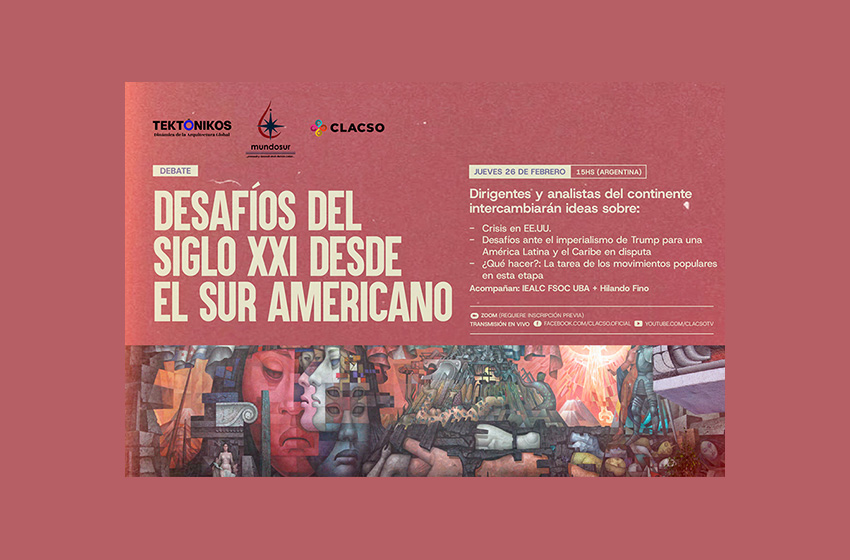
21st Century Challenges from South America
Virtual debate Thursday, February 26
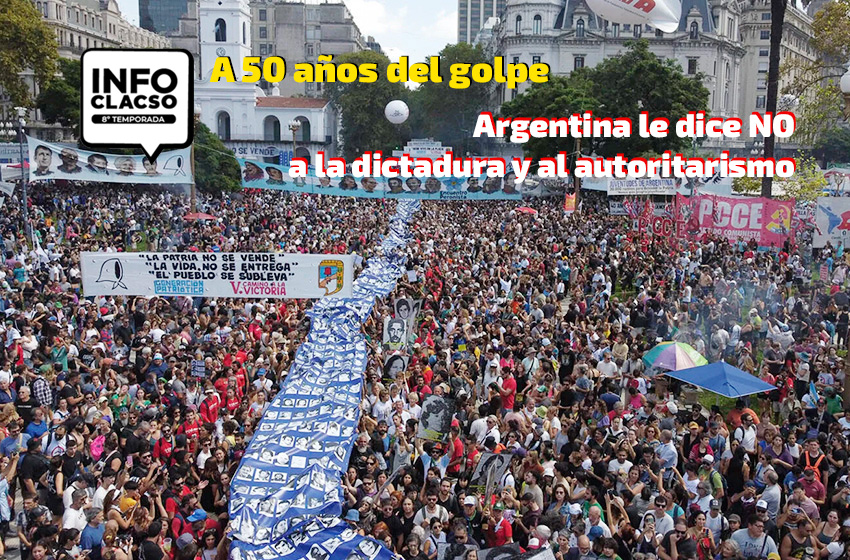
50 years after the coup: Argentina says NO to dictatorship and authoritarianism
InfoCLACSO Tuesday, March 24, 2026
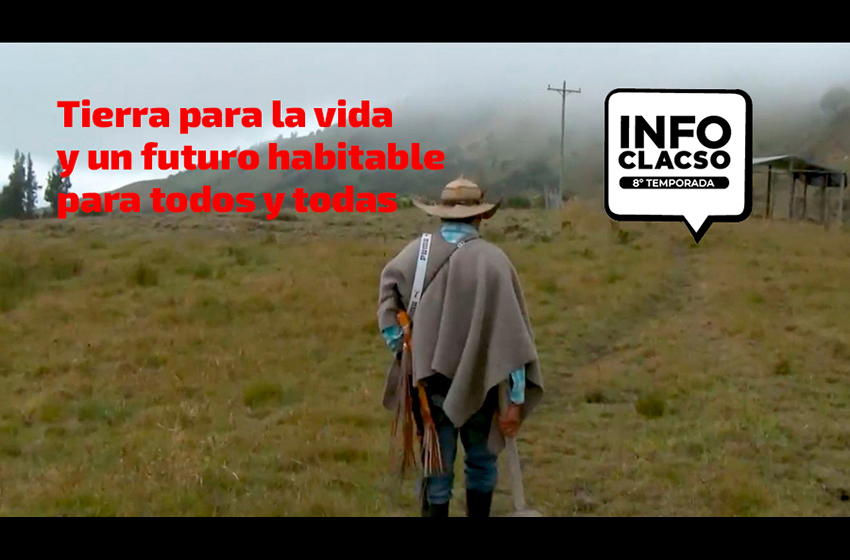
Land for life and a habitable future for all
InfoCLACSO Wednesday, March 4, 2026
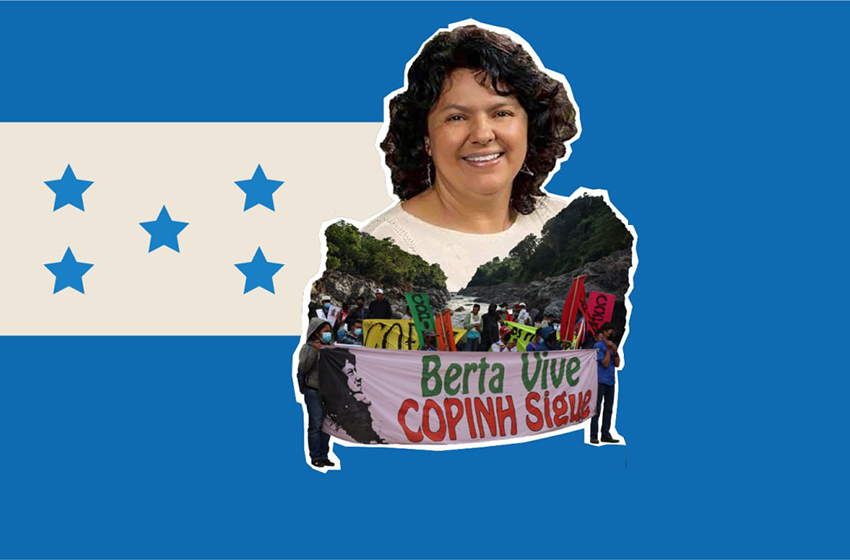
10 years after the murder of Berta Cáceres
Leader of the Lenca indigenous community of Honduras
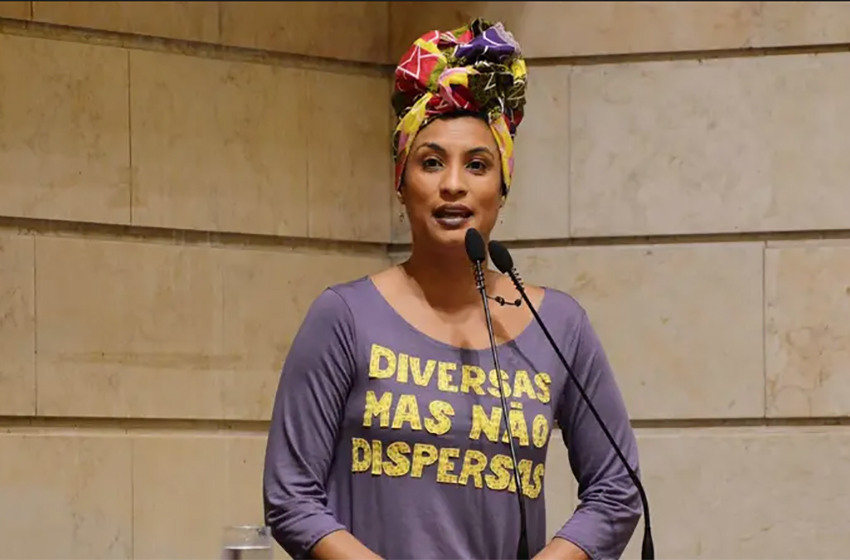
Condemns the masterminds behind the assassination of Marielle Franco
Memory and Justice in Brazil
21st Century Challenges from South America
Virtual debate Thursday, February 26
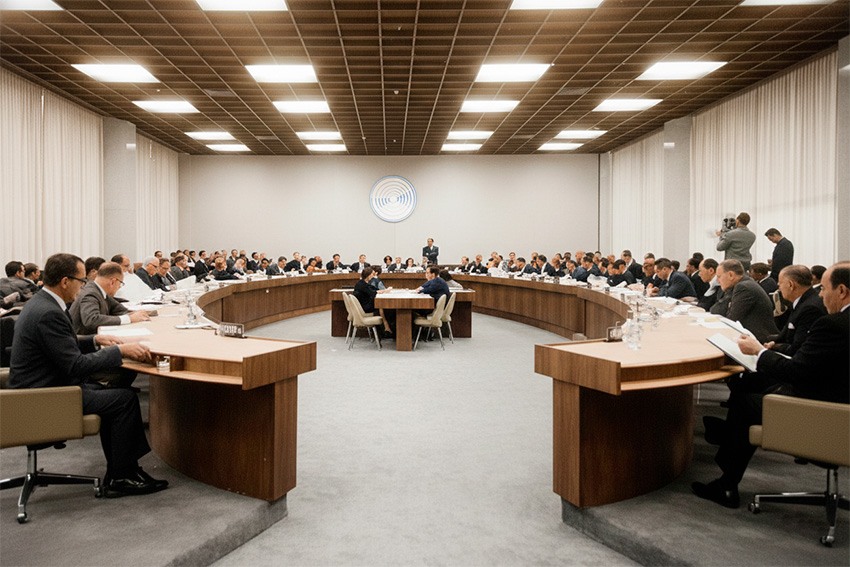
Challenges 59 years after the Treaty of Tlatelolco
For the Prohibition of Nuclear Weapons in Our America
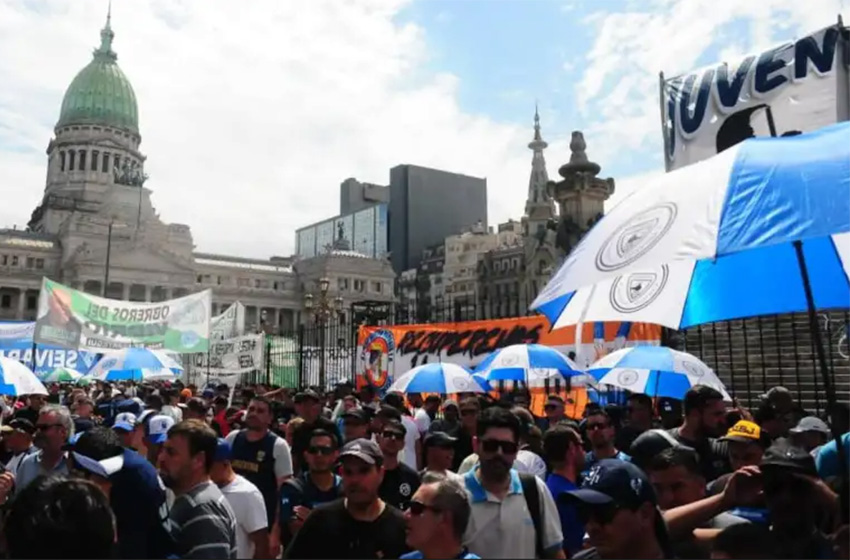
Labor reform and repression in Argentina
Democracy under siege
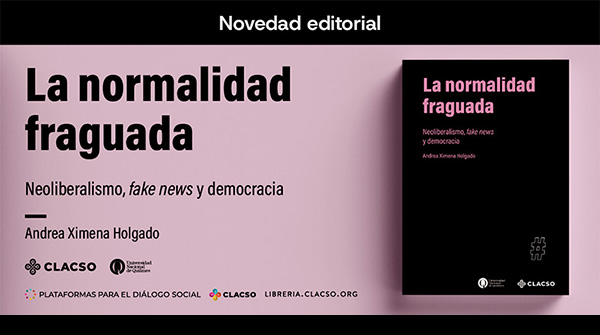
The fabricated normality. Neoliberalism, fake news, and democracy
Andrea Ximena Holgado
.
Collaborative mural of the PDS Democracy, human rights and peace
Enter your comment in this space for dialogue and exchange