
Labor reform and repression in Argentina
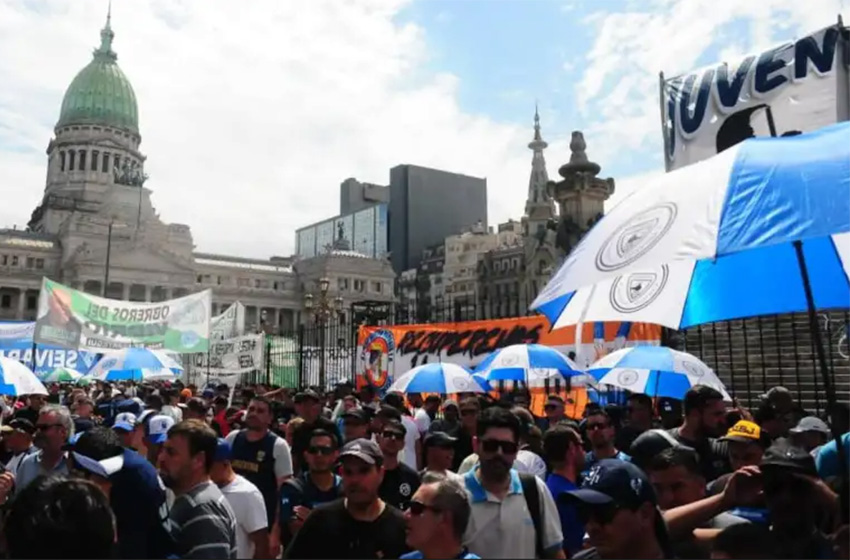
The Argentine Senate gave preliminary approval in the early hours of Thursday, February 12, to a labor reform bill that marks a turning point in the history of social rights in the country. While a majority of 42 votes in favor and 30 against was being secured inside the chamber, outside, Plaza Congreso became the scene of another brutal day of repression against popular, labor, and political organizations opposed to its passage.
The reform, promoted by Javier Milei's neoliberal government and celebrated by the main business chambers, is not a "modernization" but a systemic regression. Among its most critical points are:
-Flexibility of dismissals: The replacement of severance payments with termination funds and the reduction of fines for unregistered employment.
-Extension of the workday: The implementation of "time banks" that allow workdays of up to 12 hours, blurring the limits of rest.
-Attack on trade union freedom: Restrictions on the right to strike and sanctions for blockades, classifying them as a "very serious offense".
-From an academic and social perspective, this regulation deepens structural precarity, especially leaving the most vulnerable sectors unprotected under the false promise –historically unfulfilled– that the removal of rights generates employment.
As the debate progressed on Wednesday, February 11, thousands of workers, unions, and social organizations demonstrated under the slogan "rights are not negotiable." The state's response was the deployment of a disproportionate and brutal security operation, resulting in dozens of arrests and injuries from rubber bullets, tear gas, and water cannons.
What happened at the National Congress in Buenos Aires is not an isolated incident, but rather part of a regional offensive against the welfare state and the foundations of democracy. For CLACSO and the academic community, the challenge is twofold: to denounce institutional violence and to analyze how these legal frameworks reshape the subjectivity of workers in a context of increasing poverty and job insecurity.
In this regard, the CLACSO Member Centers of Argentina issued a statement declaring: “We defend the right to protest, to organize, and to participate democratically without criminalization or persecution. And we work to defend public education and science and labor rights for all.”
See "Repudiation of the ongoing repression against the labor reform "
The bill, which had already passed the Senate, reached the Chamber of Deputies on Thursday, February 19th, and in protest against its treatment, the labor unions called for a strike with widespread participation throughout the country and with mobilizations to Congress that were once again repressed.

