
March, Women's Month at CLACSO
As every year, for the Latin American Council of Social Sciences (CLACSO), March is Women's Month. Within this framework, CLACSO presents throughout March an agenda of activities, training opportunities, and audiovisual content that invite reflection on the struggles for equality and gender justice in Latin America and the Caribbean, with "Feminist Thought and Action: Networks, Bodies, and Politics in Motion" being one of the main themes of our Platforms for Social Dialogue.
Training
30 Training scholarships for women and dissidents
Registration for CLACSO Diplomas is now open
We invite researchers, activists, and public officials to join our gender-focused training programs. Registration is currently open for the following Postgraduate Diplomas :
• Public policies, crisis and gender justice
• Popular and feminist economies
• Measurement of gender-based violence against women and femicide/feminicide
InfoCLACSO
Special Women's Month
During March, our weekly Wednesday program InfoCLACSO will present two special programs dedicated to reflecting on the current challenges of feminist agendas in Latin America and the Caribbean: March 11 and 18.
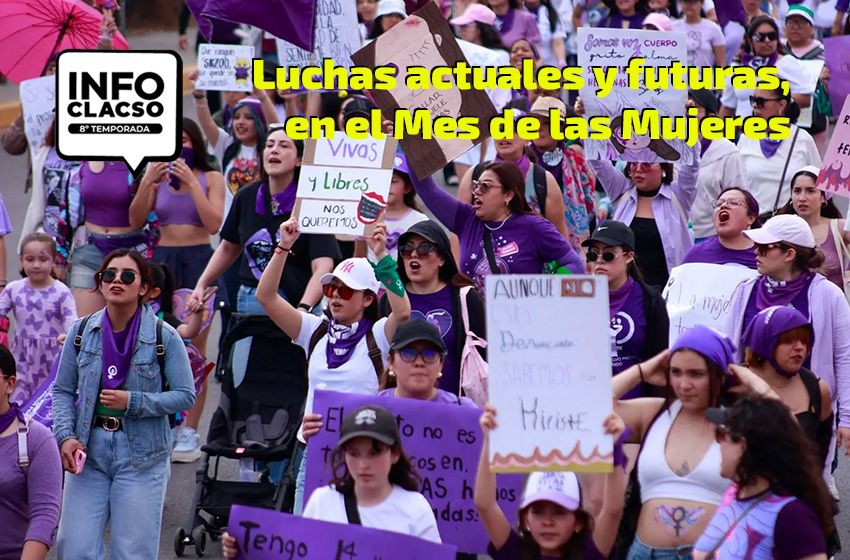
InfoCLACSO Wednesday, March 11, 2026
Networked research
Threads of Silence | Video Series
We invite you to watch the series of 10 short videos “Threads of Silence” , which accompany the chapter “Violence against women workers in the maquiladora industry. An intersectional study in Guatemala” , by Manuel Salvador Funes Narváez, Mariantonia Bermúdez González and Suhey Mercedes Fúnez Narváez.
This chapter is part of the book Multiple Dimensions of Gender-Based Violence , published by CLACSO as a result of a Research Grant.
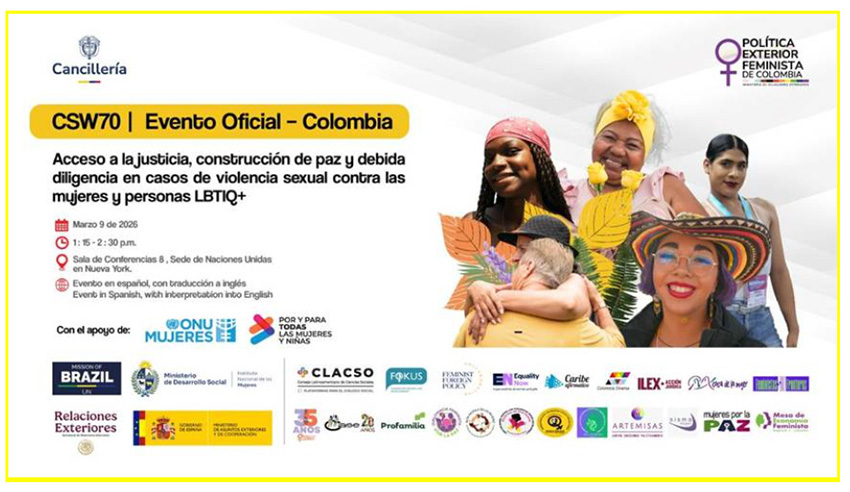
CLACSO in the CSW70
CLACSO participates in the United Nations Commission on the Status of Women (CSW70) , contributing reflections and proposals from Latin America and the Caribbean on gender equality, social justice and democracy.
Work groups
During Women's Month , the CLACSO Working Groups Program will disseminate bulletins, research and productions prepared by different groups that address gender inequalities from critical and situated perspectives.
Open activities will also be promoted to strengthen academic and political debate, broaden collective participation, and contribute to building greater gender equality and justice.
We share the Protocol for attention and intervention in situations of gender-based violence from an intersectional perspective, within the scope of activities organized by CLACSO , prepared by an Inter-GT Commission and approved by the CLACSO Steering Committee.
The result of the coordinated work of an Inter-GT Commission and approved by the CLACSO Steering Committee, this document transcends the administrative to consolidate itself as a profound political commitment structured around three guiding principles:
✓ Guiding Principle: Establishes clear limits and precise consequences for misconduct, with the primary objective of inhibiting and eradicating its repetition in any activity organized by the institution.
✓ Educational Focus: Commitment to a fundamental cultural transformation through visibility, recognition and critical reflection on the violence and inequalities rooted in academic spaces.
✓ Comprehensive Intervention Framework: It goes far beyond punitive sanctions. The protocol guarantees a framework of continuous support and proposes concrete reparation mechanisms, focused on caring for and listening to the victims.
With the implementation of this tool, accompanied by ongoing training and awareness-raising activities, CLACSO reaffirms that knowledge production and debate in the social sciences must, indispensably, take place within frameworks of respect, equity, and mutual care.
———————–
Feminist thought and action: plots, bodies and politics in motion
Content and activities linked to the Platform for Social Dialogue (PDS) “Feminist thought and action: plots, bodies and politics in motion” , a space that brings together articles, research, audiovisual materials and debates dedicated to feminisms in Latin America and the Caribbean.
Publications for Women's Month
New releases on gender and feminisms in different collections of the catalog
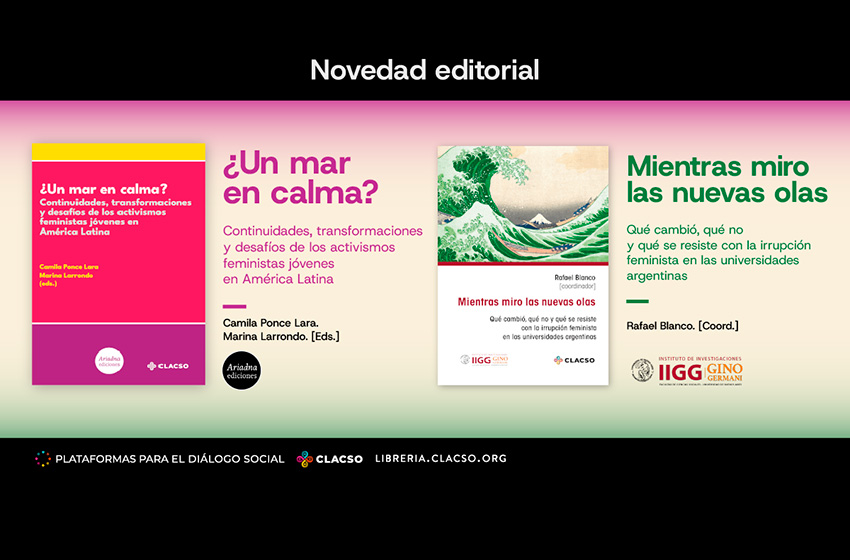
Thinking about feminisms withtemporary
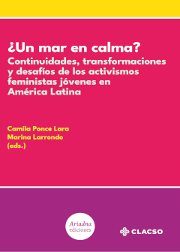
This work brings together research and academic reflections that address six major thematic areas: youth feminist mobilizations; legislation and public policy; awareness and education on gender violence; intersection with LGBTQ+ cultures; the sociopolitical impact of youth feminisms; and intersectionality and decoloniality. Through these areas, it seeks to offer a multidimensional analysis of youth feminist activism in Latin America.
Download
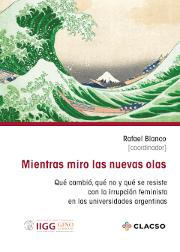
This book examines what changed, what didn't, and what resists change with the feminist movement's emergence in Argentine universities. This "emergence" has often been characterized as a feminist "wave" or "tide" that brought with it significant debates, agendas, promises, and transformations in public discourse and everyday life.
Download
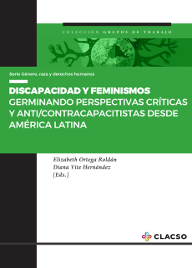
This work gathers interdisciplinary contributions from the theoretical, investigative, activist, artistic, and experiential fields of dialogue and interpellation between critical disability studies and feminist studies in our Latin American region, which have long since ceased to be barren and have been nourished by ancestral traditions, and which we continue to cultivate so that others may flourish and continue sowing seeds.
Download
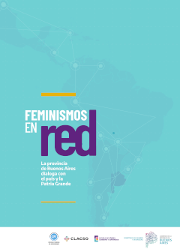
This initiative aimed to strengthen dialogue and collaboration between the province, the rest of the country, and the feminisms of Latin America and the Caribbean, consolidating a network that promotes and deepens the gender and diversity agenda at a regional level.
Download
#WomensMonth2026
Follow us on our social media to find out about all the activities and content of the month and join the hashtag to participate in the conversations.
Voices that transform: Reflections from the Steering Committee on the role of women in academia
Being a woman in academia is, now more than ever, an act of dual commitment: intellectual rigor and political transformation. Over the decades, women have conquered classrooms, research centers, and leadership positions, but what does it truly mean to be a female academic today, and what challenges persist in our universities? Despite undeniable progress, knowledge production is not exempt from patriarchal logic. Those who navigate university life continue to face structural barriers: from glass ceilings in the most influential decision-making spaces and inequalities in access to funding, to the historical invisibility of female authors in curricula and the constant—and often unspoken—tension of caregiving responsibilities.
However, the university is also our battleground. Faced with these barriers, an unavoidable question arises: How can women academics, through research and critical teaching, contribute to building more just and equitable societies? The answer is woven collectively and in everyday practice. It involves dismantling the logics of exclusion from within the classroom, promoting intersectional theoretical frameworks, and advancing research agendas that not only diagnose the inequalities in our region but also engage directly with public policies and the demands of social movements.
To delve deeper into these urgent issues, we invited the members of the Steering Committee to share their perspectives . Below, they present their testimonies: a lucid snapshot of the tensions, resistance, and enormous transformative potential of women in the social sciences of Latin America and the Caribbean.

