
Inequalities and poverty in Latin America and the Caribbean
Historically, Latin America and the Caribbean has been the most unequal region in the world, with extremely high levels of wealth concentration (both in terms of assets and income) and opportunities, resulting in poverty, inequality, exclusion, and exploitation that have hampered both economic growth and social justice, democracy, and other normative dimensions of full citizenship. This long-standing trend was only reversed during the first decade and a half of the 21st century with the shift to the left; but currently, progress has stalled or even regressed within the context of the global hegemonic crisis.
In this context, it is worth asking about the causes and effects of neoliberalism and anti-neoliberalism in these areas of concentration and inequality. Structurally, how have the political economies of inequality and concentration been shaped, determining the dynamics of accumulation in the region and its countries, and how can they be transformed? Institutionally, how have unequal regimes been established that justify and legitimize both the production of the rich and the production of the poor, the excluded, and the exploited; and what can be done to change them into egalitarian regimes oriented toward social justice? Socially, how have economic actors reacted, adopting or transforming, resisting or innovating strategies of social reproduction in spaces of education, work, leisure, etc., and how can normative aspirations for the good life of Latin Americans be derived from these experiences and practices?
The debate raised is neither new nor current. A critical line of Latin American political economy, initiated with Dependency Theory and its critical offshoots, has been lost to academic circles that fail to consider regional specificities. Critically speaking, it is crucial to recover a long-term geopolitical and historical perspective of the region to address macrostructural issues. Secondly, it is important to consider the mesostructural debate, which investigates the formal institutional layer of unequal regimes, showing that in the region the consolidation of inequality, exclusion, and exploitation is largely based on informal institutions. A third line of inquiry evaluates the microstructural relationships between natives and immigrants, racial majorities and minorities, and men and women, revealing egregious disparities in wealth, income, wages, human capital, employment rates, and occupational segregation. In general, men earn more than women, and natives earn more than immigrants. In part, these disparities can be attributed to social origins, opportunities, educational attainment, training, health, and mental health. However, in societies with historically entrenched colonial pasts and legacies, prejudices and stereotypes also play a role. The exploitation, discrimination, and exclusion of marginalized groups is a crucial issue that is often overlooked in mainstream economics.
It is essential to broaden our perspective to contextualize both orthodox (neoclassical) and heterodox (Marxist) theories. This requires understanding, comparing, and contrasting the most important models: classical, neoclassical, monetary, liberal, neo-Keynesian, and Marxist. Furthermore, new phenomena of exclusion and marginalization must be evaluated in the labor market outcomes of subaltern groups through the new approaches proposed by neoclassical economics, the new economics of subalternity, the dual labor market, world systems economics, and institutional economics. In this regard, the contribution of feminism is highly relevant, through its most influential paradigms: liberal, radical, and Marxist; as well as ecological and multicultural approaches. Empirical evidence from the region suggests that concentration, inequality, and various forms of exclusion are the main challenges facing the Latin American and Caribbean economy today; and that these phenomena are much more pronounced among some subaltern groups, such as immigrants. Furthermore, modern exploitation and slavery are taking on new forms and affecting people of all ages, genders, and races: from migrants forced into factory work, domestic service, or agriculture, to sexual exploitation. Mainstream economics focuses on these phenomena while neglecting the problem of concentration: that is, the new ways in which elites (especially financial elites) exploit labor, capture surplus value, evade taxes, and funnel capital to tax havens. A further step in theorizing this dynamic will involve relating the micro-level strategies of subaltern groups and elites within a macro-level approach that allows us to understand the role that wealth concentration plays in generating new forms of poverty and inequality.
There are functional and critical contradictions between the systemic reproduction of capitalism and the social reproduction of the lifeworlds it parasitizes. Within this framework, it is important to examine the obstacles to accumulation, how they have historically been overcome or not, and how they might be overcome in the present, whether in terms of transitional or terminal crises.
It is essential to reflect on the possibilities for change in Latin America and the Caribbean. This requires evaluating the strengths and weaknesses of alternative explanations within the Political Economy of Inequality (PEI) and analyzing possible social actions in light of empirical evidence. In particular, successful public policies should be analyzed, as well as the transformative contributions of social movements and other civil society actors. This debate will include both descriptive and normative definitions of how to assess, measure, and compare income/wealth inequality, discrimination, poverty, and exploitation; as well as an understanding of the role of utopian social planning in overcoming inequality, discrimination, poverty, and the concentration of wealth and privilege.
(1- Proposed by the Inequality Lab team, led by Piketty.)
In this context, it is worth asking about the causes and effects of neoliberalism and anti-neoliberalism in these areas of concentration and inequality. Structurally, how have the political economies of inequality and concentration been shaped, determining the dynamics of accumulation in the region and its countries, and how can they be transformed? Institutionally, how have unequal regimes been established that justify and legitimize both the production of the rich and the production of the poor, the excluded, and the exploited; and what can be done to change them into egalitarian regimes oriented toward social justice? Socially, how have economic actors reacted, adopting or transforming, resisting or innovating strategies of social reproduction in spaces of education, work, leisure, etc., and how can normative aspirations for the good life of Latin Americans be derived from these experiences and practices?
The debate raised is neither new nor current. A critical line of Latin American political economy, initiated with Dependency Theory and its critical offshoots, has been lost to academic circles that fail to consider regional specificities. Critically speaking, it is crucial to recover a long-term geopolitical and historical perspective of the region to address macrostructural issues. Secondly, it is important to consider the mesostructural debate, which investigates the formal institutional layer of unequal regimes, showing that in the region the consolidation of inequality, exclusion, and exploitation is largely based on informal institutions. A third line of inquiry evaluates the microstructural relationships between natives and immigrants, racial majorities and minorities, and men and women, revealing egregious disparities in wealth, income, wages, human capital, employment rates, and occupational segregation. In general, men earn more than women, and natives earn more than immigrants. In part, these disparities can be attributed to social origins, opportunities, educational attainment, training, health, and mental health. However, in societies with historically entrenched colonial pasts and legacies, prejudices and stereotypes also play a role. The exploitation, discrimination, and exclusion of marginalized groups is a crucial issue that is often overlooked in mainstream economics.
It is essential to broaden our perspective to contextualize both orthodox (neoclassical) and heterodox (Marxist) theories. This requires understanding, comparing, and contrasting the most important models: classical, neoclassical, monetary, liberal, neo-Keynesian, and Marxist. Furthermore, new phenomena of exclusion and marginalization must be evaluated in the labor market outcomes of subaltern groups through the new approaches proposed by neoclassical economics, the new economics of subalternity, the dual labor market, world systems economics, and institutional economics. In this regard, the contribution of feminism is highly relevant, through its most influential paradigms: liberal, radical, and Marxist; as well as ecological and multicultural approaches. Empirical evidence from the region suggests that concentration, inequality, and various forms of exclusion are the main challenges facing the Latin American and Caribbean economy today; and that these phenomena are much more pronounced among some subaltern groups, such as immigrants. Furthermore, modern exploitation and slavery are taking on new forms and affecting people of all ages, genders, and races: from migrants forced into factory work, domestic service, or agriculture, to sexual exploitation. Mainstream economics focuses on these phenomena while neglecting the problem of concentration: that is, the new ways in which elites (especially financial elites) exploit labor, capture surplus value, evade taxes, and funnel capital to tax havens. A further step in theorizing this dynamic will involve relating the micro-level strategies of subaltern groups and elites within a macro-level approach that allows us to understand the role that wealth concentration plays in generating new forms of poverty and inequality.
There are functional and critical contradictions between the systemic reproduction of capitalism and the social reproduction of the lifeworlds it parasitizes. Within this framework, it is important to examine the obstacles to accumulation, how they have historically been overcome or not, and how they might be overcome in the present, whether in terms of transitional or terminal crises.
It is essential to reflect on the possibilities for change in Latin America and the Caribbean. This requires evaluating the strengths and weaknesses of alternative explanations within the Political Economy of Inequality (PEI) and analyzing possible social actions in light of empirical evidence. In particular, successful public policies should be analyzed, as well as the transformative contributions of social movements and other civil society actors. This debate will include both descriptive and normative definitions of how to assess, measure, and compare income/wealth inequality, discrimination, poverty, and exploitation; as well as an understanding of the role of utopian social planning in overcoming inequality, discrimination, poverty, and the concentration of wealth and privilege.
(1- Proposed by the Inequality Lab team, led by Piketty.)
In this context, CLACSO has recognized the need to strengthen social dialogue networks related to the Political Economy of Inequality in Latin America and the Caribbean, encompassing those who subscribe to macro, micro, and meso approaches, in order to provide multi- and transdisciplinary academic responses and multidimensional public policy recommendations. Within this context, we propose the following: general contents as priorities to be addressed in the region. We hope that these will be nurtured, enriched, and expanded through the active participation of the CLACSO network community:
a)Framework/approach to understand, address and overcome inequality, discrimination, exclusion and exploitation in Latin America and the Caribbean.
b) The economy, poverty and inequalities in the neoliberal cycle and the leftward shift in Latin America and the Caribbean. Thinking about alternative accumulation models linked to egalitarian and inclusive dynamics.
c) What are the challenges in the Political Economy of Inequality for current governments, and what public policy recommendations can be made in this regard?
d) Orthodox and heterodox paradigms of the Political Economy of Inequality under debate
e) New forms of concentration, inequalities and exclusion, at macro and micro levels.
f) The EPD and the dilemma between systemic reproduction and social reproduction.
g) The EPD and the search for social alternatives.
a)Framework/approach to understand, address and overcome inequality, discrimination, exclusion and exploitation in Latin America and the Caribbean.
b) The economy, poverty and inequalities in the neoliberal cycle and the leftward shift in Latin America and the Caribbean. Thinking about alternative accumulation models linked to egalitarian and inclusive dynamics.
c) What are the challenges in the Political Economy of Inequality for current governments, and what public policy recommendations can be made in this regard?
d) Orthodox and heterodox paradigms of the Political Economy of Inequality under debate
e) New forms of concentration, inequalities and exclusion, at macro and micro levels.
f) The EPD and the dilemma between systemic reproduction and social reproduction.
g) The EPD and the search for social alternatives.
CLACSO at the ALAS Congress: Between polycrisis and alternatives
InfoCLACSO Wednesday, August 5, 2026

Short notebooks for public advocacy
Deadline for notebook submission: October 30
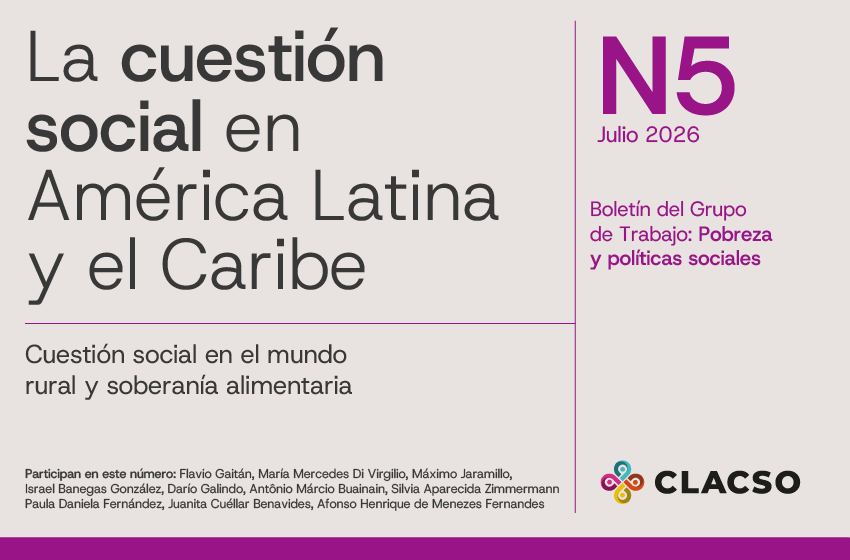
Bulletin #5 The social question in Latin America and the Caribbean
#5 Social issues in the rural world and food sovereignty
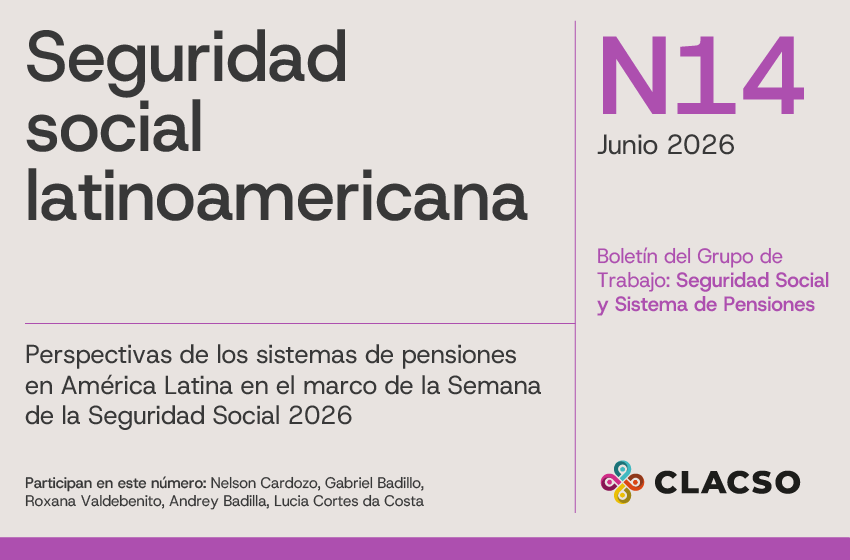
Bulletin #14 Latin American Social Security
#14 GT Social security and pension systems
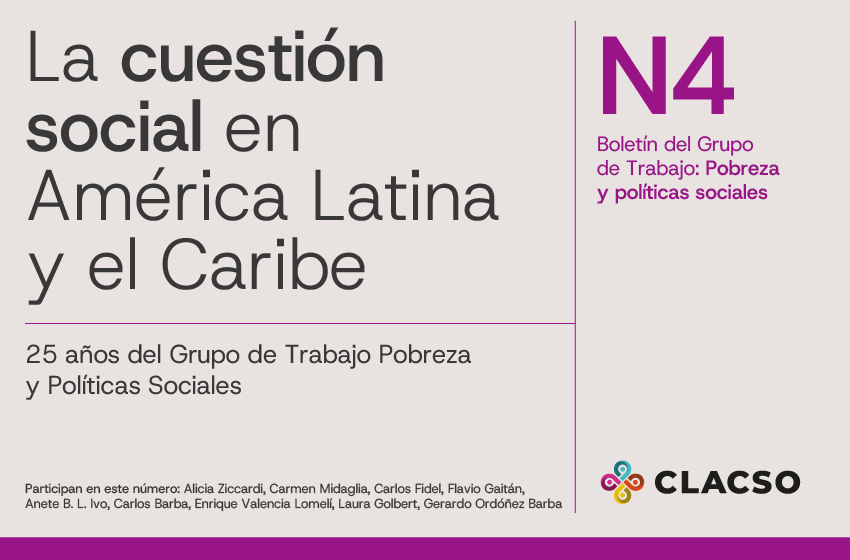
Bulletin #4 The social question in Latin America and the Caribbean
#4 25 years of the CLACSO Working Group on Poverty and Social Policies
The Central American isthmus: peripheral epistemological perspectives
Production, dissemination and connection of interdisciplinary knowledge on diasporas, democracy, authoritarianism, territorialities, extractivism, spiritualities, pedagogies, culture, art, peoples and movements...
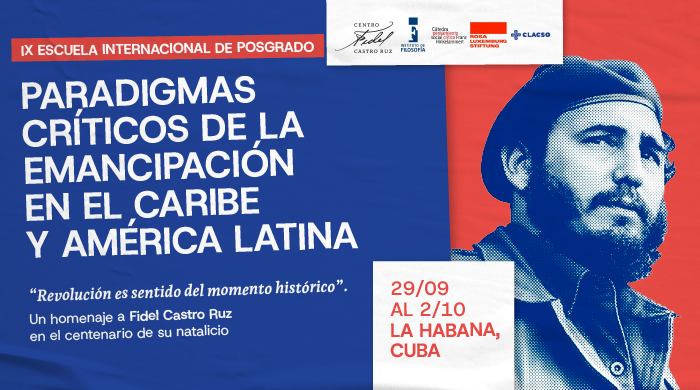
IX International Postgraduate School: Critical Paradigms of the Emancipation of the Caribbean and Latin America
IX International Postgraduate School: Critical Paradigms of the Emancipation of the Caribbean and Latin America | Havana, Cuba |...
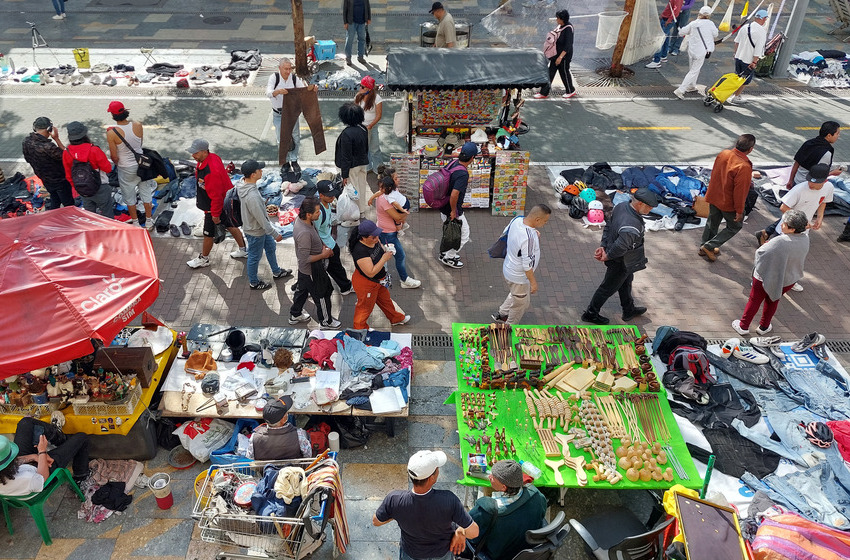
Popular economies: theoretical and practical mapping
The organizational structures of popular economies constitute new horizons for the social, political, and economic construction of popular organizations and...
Crisis, responses and alternatives in the Greater Caribbean
The organizational structures of popular economies constitute new horizons for the social, political, and economic construction of popular organizations and...

