
Critical Studies of the Dominican Health System
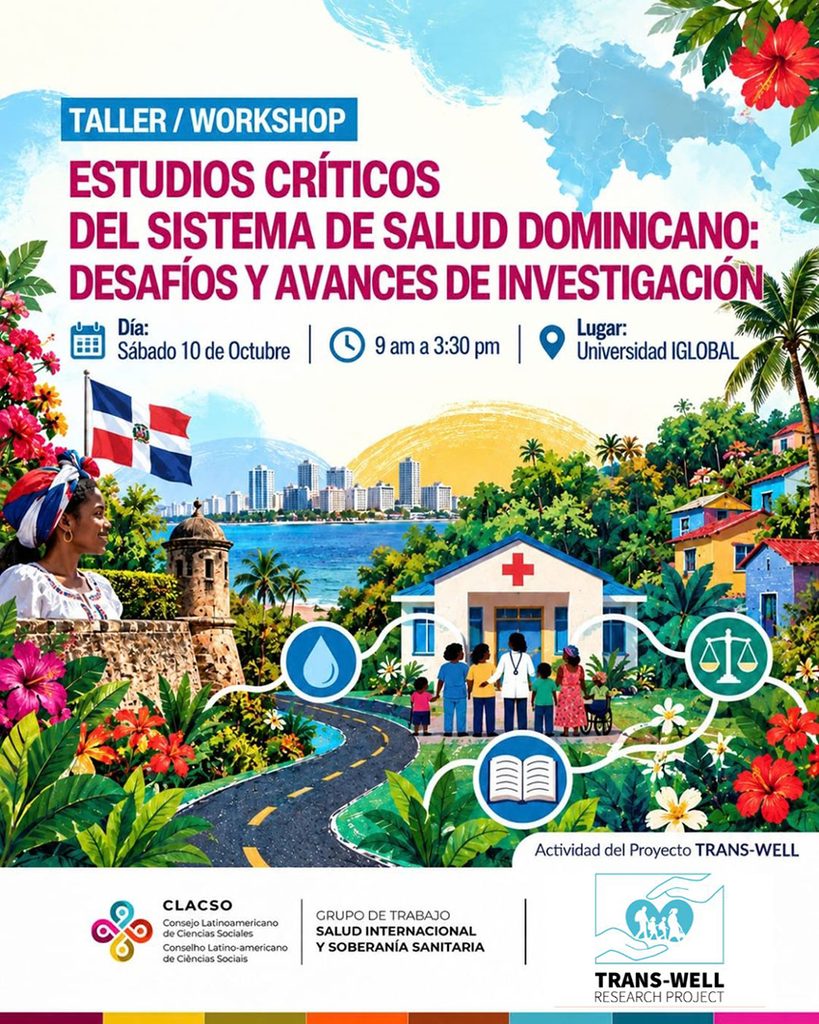
Within the framework of the TRANS-WEL project, the 1st Workshop-Workshop " Critical Studies of the Dominican Health System: progress in work and challenges in research " is organized.
Saturday October 10 From 9 am to 3:30 pm (RD time) – In-person modality
Location: IGLOBAL University (Captain Eugenio de Marchena Street #26, La Esperilla sector, Santo Domingo).
Coordinators: Gonzalo Basile (Argentina/DR. Coordinator of the CLACSO Working Group on International Health and Health Sovereignty / Institute of Studies in Health and Health Sovereignty of the Caribbean) and Ricardo Elías Melgen (CLACSO Working Group on International Health and Health Sovereignty, Dominican Republic Chapter).
Organized by: TRANS-WELL Consortium / CLACSO Working Group on International Health and Health Sovereignty / Caribbean Institute for Health and Health Sovereignty Studies (IES-SS)
IMPORTANT: The Workshop is EXCLUSIVE for members and/or fellows of the CLACSO Working Group “International Health and Health Sovereignty” in the Dominican Republic.
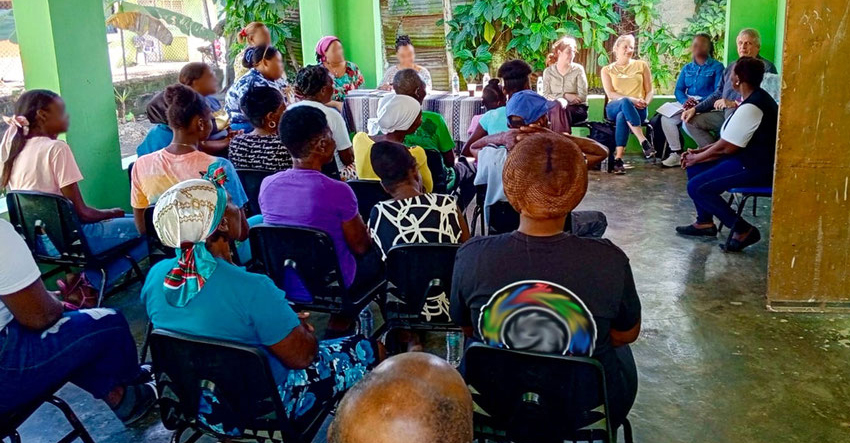
The TRANS-WELL research team studies the complex interplay between migration and health in crisis regions, where economic instability, violence, and the severe impact of climate change are driving people to migrate. These migration flows challenge conventional policy approaches and measures.
From the perspective of host societies, migration and other forms of (im)mobility are often perceived as threats. Unpredictable demographic fluctuations can strain public institutions and place an additional burden on people who are already disadvantaged. These additional challenges are often accompanied by xenophobic attitudes, exclusion, and violence.
Refugees and displaced persons are frequently denied access to public health services and medical treatment, while public health institutions often struggle to provide adequate service to all who need it. This situation, exacerbated by differing conceptions of health, healing, and well-being, means that both populations on the move (migrants, refugees, displaced persons, etc.) and host communities face numerous challenges in the face of these trends.
The pressure placed on healthcare systems during the immediate response to crises can have lasting consequences. These include weakened infrastructure, reduced capacity to provide care, and restricted access to essential medicines.

