
America Latina in motion
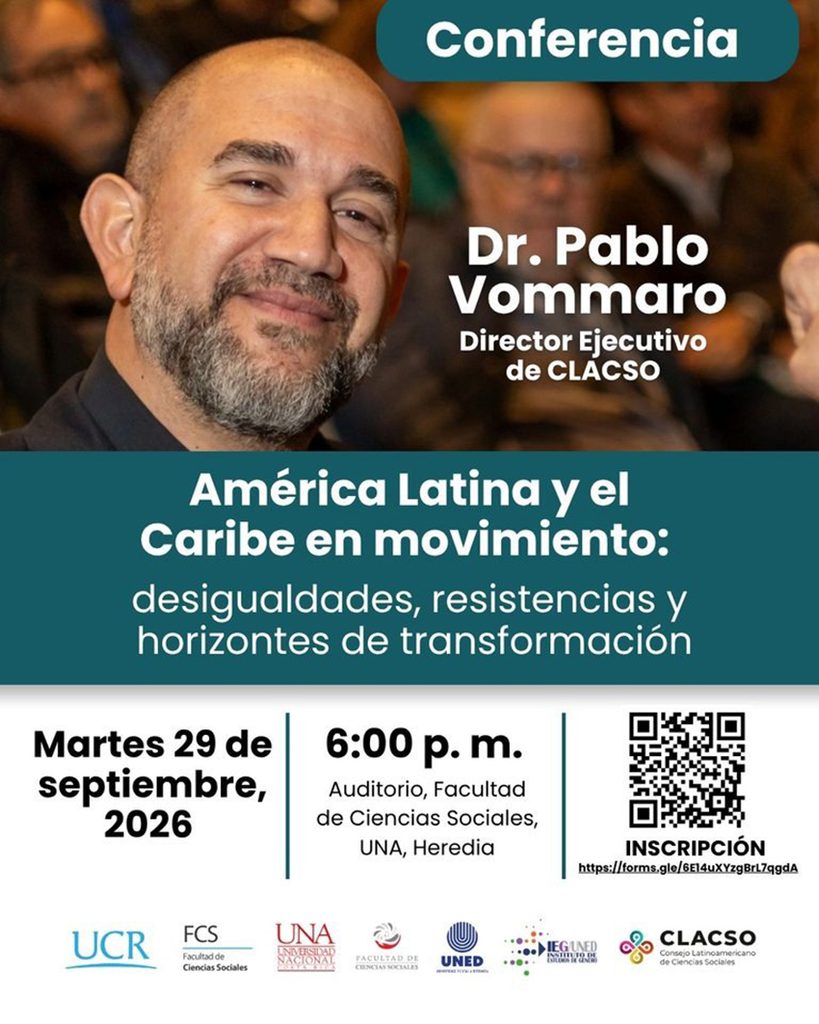
The keynote address “Latin America and the Caribbean in motion: inequalities, resistance and horizons of transformation”, given by Pablo Vommaro , executive director of the Latin American Council of Social Sciences , and organized together with the National University , the University of Costa Rica through its Faculty of Social Sciences , and the State Distance University and its Institute of Gender Studies , addresses socioeconomic gaps, social movements and alternatives for social justice in the region.
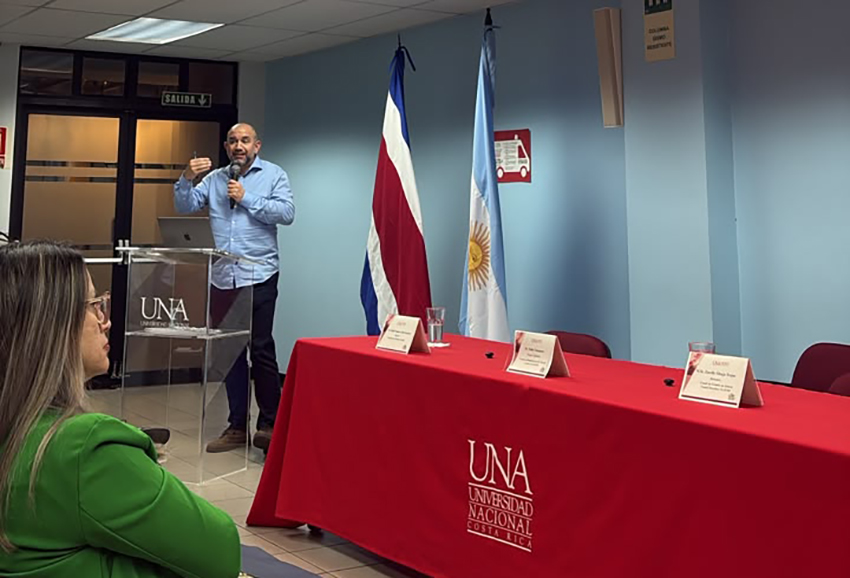
Tuesday, September 29 – 6:00 pm at the Auditorium of the Faculty of Social Sciences, National University, San José, Costa Rica – Broadcast via Facebook Live.
Interested individuals must register
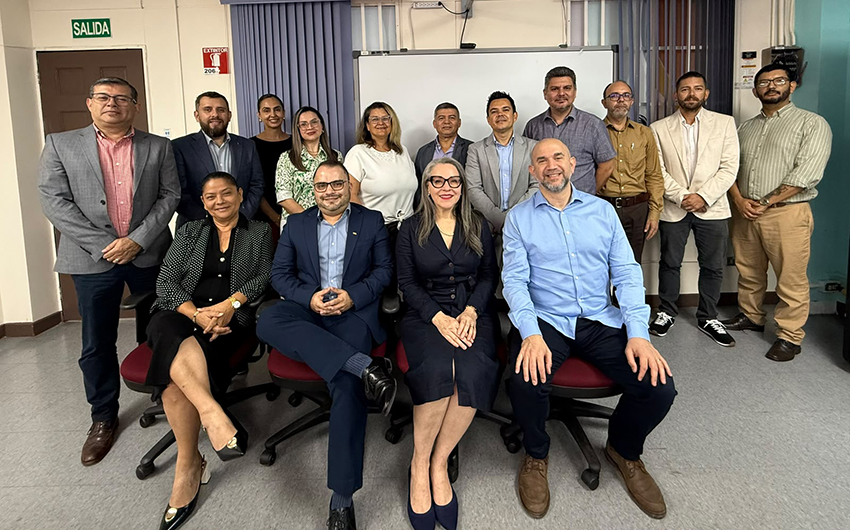
Strengthen the participation of Costa Rican Universities in CLACSO.
As part of the priority of working with and from Central America, Pablo Vommaro held a collaborative working meeting with the three CLACSO member centers and the different programs and schools of the Faculty of Social Sciences of the National University (UNA) where lines of action and joint agendas were identified in research, training, publications and evaluation initiatives.
Conversation with coordinators and academics from the Faculty of Social Sciences of the UNA to share the possibilities and opportunities of participation in CLACSO.
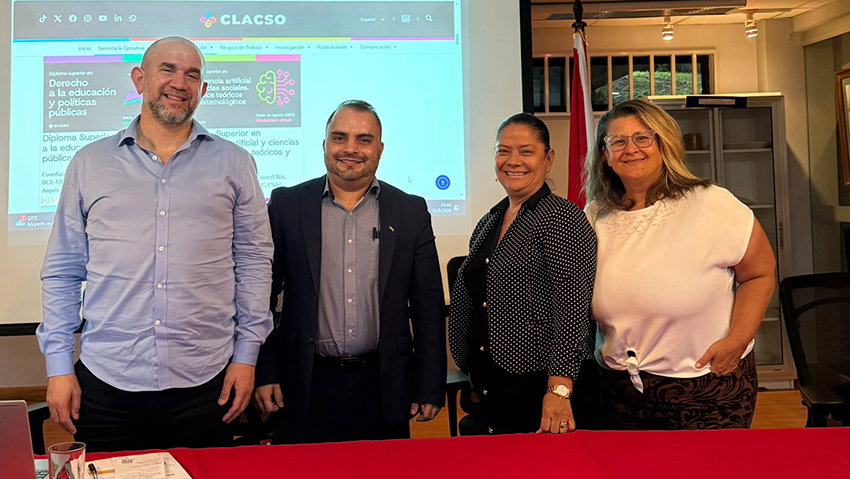
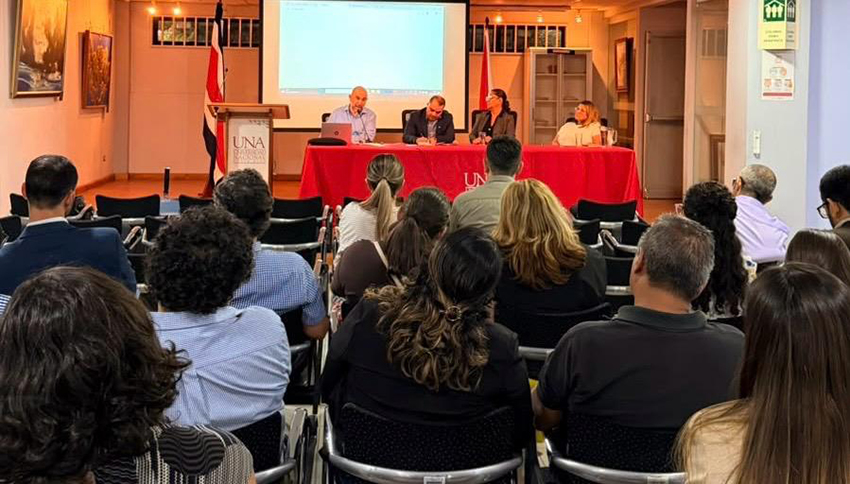
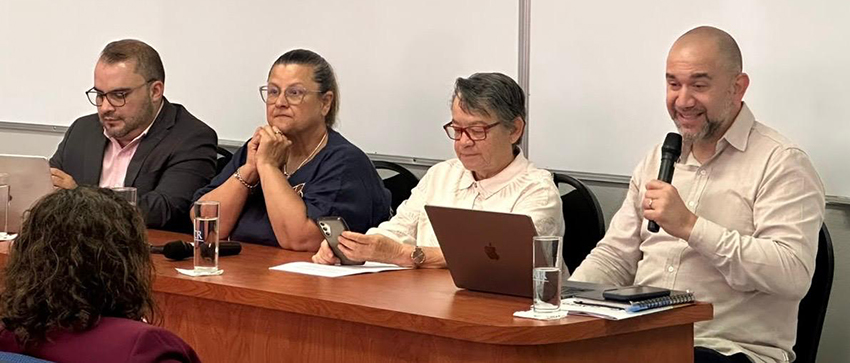
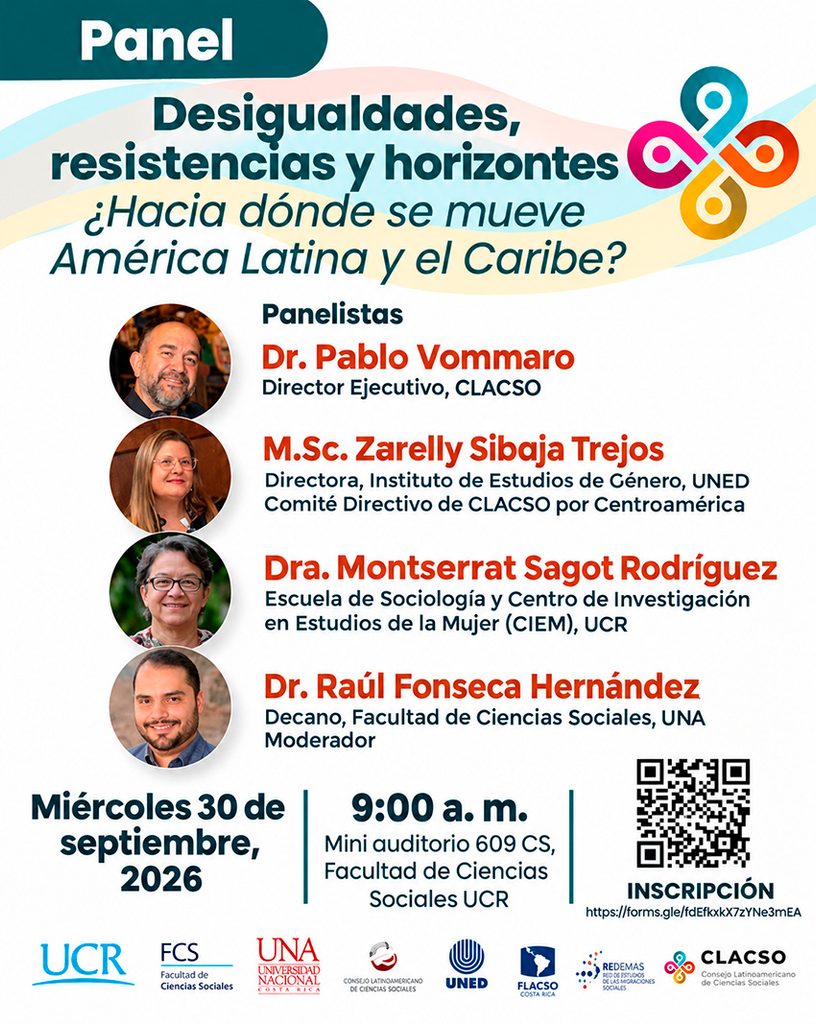
Then, on Wednesday the 30th from 9:00 to 10:30am, Pablo Vommaro will participate in the Panel: “ Inequalities, resistances and horizons: Where is Latin America and the Caribbean moving towards? ” in the Auditorium of the Faculty of Social Sciences, National University, San José, Costa Rica.
This is a space for reflection and dialogue on the transformations, challenges and horizons that our region is experiencing, and it falls within the core themes promoted by the CLACSO network throughout the region:
-Multidimensional analysis of structural socioeconomic gaps, gender issues, access to rights and the impacts of climate crises in Latin America.
-Study of social movements, activism and community initiatives that are organized to defend common goods and democracy against predatory models.
-Prospective reflection to build alternatives based on redistributive justice, economies for life and regional integration.

