
International Youth Day 2026
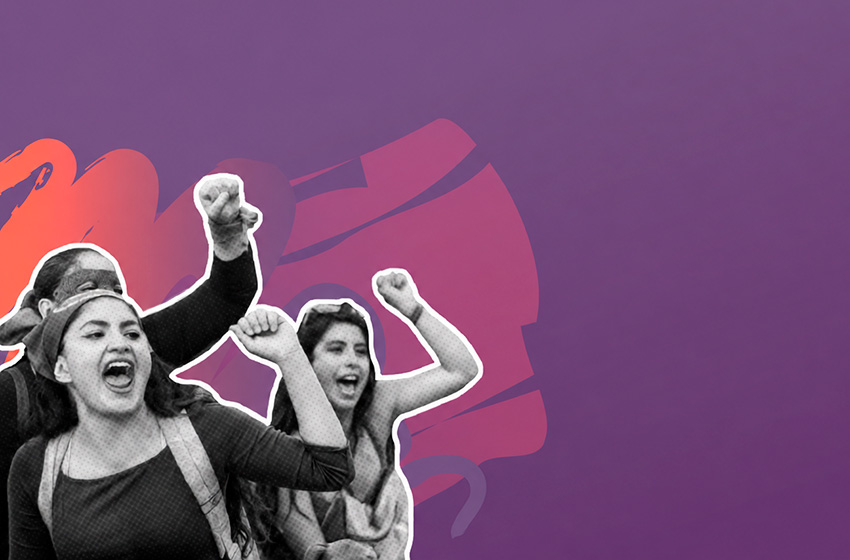
Since 1999, International Youth Day has been celebrated every August 12th , established by the United Nations General Assembly to highlight the role of young people as agents of social change, their role in building a sustainable future, and to raise awareness of the challenges and problems they face.
On International Youth Day, CLACSO reaffirms its commitment to critical thinking, participatory research, and the visibility of young people as fundamental political subjects in the construction of social justice and democracy.
In a Latin American and Caribbean context marked by complex socio-economic transformations, job insecurity, climate emergencies and democratic challenges, the region's youth are not only the future, but also the active present of the main dynamics of social change.
Even though this issue concerns us 365 days a year, this is a good opportunity to reflect on the realities faced by young people in Our America, promoting critical and interdisciplinary knowledge to transform their living conditions, focusing on their structural challenges and diverse realities.
Young people in Latin America and the Caribbean face an intersection of historical and emerging gaps:
-Precariousness and employment: High rates of informal employment and youth unemployment that directly impact their life plans and autonomy.
-Right to education: The urgent need to guarantee a public, free, inclusive and quality education that responds to technological and territorial transformations.
-Violence and human rights: The persistence of institutional, racial, gender and territorial violence that especially affects young peasants, indigenous people, Afro-descendants and people from popular sectors.
-Climate justice: The decisive participation of new generations in the defense of territories, biodiversity and the fight against extractivism and the environmental crisis.
In this regard, Pablo Vommaro , Executive Director of CLACSO, emphasized that “within the framework of International Youth Day, commemorated this August 12th, as every year since 1999, I believe that the main challenges regarding agendas for working with and from young people (academic, research, political, social advocacy, and community-based agendas, in the various spheres where young people live their lives) are: firstly, listening to and recognizing young people. That is, not being so concerned with the messages we send them or with speaking to young people, but rather with creating the mechanisms and social spaces to listen to them and to recognize their leading role in decision-making processes regarding issues that are not only youth-related or youth-focused, but also the full range of social issues that concern them, worry them, and affect them.”
Therefore, we must listen to them, recognize them as active protagonists of social life, not as agents of the future, but as protagonists here and now, as present youth who have the right and also the capacity to make decisions, to lead the social, political, economic, environmental, and cultural transformations that our societies need.
In this context, the main challenges and pending issues relate, on the one hand, to a general increase in precarity, with a marked deterioration in both the material living conditions and the subjective, symbolic conditions of young people. This includes a growing precarity of employment, a precarity of the territories they inhabit and contest, and a deterioration also more closely linked to the affective, emotional, and relational spheres, which in some cases are described as mental health, but which extends far beyond mental health; it relates to community conditions, to the social and collective conditions that allow young people to develop and project their lives, to have a trajectory to forge both in the present and for the future.
So, reversing precarity and deterioration is an outstanding issue. This is also related to multiple intersecting inequalities: generational, gender, ethnic-racial, social class, and territorial, all of which combine to create multiple inequalities, both persistent—old inequalities that continue, that endure, that persist—and emerging. Among these emerging inequalities is the whole issue of the digitalization of life, artificial intelligence, and the digital world that young people inhabit. I believe this creates emerging inequalities that we must also address through social research, public policy, and advocacy.
And another very important dimension has to do with climate justice, with climate action, of which young people are undoubtedly protagonists, but many times they are also victims of climate change because it forces them to undertake migrations or deteriorates possibilities of development in their territories or of decent jobs in some cases.
Likewise, recognizing young people involves making visible the different types of associations, groups, and forms of organization they have in the contemporary world. Undoubtedly, thinking about Latin America and the Caribbean, young women, young people from diverse sexual orientations and gender identities, along with young women, have spearheaded one of the most dynamic movements in the region in recent years, driving forward agendas. But also young people involved in climate action and justice, youth climate activists, young environmentalists, young people defending water and territories, Indigenous youth, young people from working-class neighborhoods or the outskirts of major Latin American and Caribbean cities, Black, Afro-descendant, and Afro-diasporic youth, and students—all these young people have organized and mobilized in recent years, and I believe that on this International Youth Day, they too need recognition and visibility in order to empower and strengthen their organizational capacities.
At CLACSO, we are working with and from young people, with new generations, incorporating new generations of researchers, working with undergraduate and graduate students, with university students, also working with young women, with indigenous youth, with Black and Afro-descendant youth, with young students, through various means: training spaces, yes, such as the Specialization in Childhoods and Youth that we are now launching and with open enrollment; various short courses that address topics related to youth; two Working Groups that are developing and addressing issues related to youth and student movements from different fields; various publications, both from the Working Groups and from the research calls with results of research related to youth that we carry out at CLACSO; and also with communication tools, such as InfoCLACSO dedicated to youth, and other communication, advocacy and meaning-contesting tools that we develop at CLACSO.
Therefore, I believe there is an ecosystem of knowledge and influence with and from young people within CLACSO. And on this International Youth Day, it is important to highlight the challenges, the pending agendas, and the actions and initiatives that we are implementing at CLACSO,” concluded Pablo Vommaro.
CLACSO dedicates significant space to the concerns and actions of young people and has, among other resources, an observatory and an open-access library that reflect the problems and aspirations of this segment of the population, in addition to two Working Groups. Furthermore, through scholarship programs and publications, it continuously promotes research aimed at understanding youth cultures, the dynamics of political participation, mental health, migration, and identities in flux.
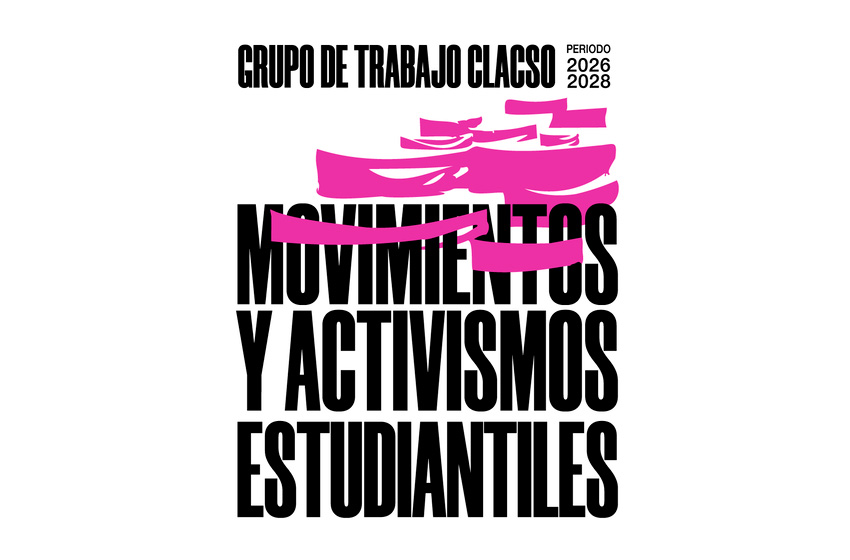
GT Student Movements and Activism
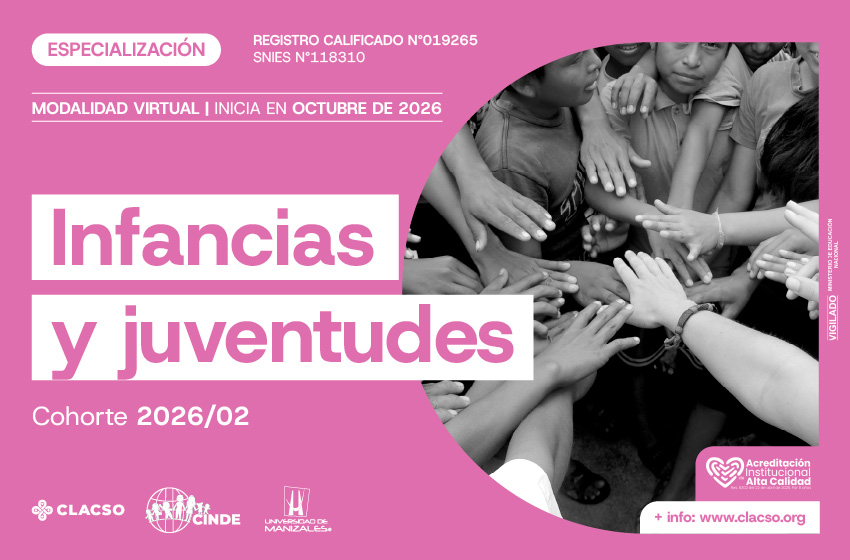
Specialization in Childhood and Youth
Youth in dispute: Precarity, weariness and the advance of the far right
Pablo VommaroThe institution's Executive Director analyzes and maps the complex reality of youth in Latin America and the Caribbean.
The lie of "if you want it, you can have it": Individualism, immediacy, and youth
The educator and social psychologist Guillermo Volkind and a deep reflection on the current educational crisis
The song of the neoliberal seria: Por que a direita seduz losyoung workers?
Nesta interviews CLACSO, a researcher and specialist Elisa Guaraná de Castro analyzes the complex relationship between Latin American youth, the world of work and the advancement of conservatism in the region.
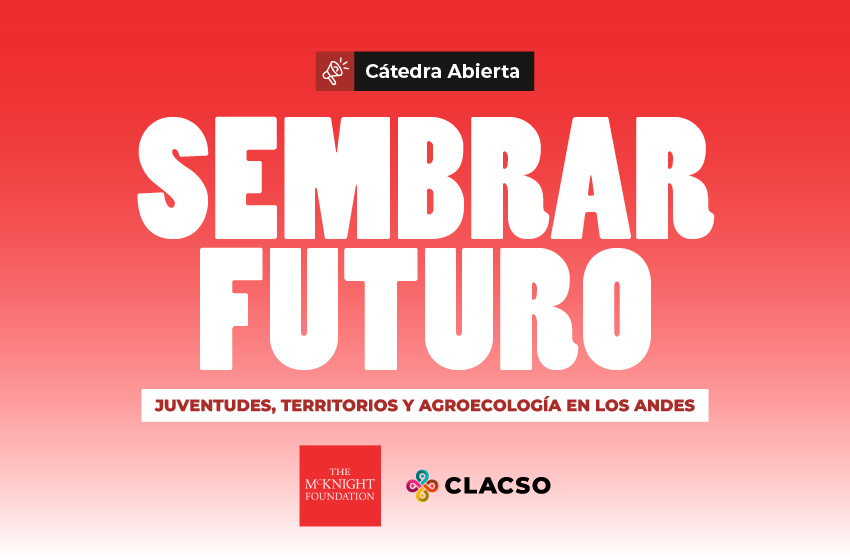
Open Lecture Series – Sowing the Future: Youth, Territories and Agroecology in the Andes
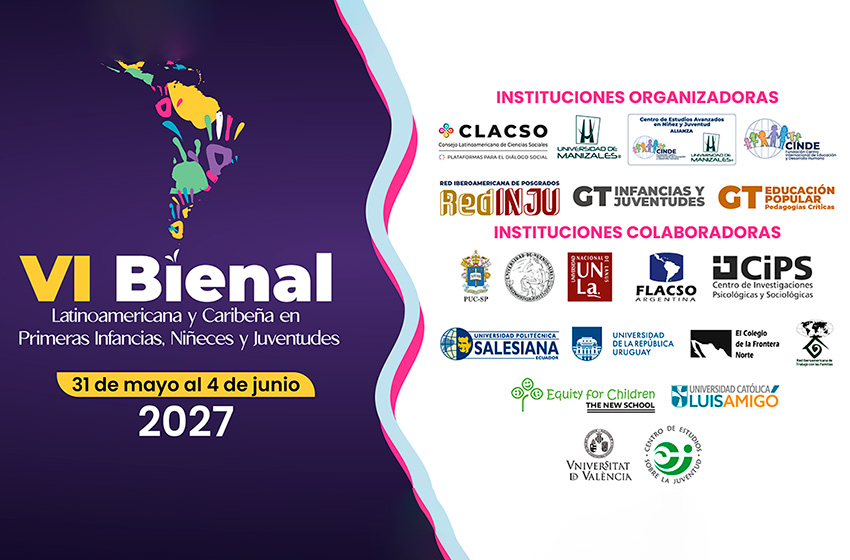
Open call: VI Latin American and Caribbean Biennial on Early Childhood, Childhood and Youth
Childhoods and youth in rural territories. Socio-environmental and agroecological struggles
The CLACSO Working Groups “ Childhoods and Youth ” and “ Political Agroecology ”, together with the Faculty of Political and Social Sciences of the National University of Cuyo (UNCuyo), organized the webinar series “Childhoods and Youth in Rural Territories. Socio-environmental and Agroecological Struggles”.
“We young people know that we have to take care of environmental defenders” – Alejandro Caballero , member of “Escazú Ahora México”
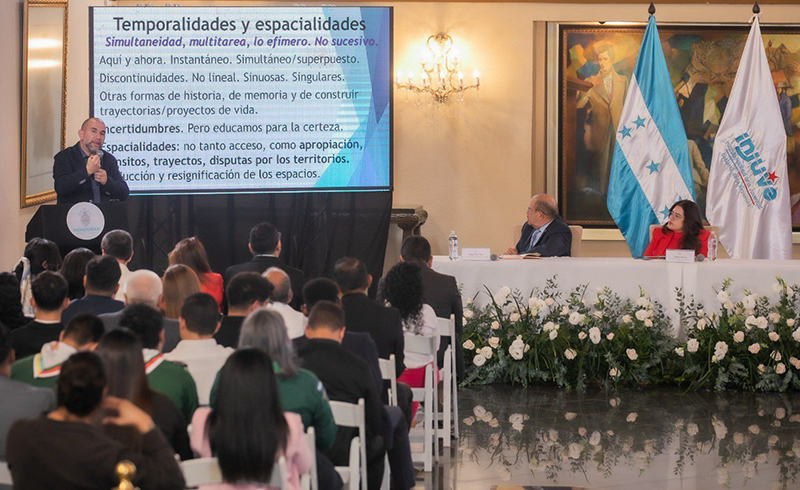
Honduras is making progress in building a new Public Policy for Youth
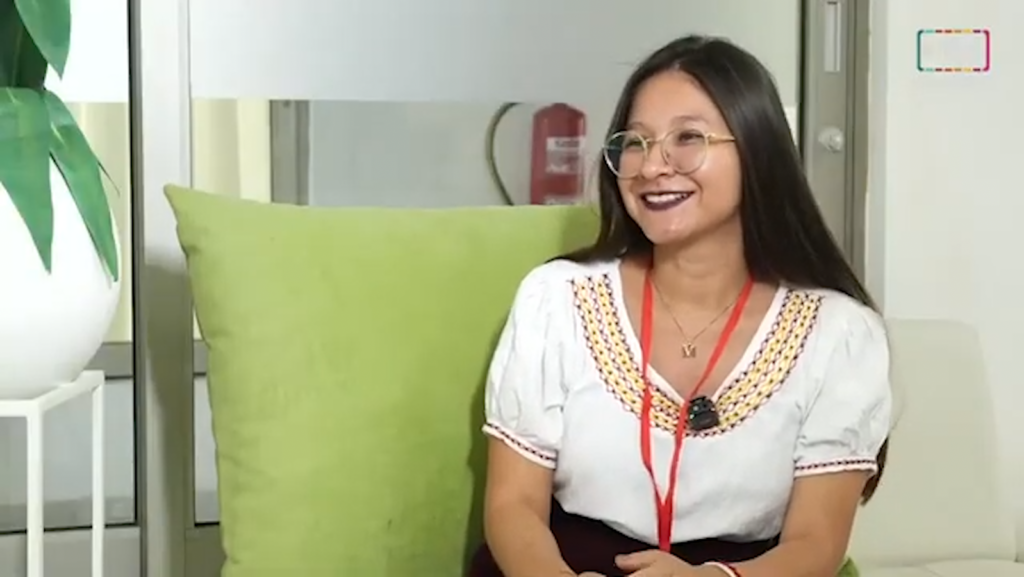
“To change reality, we must promote youth initiatives” – Minawee López, coordinator of the National Youth Council of Guatemala
What kind of youth for what kind of future? – InfoCLACSO October 2, 2024
“It is undeniable that young people are murdered because they are young” – Alexandra Agudelo López
V Latin American and Caribbean Biennial on Early Childhood, Childhood and Youth
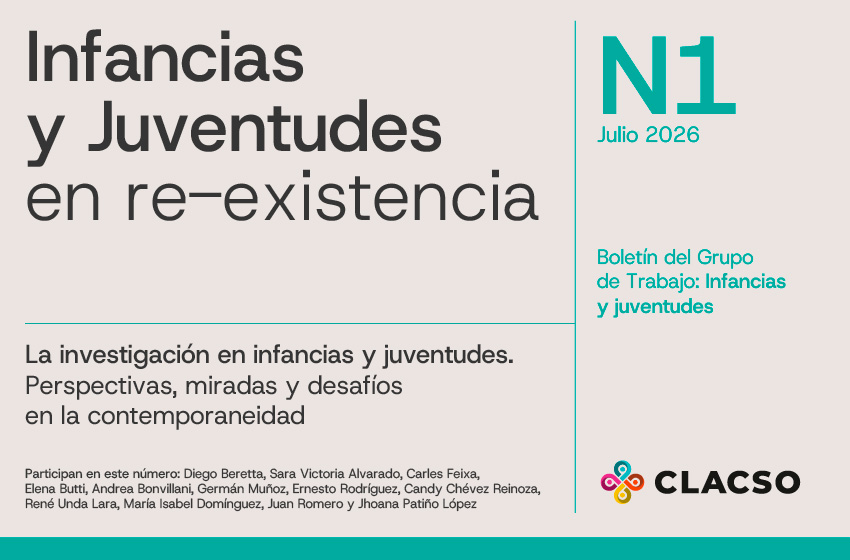
Bulletin #1 Childhoods and youths in re-existence
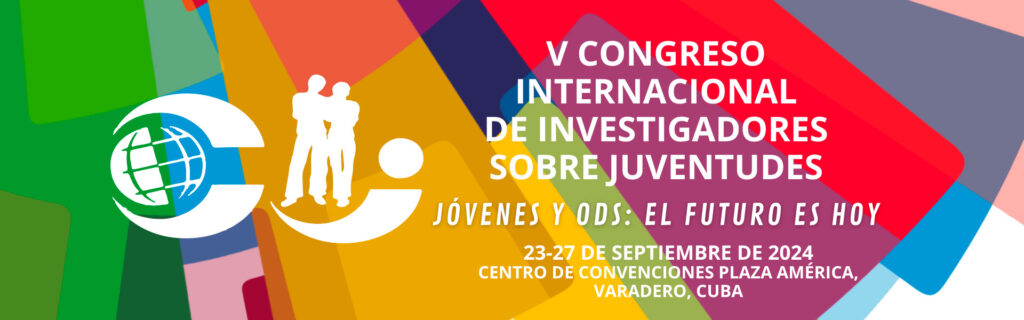
V International Congress of Researchers on Youth
Indigenous youth in Mexico: studies and sociocultural scenarios
Young people on the move in a globalized world
Youth and sovereignty: hegemony, discourses and trajectories towards emancipation
Open class: Inequalities, cultures and politics: Perspectives from Youth
Militant youth since the return to democracy – Political participation, daily life and culture
Collection: Argentine Youth Today: Trends, Perspectives, Debates
SEE OTHER CLACSO BOOKS ON YOUTH
Children and youth: Where are public policies headed in crisis contexts?

