
International Day of Indigenous Peoples
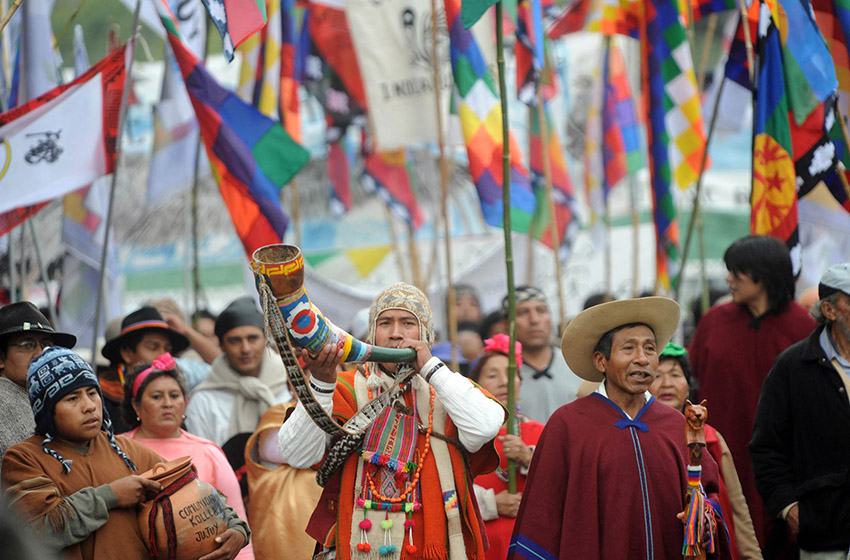
El International Day of Indigenous Peoples Every August 9th constitutes a political call to active reflection, living memory and transformative solidarity in Latin America and the Caribbean.
In a context marked by the expansion of extractive industries, the global climate crisis, and the persistence of structural violence, Indigenous communities continue to lead continental struggles for life and territory. Their resistance is constantly reshaping key debates in contemporary social thought.
-Defense of territory and common resources: Indigenous peoples safeguard more than 80% of the planet's biodiversity. Their struggles not only defend the land as a geographical space, but also the common home against an ecocidal development model.
-Climate justice and alternatives to development: The notions of Good Living (Sumak Kawsay, Suma Qamaña, Teko Porã) question the hegemony of capital and propose civilizational horizons based on reciprocity, balance and interconnection with nature.
-Decolonization of knowledge: Recognizing ancestral knowledge is not an act of folkloric rescue, but a fundamental epistemological necessity to dismantle structural racism and reconfigure the praxis of social sciences in the region.
From CLACSO, we reaffirm our commitment to situated research, supporting grassroots organizations and making visible their demands for self-determination, prior consultation and the full guarantee of their collective and individual rights.
CLACSO actions and productions
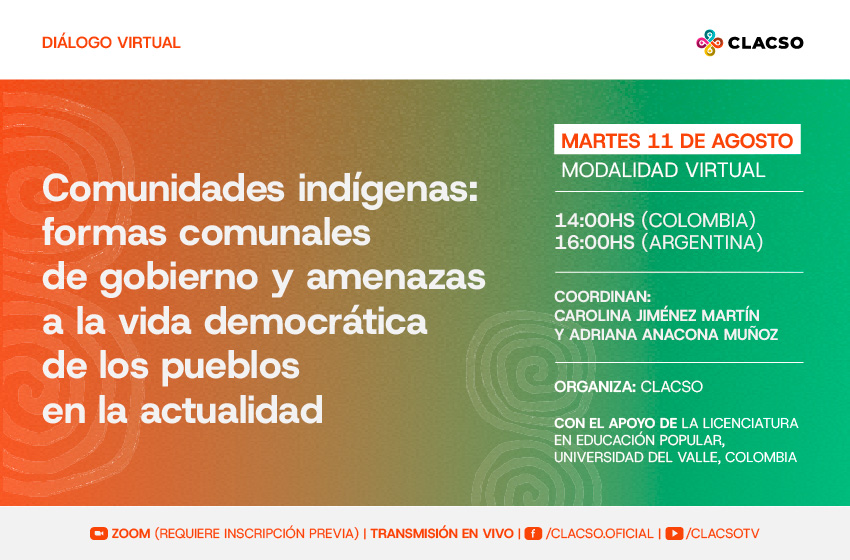
CLACSO, with the support of the Bachelor's Degree in Popular Education of the University of Valle of Colombia, invites the virtual dialogue "Indigenous communities: communal forms of government and threats to the democratic life of the peoples today" on Tuesday, August 11, starting at 14 p.m. Colombia time – 16 p.m. Argentina time.
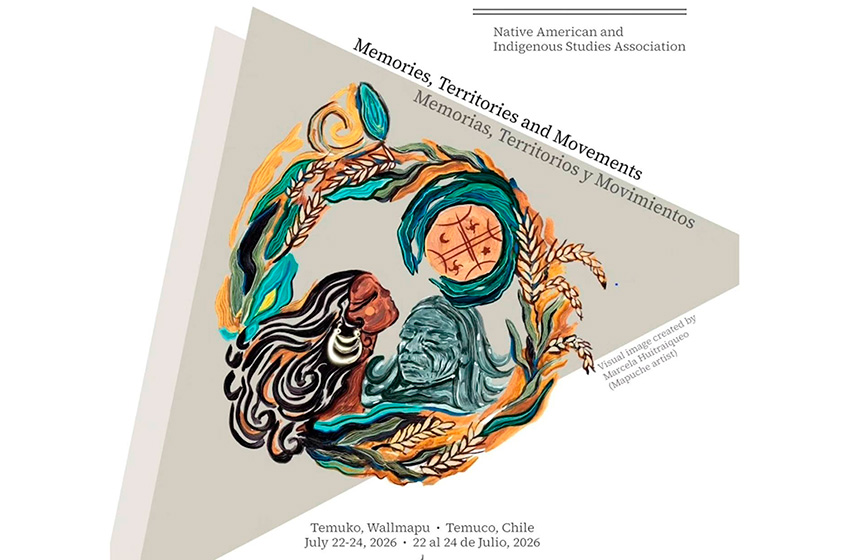
Memories, Territories and Movements
Between July 22 and 24, the city of Temuco (Chile) hosted the seventeenth edition of the Annual Congress of the Native American and Indigenous Studies Association (NAISA), a cutting-edge scientific and social meeting that took place in Latin America for the first time in its history.
Through the Working Group “Indigenous Peoples: Epistemic-Territorial Dialogues and Disputes”", he Latin American Council of Social Sciences participated in the Congress as part of IDRC Indigenous Project that he shares with him International Development Research Centre of Canada.
-Indigenous peoples, epistemic justice and new ways of producing knowledge
Within the framework of the International Congress of the Latin American Studies Association (LASA 2026), held in Paris, France, CLACSO and IDRC (International Development Research Centre) organized the panel “Rethinking other epistemologies and research co-productions in the face of the challenges of the systemic crisis”, an activity developed within the framework of the IDRC INDIGENA project: “Weaving an Indigenous research ecosystem: towards new academic relationships with Indigenous and Afro-descendant Peoples based on epistemic justice and equity in Abya Yala”.
-Indigenous peoples: epistemic-territorial dialogues and disputes
The CLACSO Working Group on Indigenous Peoples: Epistemic-Territorial Dialogues and Disputes (PI-DDET) is a continuation of two previous working groups on Indigenous peoples. We have now strengthened and expanded this collective space with the participation of researchers from the following Indigenous nations: Miskito, Embera, Bribri, Diaguita, Maya K'iche', Lickanantay, Aymara, and Tupinambá.
-Working Group “Indigenous Peoples, Autonomies and Collective Rights”
The open course "Training and Advocacy School with Indigenous Women on the Climate Crisis" aims to strengthen the leadership of Indigenous women in Latin America/Abya Yala in the face of the climate crisis. Developed by the National Coordinating Body of Indigenous Women (CONAMUPOURI) in collaboration with Wechekeche ka itrofilmongen (WKI) and the Center for Intercultural and Indigenous Studies (CIIR), it consists of four training sessions that address the climate crisis from the perspective of Indigenous knowledge and the organizational trajectories of Indigenous women.
-Open Chair of the National Indigenous Peasant Movement -We Are Land (MNCI-ST)
This open lecture series is the product of the militant efforts of the Argentine peasant movement and the tireless work of CLACSO to foster a genuine dialogue of knowledge and to recover the voices of the disputed territories in our region, particularly in Argentina, within the framework of an international struggle for peasant rights. It consists of four modules that aim to provide a theoretical and political overview of the state of peasant struggles in Argentina and Latin America. The objectives of this forum are related to understanding the enduring relevance of the agrarian question and the defense of land from the perspective of Indigenous and Latin American peasant communities, based on the empirical study of Peasant Rights. Throughout these sessions, discussions are held from the ground up, addressing issues such as the right to land and water, the right to production, food sovereignty, agroecology, and the right to education in rural areas.
The Open Lecture Series: Commodification and Struggles for Water in Latin America, in a Context of Climate Crisis, is proposed by MODATIMA, the Movement for the Defense of Access to Water, Land, and Environmental Protection, with over 15 years of experience in the territorial struggle for the decommodification of water in Chile. From a historical and territorial perspective, this lecture series seeks to understand how water has been transformed into a market commodity and what the main social, community, and political struggles have been for its defense and recovery, as well as the challenges faced by social organizations in Latin America. Therefore, through this forum, a process of training and critical reflection is proposed regarding the commodification and privatization of water in Latin America, within the current context of climate crisis and the expansion of extractive industries.
-Open access books
-Indigenous peoples of Abya Yala in defense of their autonomies
-Disability in the indigenous and native peoples of Abya Yala
-Resistance and struggles from indigenous peoples and diversities #clacso2025
-Bolivia in uprising: territorial defense, ancestral memory and community struggle

