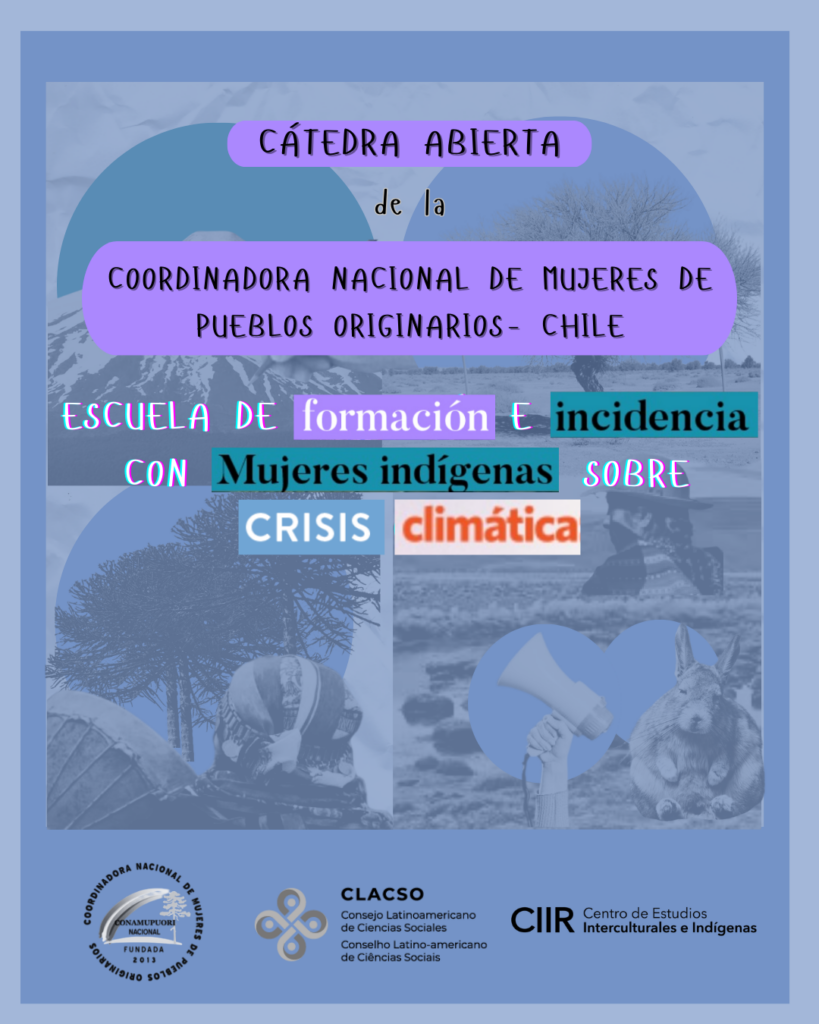
Open Chair of the National Coordinating Body of Indigenous Women – Chile: Training and advocacy school with indigenous women on the climate crisis
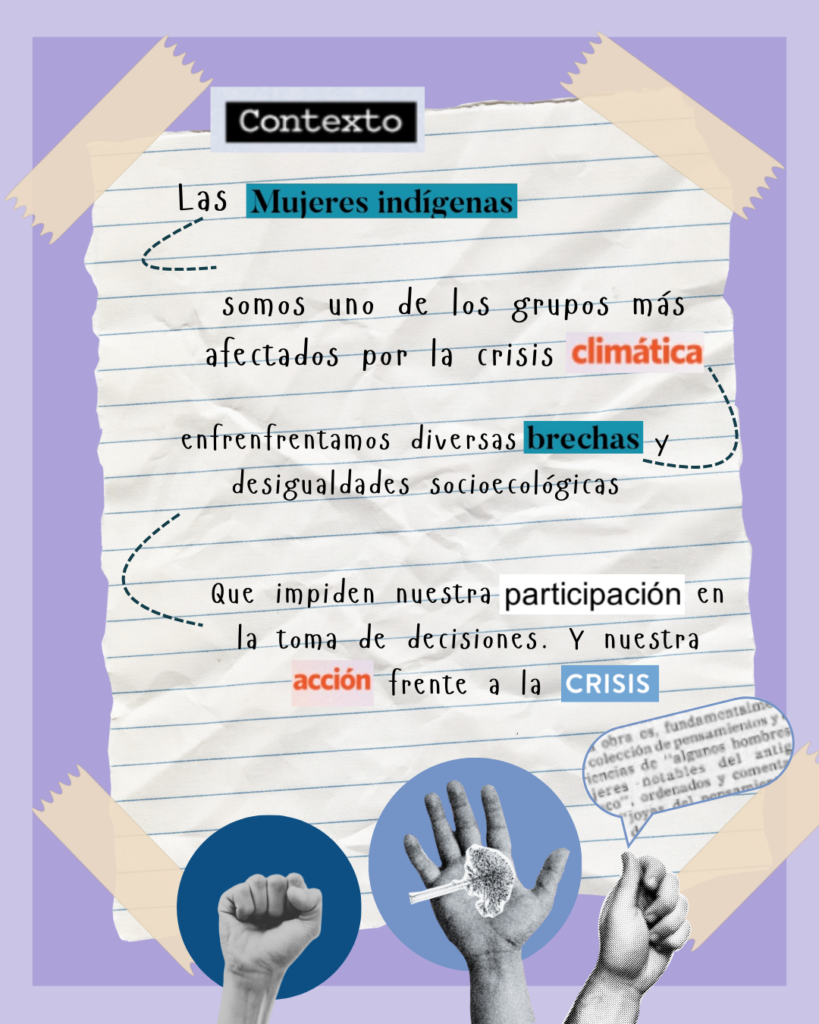
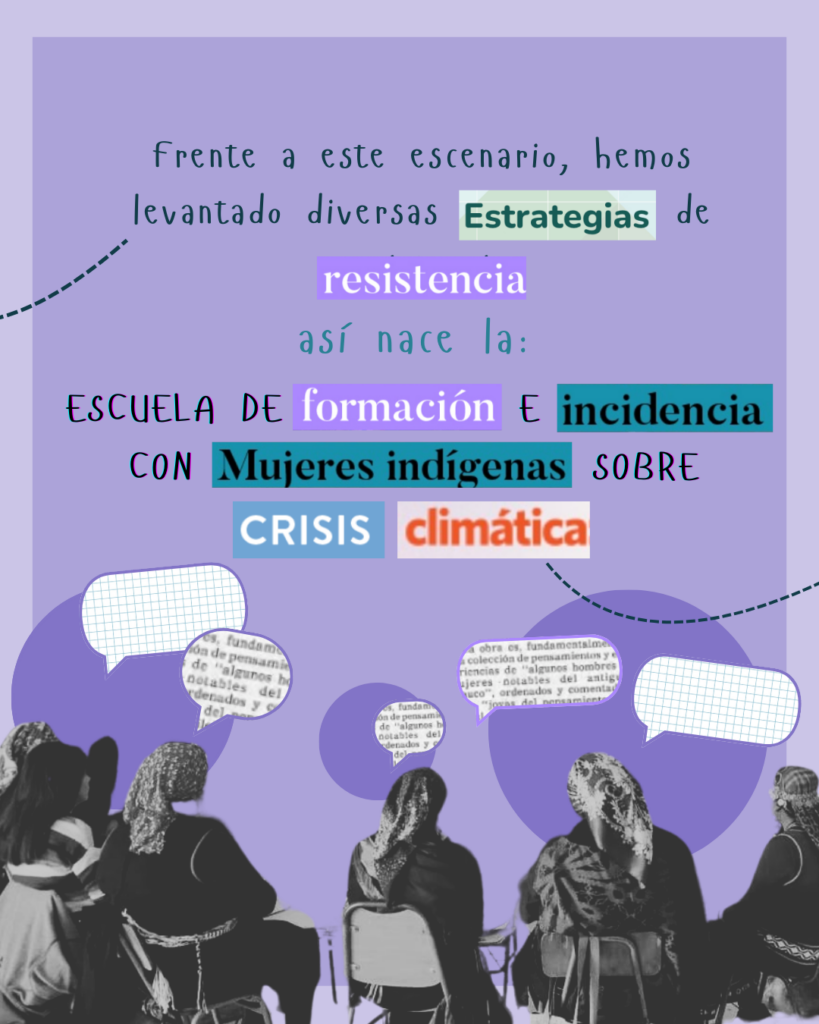
The open course "Training and Advocacy School with Indigenous Women on the Climate Crisis" aims to strengthen the leadership of Indigenous women in Latin America/Abya Yala in the face of the climate crisis. Developed by the National Coordinating Body of Indigenous Women (CONAMUPOURI) in collaboration with Wechekeche ka itrofilmongen (WKI) and the Center for Intercultural and Indigenous Studies (CIIR) , it consists of four training sessions that address the climate crisis from the perspective of Indigenous knowledge and the organizational trajectories of Indigenous women.
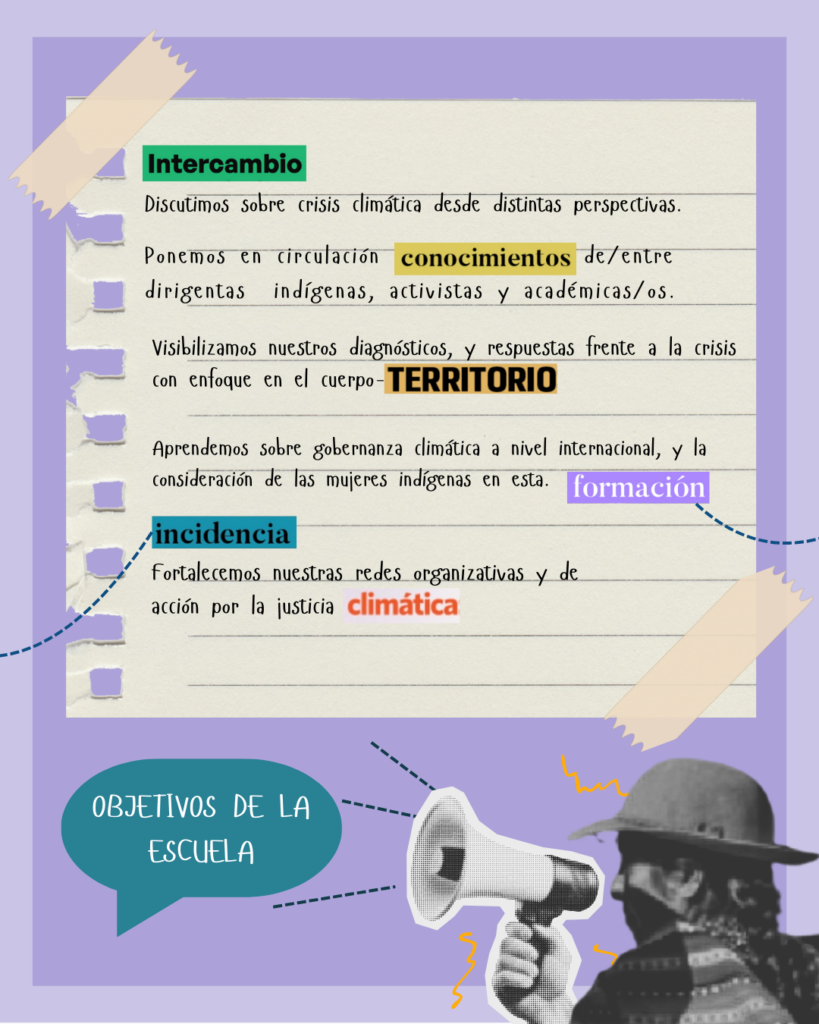
This School seeks to center the bodies and territories of Indigenous women, accompanied by practical work that promotes the exchange of experiences and collaborative learning. Its aim is to reclaim their own interpretations and their central role in generating relevant responses to the climate crisis from their territories, strengthening their capacity to influence various decision-making spaces. The four open lectures are led by representatives of CONAMUPOUORI and include presentations by Indigenous experts, as well as interviews about territorial experiences in Chile related to the climate crisis, their interpretations, and approaches.
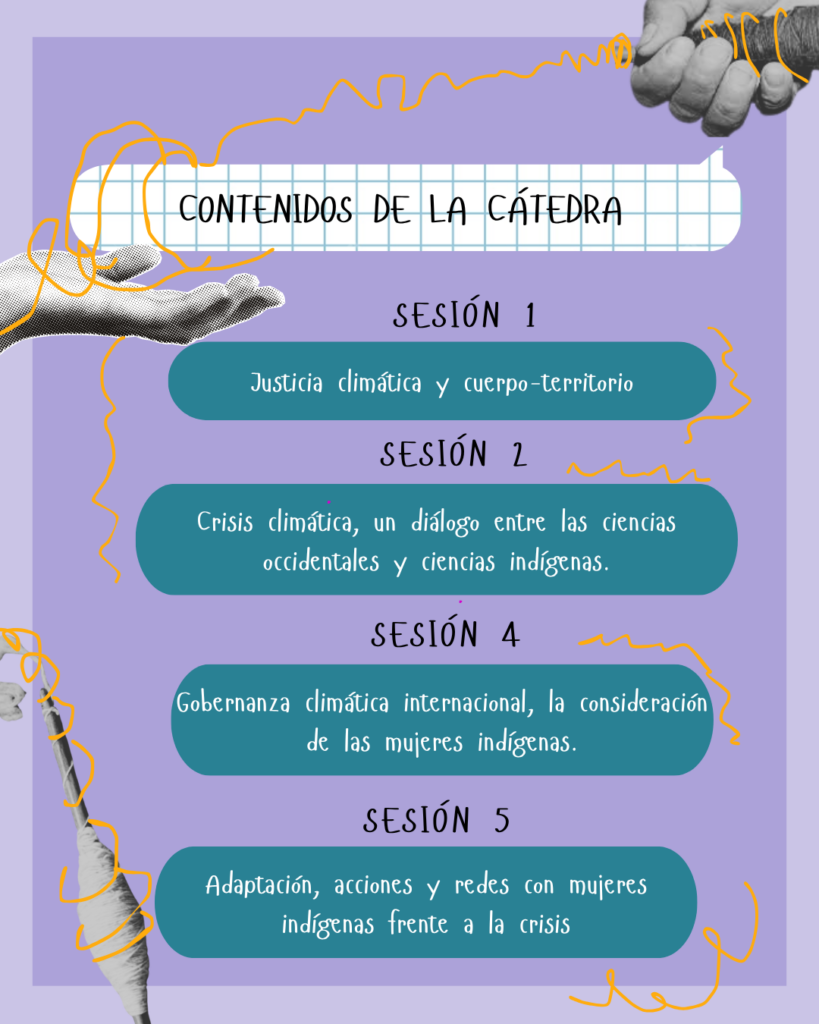
Session 1 – Climate justice and body-territory
This session analyzes the climate crisis from the perspective of its impact on the bodies and territories of Indigenous women. Using notions of ecological justice, it examines the imbalances between humans and nature, delving into how Indigenous women interpret and resist this problem.
How does the climate crisis affect us? We invite you to create a collective diagnosis based on your own experiences:
Suggested Reading:
- Guide 1
- Body-Territory Mapping (2017)
Session 2 – Climate Crisis, a dialogue between Western and Indigenous Sciences
This session integrates concepts from modern environmental science and Indigenous knowledge to understand the climate crisis. Its aim is to promote a dialogue between different forms of knowledge and to establish Indigenous knowledge as a valid science for understanding and responding to climate change.
How do we understand the climate crisis, its causes, and its consequences? We invite you to delve into a collective diagnosis based on our own experiences, knowledge, and projections:
Suggested Reading:
Session 3 – International Climate Governance: Considering Indigenous Women
This session aims to strengthen knowledge of climate governance based on the lived experiences of Indigenous women, in order to identify potential avenues for promoting their participation in decision-making spaces.
Who do we engage with to respond to the climate crisis? We invite you to create a collaborative sociogram to identify key stakeholders and develop action strategies:
Suggested Reading:
- Guide 3
- Indigenous women and climate action: recommendations for risk reduction (2022)
- Recognition of indigenous peoples in nationally determined contributions (NDCs) (2022)
- Indigenous Women's Network on Biodiversity
Session 4 – Adaptation, actions and networks with indigenous women in the face of the crisis
This session presents diverse experiences of action, adaptation, and organization in response to the climate crisis, developed by Indigenous women in Chile. Its aim is to promote the creation of a registry to highlight these actions and build collaborative networks in the region.
How do we resist and take action in the face of the climate crisis? We invite you to map our actions, strategies, and experiences in a collective mapping exercise:
https://padlet.com/vizcachandina/acciones-frente-a-la-crisis-clim-tica-382f7is1usgdix3r
Suggested Reading:
- Guide 4
- From School to Action: Strategies of indigenous and Afro-descendant women to face the climate crisis. (2025)
- Mapping Manual (2013)
- Body-territory cartography
Diffusion kit