
Indigenous peoples, epistemic justice, and new ways of producing knowledge
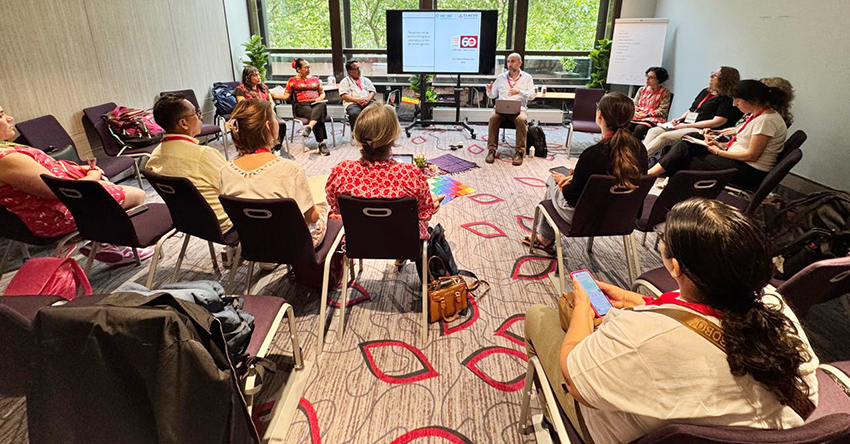
Within the framework of the International Congress of Latin American Studies Association (LASA 2026), held in Paris, France, CLACSO e IDRC (International Development Research Centre) organized the panel “Rethinking other epistemologies and research co-productions in the face of the challenges of the systemic crisis”, an activity developed within the framework of the project IDRC INDIGENA: “Weaving an Indigenous Research Ecosystem: Towards new academic relationships with Indigenous and Afro-descendant Peoples based on epistemic justice and equity in Abya Yala”.
The event brought together researchers and indigenous leaders from various countries in Latin America and the Caribbean to share progress, findings and challenges of a regional research project that seeks to transform the relationships between academia and indigenous peoples based on principles of epistemic justice, intercultural dialogue and recognition of the diverse forms of knowledge production.
The panel featured presentations by Taira Edilma Stanley Icaza, from the Institute of National Studies of the University of Panama and a member of the Guna people; Laura Priscila Tercero Cruz, from the Mexican Institute of Water Technology; and Beloved of Jesus Ramos Prieto, from the Indigenous Council Los Pasos del Jaguar of El Salvador. The moderation was handled by Illa Carrillo Rodríguez.
At the opening of the panel, Illa Carrillo Rodríguez She highlighted the importance of moving towards research models that overcome extractive practices and allow the construction of knowledge co-production processes based on epistemic justice and equity, one of the central objectives of the project promoted by CLACSO and IDRC.
During the opening, Pablo VommaroThe Executive Director of CLACSO emphasized the importance of promoting inclusive, collaborative science committed to epistemic, gender, racial, territorial, and climate justice. In this regard, he maintained that the current challenge lies in building spaces for recognition, listening, and legitimization of knowledge that has been historically invisible or marginalized.
She also emphasized the need to promote multilingualism in scientific and academic production, recognizing that Indigenous languages are also languages of knowledge and science. “It’s not about giving a voice to those who don’t have one; the voice is there. The problem is that we often fail to create the spaces to listen to it,” she noted.
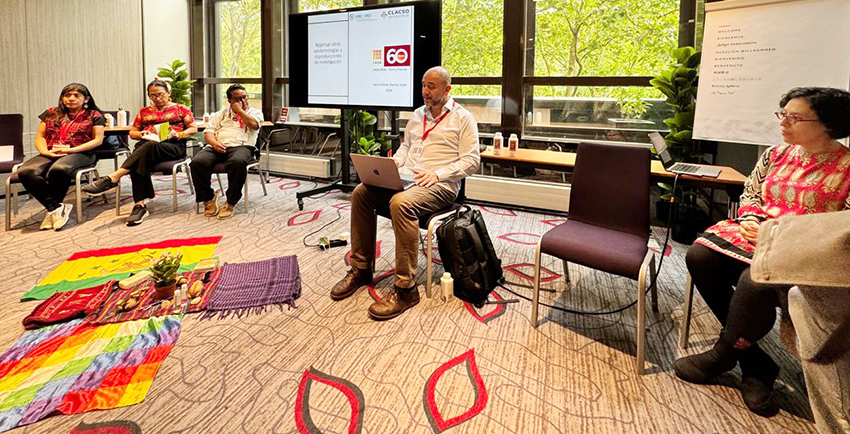
The presentations offered insights into the research process developed in eight countries of the region, through collaborative work between Indigenous organizations, community authorities, intercultural universities, and Indigenous and non-Indigenous researchers. One of the main themes addressed was the need to question the extractive practices that still persist in many academic research processes.
From Panama, Taira Edilma Stanley Icaza She shared her experience with the project and explained that one of the most significant findings was the existence of tensions between conventional academic protocols and the protocols of Indigenous communities. The researcher emphasized the importance of recognizing that these communities have norms, procedures, and methods for validating knowledge that must be respected by those conducting research in their territories.
In her remarks, she also emphasized that Indigenous peoples are not merely objects of study, but rather producers of knowledge with their own methodologies, epistemologies, and conceptual frameworks. In this regard, she noted that current discussions on science and knowledge present an opportunity to highlight and strengthen these contributions from an intercultural perspective.
For its part, Laura Priscila Tercero Cruz She presented some of the main results obtained in the various participating countries. Among them, she mentioned the existing tensions between regulatory frameworks that recognize cultural diversity and academic practices that continue to reproduce forms of epistemic racism and the extractivism of knowledge.
She also highlighted the importance of strengthening the recognition of indigenous researchers as legitimate producers of knowledge, promoting the development of indigenous and intercultural universities, and generating public policies that favor the production of their own educational materials, linguistic strengthening, and the incorporation of community knowledge in different fields of knowledge.
From El Salvador, Beloved of Jesus Ramos Prieto She addressed research methodologies from the perspective of Mother Earth pedagogies and ancestral knowledge. Drawing on the experiences of the region's indigenous peoples, she explained how knowledge is constructed through observation, dialogue, collective memory, the connection with nature, and community learning.
Ramos Prieto She highlighted the importance of practices such as the dialogue circle, respect for territories, consultation with community authorities, and the participation of elders in research processes. She also raised the need to move toward greater influence in academic and political spaces so that research agendas respond to the needs and priorities of communities.
Throughout the exchange with the public, reflections arose on the relationship between indigenous knowledge and traditional forms of academic validation, the challenges of avoiding the commodification of ancestral knowledge, the importance of returning the results to the communities, and the need to build more horizontal dialogues between different traditions of knowledge.
The interventions all pointed out that there are forms of knowledge, practices, and memories that cannot be reduced to external categories or understood solely through Western logics of scientific production. In response, the participants emphasized the importance of creating spaces for dialogue that recognize epistemological pluralism and promote fairer and more collaborative forms of research.
The activity concluded with a collective closing inspired by the community practices of the participating indigenous peoples, reaffirming the commitment to continue strengthening research networks, dialogue and cooperation between communities, organizations and academic institutions.
With this initiative, CLACSO and IDRC continue to promote processes aimed at building more equitable relationships, promoting epistemic justice, the recognition of the diversity of knowledge and the collective production of knowledge in the face of the challenges of the contemporary systemic crisis.

