
Armed forces outside the Chilean Constitution
Pelao Carvallo*
People don't get the constitutions they deserve, but rather those imposed upon them, and they are lucky if they have any influence on them during the drafting process. They primarily modify them through the healthy exercise of direct action and social struggle. Evidence of this is the number of constitutional reforms made to the unreformable Pinochet-era Chilean constitution of 1980 since the beginning of the Chilean revolutionary process in October 2019.[1]including a reform that would allow for a new constitution.
The wealthy, dominant classes that oppress the people possess, above all, resilience and reinvention: they are capable of reversing, modifying, and adapting processes of change to their advantage, since they ensure they have the know-how to run states and gradually transform state apparatuses into aristocratic family fiefdoms. Piñera's first cabinet (and the second and third, etc.) demonstrated this; it was all a matter of cousins and relatives.
The Izurieta case[2] It shows that it is no different in military matters; the Chilean armed forces are an aristocratic oligarchic enclave for the benefit of the "military family," an interrelated clan of three or four surnames that have historically taken control of the military business.[3] through a system of privileges transformed into curriculum and methodology.
The people who make up Chile have also resisted and modified Chile's military constitution (both written and unwritten). Since the early 1990s, resistance, desertion, and conscientious objection have been prevalent.[4] They came to question the military's privilege to kill and disappear with impunity.[5] to the people, especially the conscripts.
The social uprising that began in Chile in October 2019 was also an anti-militarist, civil disobedience, and conscientious objection movement. The institution of mandatory military service effectively disappeared in November 2019.[6] until the beginning of 2021. Young people refused to be part of the militarized repression and in the streets this became part of the social mobilization[7] Chilean.
It is the task of the Chilean constituent assembly to ratify these demilitarizing, anti-oligarchic, and anti-aristocratic social demands. The constitution must recognize and ratify the antimilitarist impulse of the Chilean revolutionary process, which began with the October 2019 uprising. To this end, it must, at a minimum, abolish mandatory military service in its articles, and clearly incorporate the right to conscientious objection as a mechanism to guarantee public servants, uniformed or not, the right to refuse orders from authorities that result in human rights violations against individuals or groups.[8]Furthermore, as a measure of social reparation for all victims of human rights violations by the military apparatus (before, during, and after the Pinochet dictatorship), the armed forces should not be mentioned in the articles of the constitution. It is sufficient to name the need for the defense of all the territories, ecosystems, people, and communities that make up what is called Chile. This need for defense should not be equated with the armed forces, nor with military defense, but rather focused on the preservation and promotion of human, environmental, socioeconomic, and cultural rights. These should be defended with appropriate means, methodologies, techniques, and tools ultimately aimed at preserving life and fostering positive and cooperative relationships, not at death and the competition of fear that characterizes the current strategies of “deterrence.”
The oligarchic and aristocratic armed forces currently existing in Chile defend nothing more than their own survival and dominance, weaving networks of family and clientelism.[9] Historically, increasing its intervention in civil public affairs with the approval and complicity of militaristic governments like Piñera's, as shown by the militarization of Wallmapu[10] and from the northern border[11]These networks attempt to infiltrate the constitution currently under discussion and, from within the constitution, maintain that oligarchic, violent, and coup-plotting tool that is the self-proclaimed "armed and law enforcement forces."
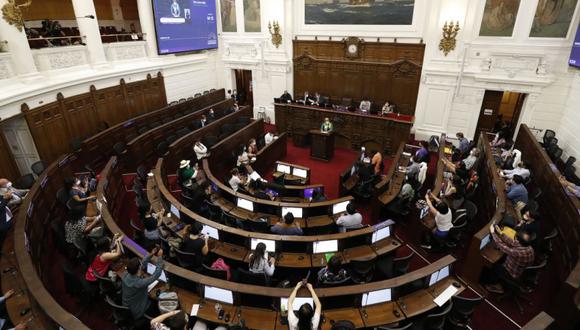
Out of a sense of duty to redress the injustices suffered by the people of Chile under the racist, cultural, and violent militarism that sustains and enriches a small group of families in Chile, the current constituent assembly must demilitarize the constitution it is drafting. This would be a recognition of what these people have been doing for decades—for all of Chilean history, in fact.
*Member of the CLACSO Working Group on Collective Memories and Practices of Resistance
[1] https://www.clacso.org/la-influencia-anarquista-en-constituyente-en-chile-analisis-con-ojos-acratas/ y https://radio.uchile.cl/2019/12/30/chile-vive-una-revolucion-a-la-francesa/
[2] https://www.elmostrador.cl/noticias/pais/2022/02/18/fraude-en-el-ejercito-fiscalia-metropolitana-oriente-acepta-renuncia-de-yerno-de-general-r-izurieta-tras-verse-involucrado-en-la-investigacion-en-su-contra/
[3] https://twitter.com/JPDIAZPINO/status/1494872302382731268
[4] https://wri-irg.org/es/articulo/2017/ni-casco-ni-uniforme-20-anos-1997-2017
[5] Cases such as Pedro Soto Tapia, Antuco, among others.
[6] https://www.clacso.org/la-revuelta-social-contra-el-servicio-militar/
[7] https://ramalc.org/sacamos-a-los-milicos-de-la-plaza/
[8] https://www.clacso.org/chile-lo-que-hacen-los-pueblos/
[9] https://www.youtube.com/watch?v=Xdi72EsN36A
[10] https://interferencia.cl/articulos/pinera-decreta-militarizacion-en-wallmapu-en-intento-por-apuntalar-los-presidenciables-de
[11] https://www.dw.com/es/chile-militariza-cuatro-provincias-por-crisis-migratoria-en-el-norte/a-60759544
If you would like to receive more information about CLACSO's training programs:
[widget id=”custom_html-57″]
to our email lists.

