
World Refugee Day
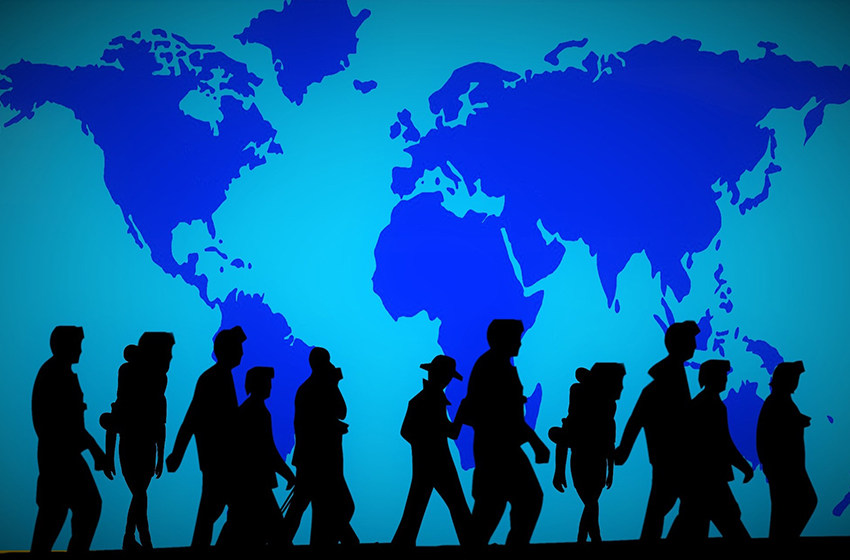
In 2001, the United Nations General Assembly set June 20 as “World Refugee Day"as an expression of solidarity, awareness and responsibility towards displaced persons."
Refugees are people who flee conflict and persecution. Their status and protection are defined by international law, and they must not be expelled or returned to situations where their lives and freedoms are at risk. This category also includes internally displaced persons (IDPs), those who flee their homes for reasons similar to those that motivate refugees to flee, but who do not cross an international border.
Refugees in Latin America are no longer solely a response to traditional dictatorships or open wars of the past, but also to new and interconnected realities: widespread violence, the impact of climate change, and necropower (forces that make life so precarious that they force mass displacement). In response, the region's states must uphold the principle of non-refoulement and make legal regularization mechanisms more flexible.
Since its inception, the Latin American Council of Social Sciences It addresses the issue of refugees from an academic, political and human rights perspective, focusing on the reality of Latin America and the Caribbean, and dedicates one of its Platforms for Social Dialogue to it: Migration and human mobility: rights, displacement and disputed policies.
CLACSO's activities focus on policy advocacy, applied research, and academic protection. They include:
1. Research and Public Advocacy Funding: CLACSO launches specific research calls to improve public policies on asylum. The ultimate goal of this research is not only theoretical analysis, but also the delivery of Action Guidelines Documents (AGs) that serve as direct input for governments and social organizations to improve their asylum protocols.
CLACSO also participates as a coordinating node in large research consortia funded by international funds, such as the INCASI2 project (International Network for Comparative Analysis of Social Inequalities). Through these structures, the following are promoted:
Research stays and academic mobility: Exchanges between researchers from Latin America and Europe to compare asylum regulatory frameworks and the dynamics of socioeconomic inequalities affecting displaced populations.
Methodological co-design spaces: Workshops and seminars to standardize data collection on migration flows and refuge in complex border contexts.
2. Working Group «Migration and South-South borders"This working group studies migration corridors, refugees in the region, and the specific situation of vulnerable groups (such as migrant children and youth, or the LGBTQ+ community in refugee situations). This group develops its assessments directly with grassroots organizations and refugee groups in the area."
3. Postgraduate and Training Network: The virtual platform CLACSO ClassroomIt contains courses, seminars, and specializations focused on human mobility, environmental/climate refugees, and the criminalization of protest leading to exile. This helps train policymakers and activists with a rigorous human rights approach.
CLACSO ACTIONS AND PRODUCTIONS
Masterful dialogue at #CLACSO2025: Human displacements from a Latin American and Caribbean perspective
Speakers: Gioconda Herrera | Mauricio Jaramillo | Rebeca Peralta Mariñelarena | Silvia Elena Giorguli Saucedo. Moderated by Handerson Joseph
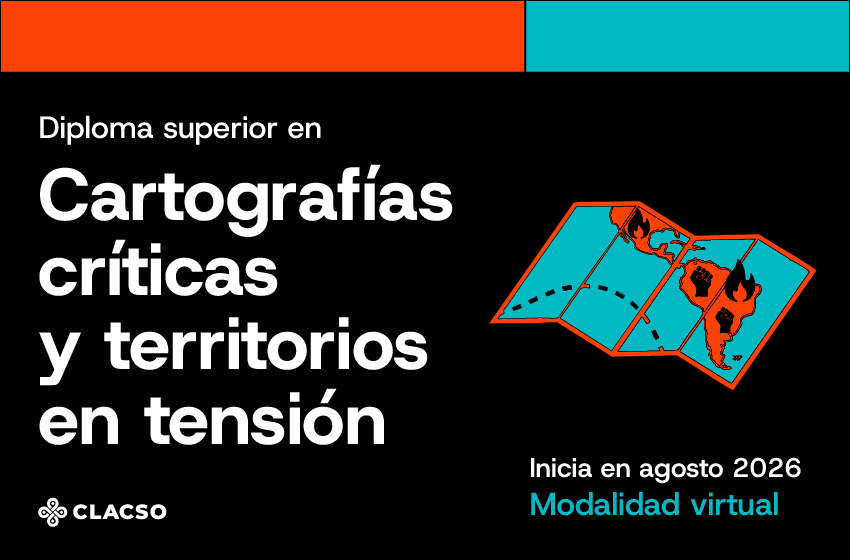
Advanced Diploma in Critical Cartographies and Territories in Tension
Academic coordination: Rolando Durán Cavieres (Cartographies of Memory Collective, Chile) and Jorge Leal (Department of Social Sciences of the Northern Coastal Regional University Center of the University of the Republic, Uruguay)
Start date: 19/08/2026 – Register now with a discount until July 07th
South-South migration movements: Borders, trajectories, and inequalities
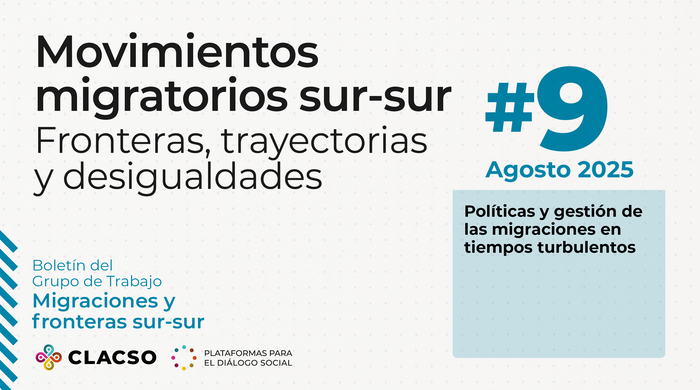
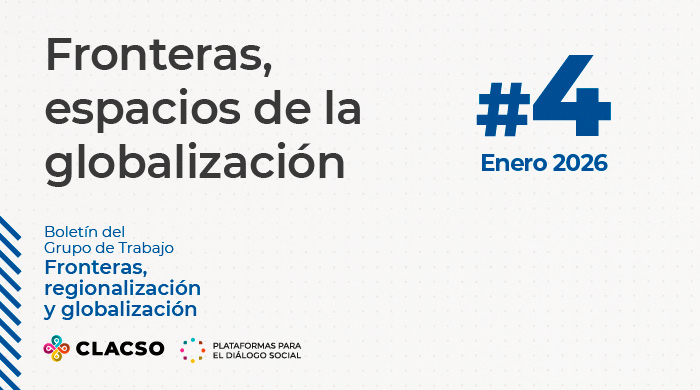
Bulletin #4 Borders, spaces of globalization
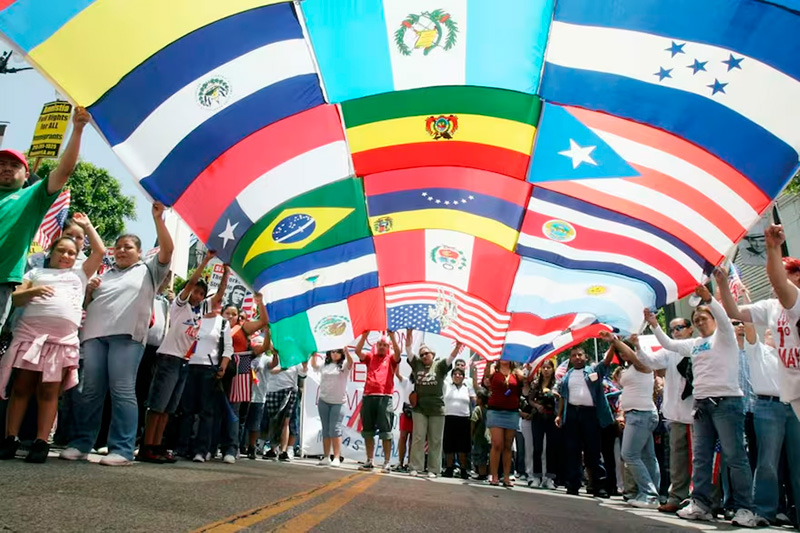
International Day of Personss Migrants 2025
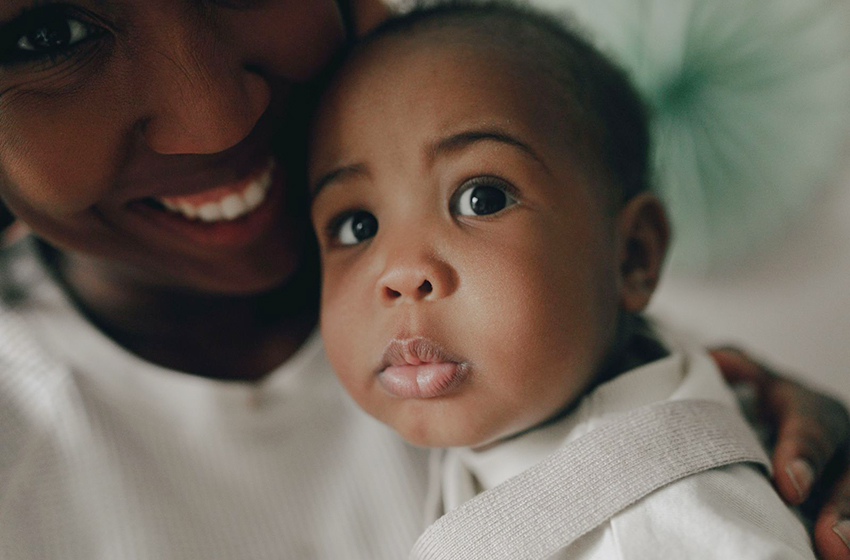
Serious impacts on the right to health in the Dominican Republic
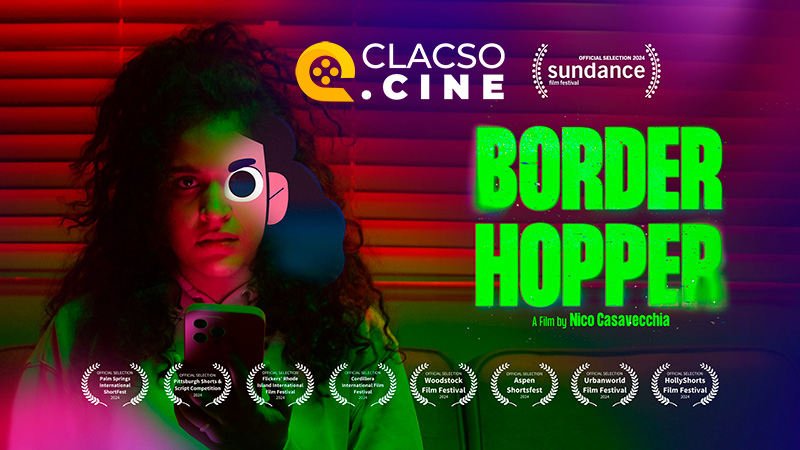
“Border Hopper” at CLACSO.CINE
Director Nico Casavecchia says: “In 1999, I was 19 years old and left Buenos Aires for a three-month internship in Europe. A few weeks before my return, the Argentine economy collapsed. Suddenly, I had no country to go back to. I decided to stay and make a life for myself in Barcelona, but my visa soon expired and I became an 'illegal immigrant.' It took me three years and countless hours filling out forms, standing in lines, and accepting rejection with a smile to become 'legal' in Europe.”
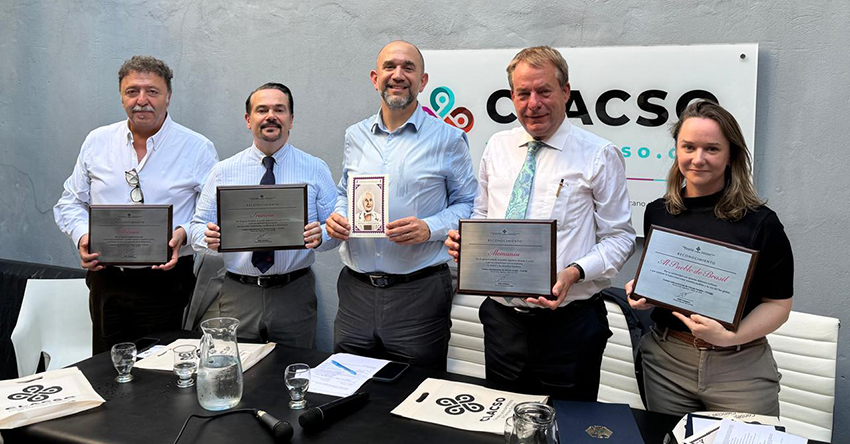
-Memory and solidarity in CLACSO
Presentation of recognition to countries and peoples that welcomed refugees from Argentina, 50 years after the civic-military coup of March 24, 1976.

