
CLACSO at the IV CELAC-European Union Summit
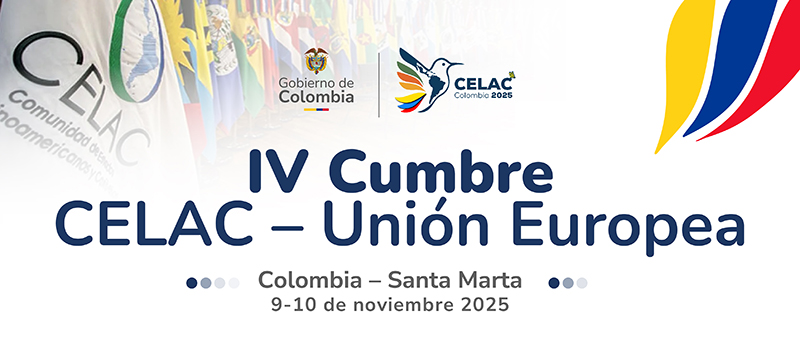
The 4th CELAC-EU Summit, held in Santa Marta, Colombia, on November 9 and 10, 2025, brought together the heads of state or government of the 33 countries of the Community of Latin American and Caribbean States (CELAC) and the 27 member states of the European Union (EU), as well as the presidents of the European Council and the European Commission. The meeting reviewed the progress made and explored new opportunities in the bi-regional strategic partnership.
Prior to the Summit, two parallel events were held: the LAC-EU Civil Society Forum 2025 and the Meeting of Cultures, Arts and Knowledge: the moral duty to imagine a future – Manifestos from Colombia.
In that framework, CLACSO He was not only present at the IV Summit and the preceding events, but he also participated in various preparatory activities:
-On July 10 and 11, 2025, in Mexico City, Pablo VommaroThe Executive Director of CLACSO participated in two plenary sessions of the “III CELAC-EU Academic and Knowledge Summit – Consolidating the Common Space of Higher Education, Science, Technology and Innovation”.
-CELAC Ministerial and High Authorities Meeting on Higher Education, a space organized on October 16 and 17, 2025 by CELAC and the Ministry of Higher Education of Colombia, where Gloria Amézquita Puntiel, Academic Director of CLACSO, joined as a speaker the inaugural panel on the relevance of reflecting on the “Shared Horizons: higher education facing the great challenges of Latin America and the Caribbean”.
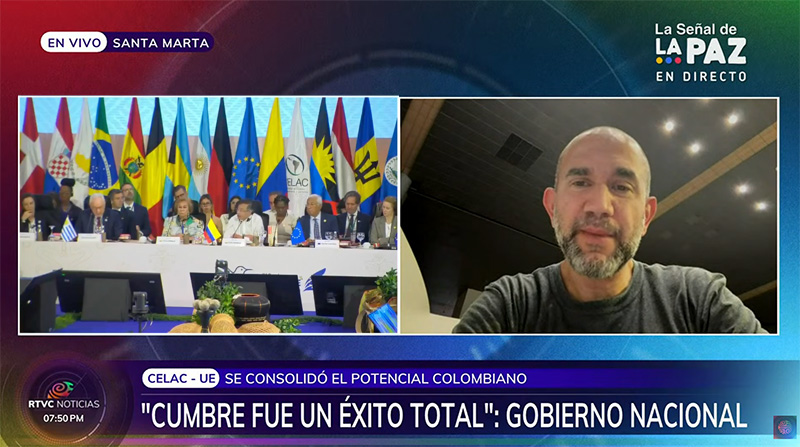
“Putting the Mercosur-EU treaty on the table is a strategic action”
Pablo Vommaro on Colombian public television
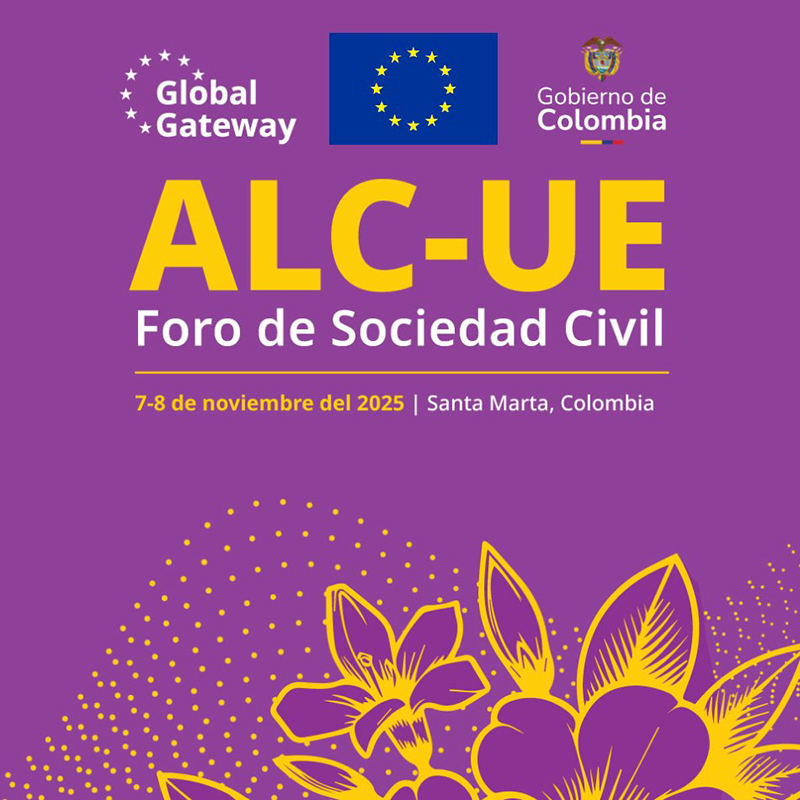
-Civil Society Forum LAC-EU 2025 – November 7 and 8
CLACSO participated in this Forum, which brought together civil society organizations from Latin America and the Caribbean and the European Union, who contributed perspectives and proposals to the broader bi-regional agenda. Building on the “EU-Latin America and the Caribbean Forum: Partners in Change,” held in 2023, the EU-LAC Civil Society Forum aimed to foster meaningful participation from youth, women's, and indigenous organizations, social actors, and institutional representatives, helping to strengthen a partnership that extends beyond the event itself.
The Civil Society Forum was co-organized by the Government of Colombia and the European Union, in close collaboration with civil society organizations, with technical support from the EU-funded Policy Forum for Development (PFD).
-Encounter of Cultures, Arts and Knowledge: the moral duty to imagine a future – Manifestos from Colombia – November 7-9
This space was conceived as an act of artistic, ethical, and poetic resistance against the global challenges of our time: war, displacement, climate change, and inequality. Fifty artists, intellectuals, academics, and experts from diverse backgrounds gathered to launch a series of written, filmed, and live manifestos on various stages set up in Santa Marta, with the aim of engaging and inciting global and intercultural reflection on the multifaceted crisis facing humanity.
Organized by the Ministry of Cultures, Arts, and Knowledge, the Gathering sought to create symbols and acts of resistance against the voraciousness of capitalism, genocide, ecocide, and the rise of fascism. For four days, participants met in Pueblito, near the Sierra Nevada de Santa Marta, on the Caribbean coast, to share in the circle of words, “The Declaration of the Elders: The Power of the Word in the Face of Barbarity,” alongside Indigenous, peasant, Afro-Colombian, and urban leaders from across Colombia.
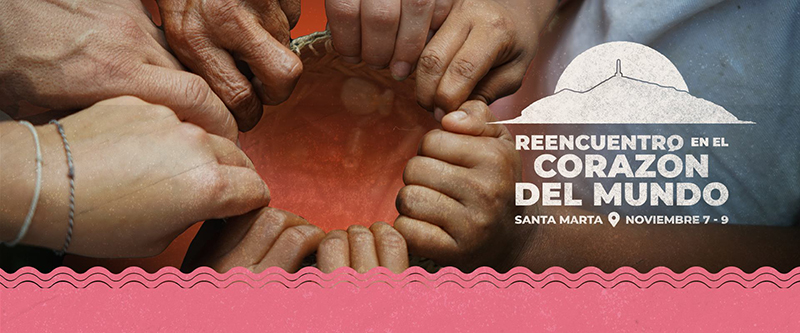
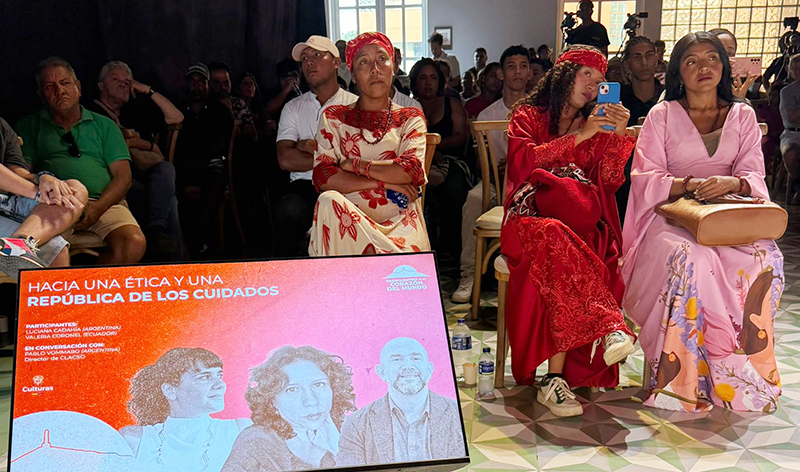
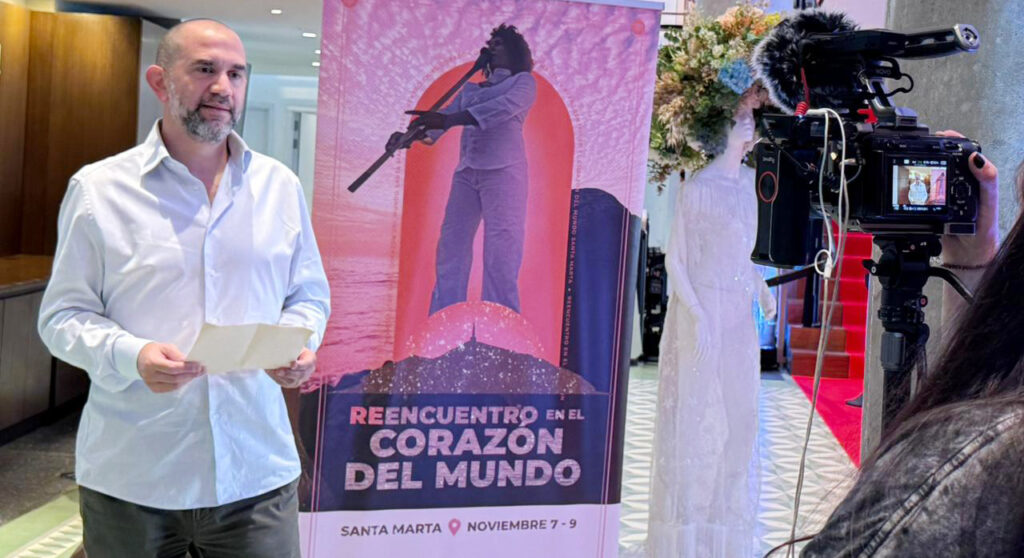
Within the framework of the Meeting of Cultures, Arts and Knowledge, the “Reunion in the Heart of the World" where Pablo Vommaro participated in a conversation with Luciana Cadahia (Argentina) and Valeria Coronel (Ecuador) entitled "Towards an ethics and a republic of care", on Friday, November 7, at the Alterna Theater Santa Marta.
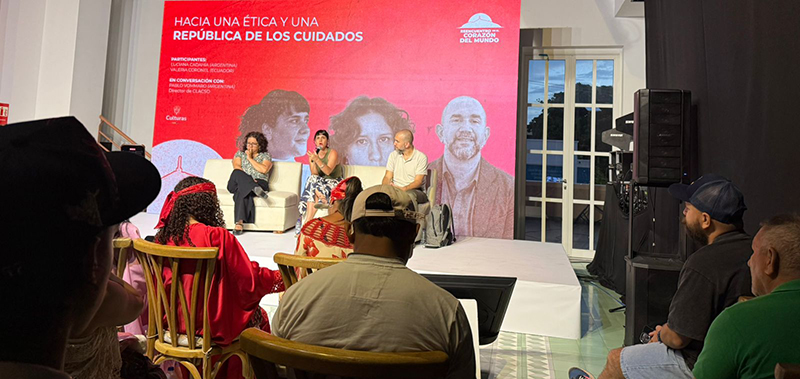
There, more than 200 artists, cultural experts, and communities shared their expressions at various locations throughout Santa Marta. Concerts, exhibitions, dialogues, and commemorative events were part of the Ministry of Arts, Cultures, and Knowledge's efforts to democratize access to culture in the city.
The initiative reaffirmed the role of cultures as a tool for social transformation and encounter between peoples, at a time when culture is consolidating itself as a fundamental axis of development and peace.
-IV CELAC-EU Summit – November 9 and 10
Two years after their third summit, the leaders of the 27 member states of the European Union (EU) and the 33 countries of the Community of Latin American and Caribbean States (CELAC) will meet in Santa Marta, Colombia, for the fourth CELAC-EU summit. The summit will be co-chaired by the President of Colombia, Gustavo Petro, in his capacity as pro tempore president of CELAC, and the president of the European Council, António CostaThe EU will also be represented by the President of the European Commission, Ursula von der Leyen.
Building on the momentum of the 2023 EU-CELAC summit, held in July 2023, which committed to holding summits every two years, this meeting aims to further strengthen cooperation on global challenges such as global governance, international security, and climate change. New avenues for collaboration to promote peace, security, and prosperity in both regions will also be explored, and priorities such as trade and investment, the green and digital transitions, and joint efforts to combat organized crime, corruption, drug trafficking, and human trafficking will be discussed.
With over one billion people, CELAC and the EU together represent 14% of the world's population, and their member states account for 21% of global GDP and one-third of the United Nations membership. The EU's relations with Latin America and the Caribbean as a strategic partnership date back to 1999, the year the first EU-LAC bi-regional summit was held in Rio de Janeiro. Since the creation of CELAC in 2010, three EU-CELAC summits have been held: in 2013, 2015, and 2023. CELAC constitutes the main forum for dialogue and cooperation between EU and CELAC member states, which maintain regular high-level contacts through various coordination mechanisms and bi-regional and sub-regional political and sectoral dialogues.
EU-LAC relations comprise one of the densest trade networks in the world, with total bilateral trade in goods and services reaching €395 billion in 2022-2023 (up 45% since 2013). The EU is the third largest trading partner of the Latin America and Caribbean region, while the countries of that region are the EU's fifth largest trading partner. The European Union is the leading source of investment in the region, contributing over €741 billion in foreign direct investment in 2022. The EU-LAC partnership is further supported by the Global Gateway Investment Agenda, which focuses on green and digital transition projects in Latin America and the Caribbean.
In the context of the accelerated processes of global geopolitical reconfiguration, this Summit is highly relevant to reaffirm the importance of Europe in horizontal international cooperation, prioritizing collaborative initiatives that strengthen democratic processes and the culture of peace, as well as just transitions in Latin America and the Caribbean, over militaristic budgets.
DOWNLOAD THE DECLARATIONON OF CIVIL SOCIETY
DOWNLOAD THE JOINT DECLARATION OF THE CELAC-EU SUMMIT 2025
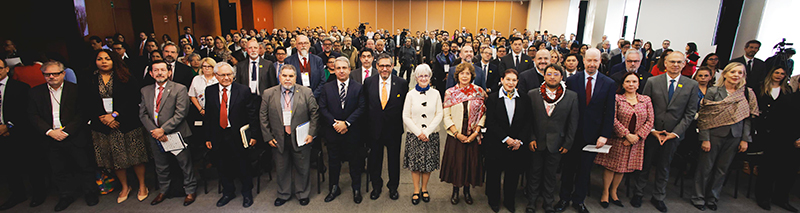
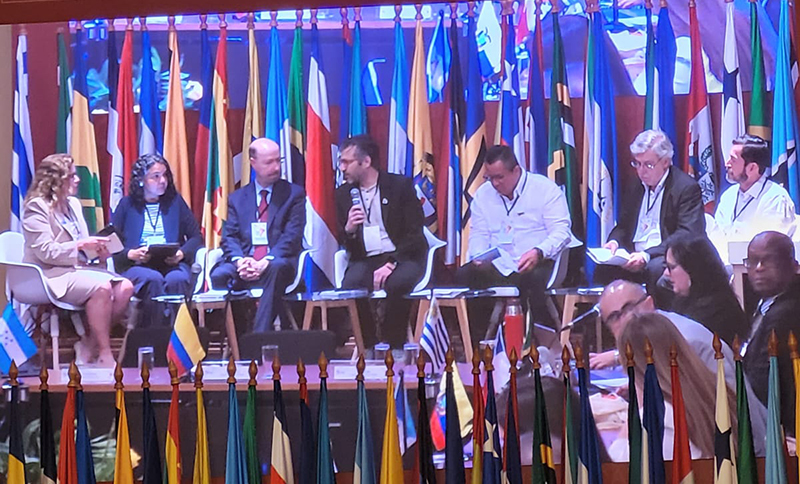
CLACSO at the CELAC Ministerial and High Authorities Meeting on Higher Education
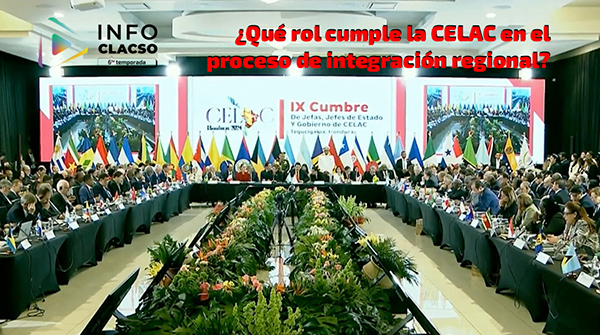
What role does CELAC play in the regional integration process?

