
CELAC Ministerial and High Authorities Meeting on Higher Education
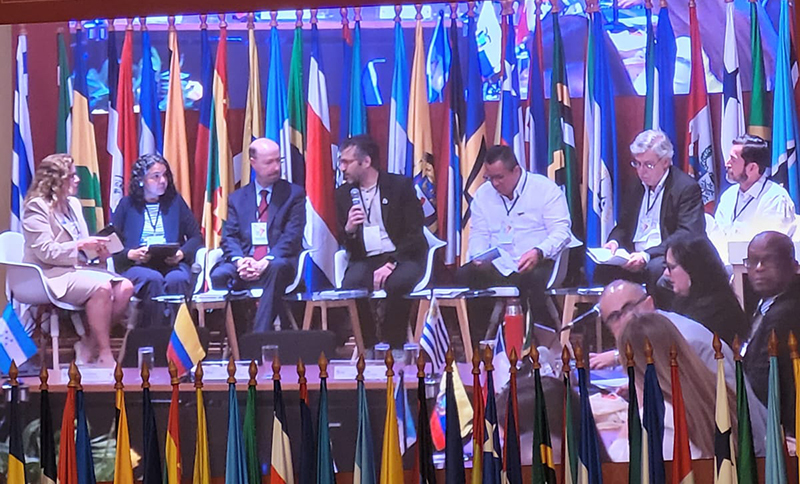
The Latin American Council of Social Sciences participated in the CELAC Ministerial and High Authorities Meeting on Higher Education, space organized by CELAC and the Ministry of Higher Education of Colombia, the government that holds the Pro Tempore Presidency of the regional integration space.
Gloria Amézquita Puntiel, Academic Director of CLACSO, participated as a speaker on the inaugural panel, regarding the relevance of reflecting on the “Shared horizons: higher education facing the major challenges of Latin America and the CaribbeanThe presentation emphasized the role of Higher Education in Latin America and the Caribbean as an engine of emancipation and resistance in the face of the global polycrisis, reaffirming its character as a social public good and human right, which should not be limited to training technicians for the market, but rather critical citizens committed to structural transformation.
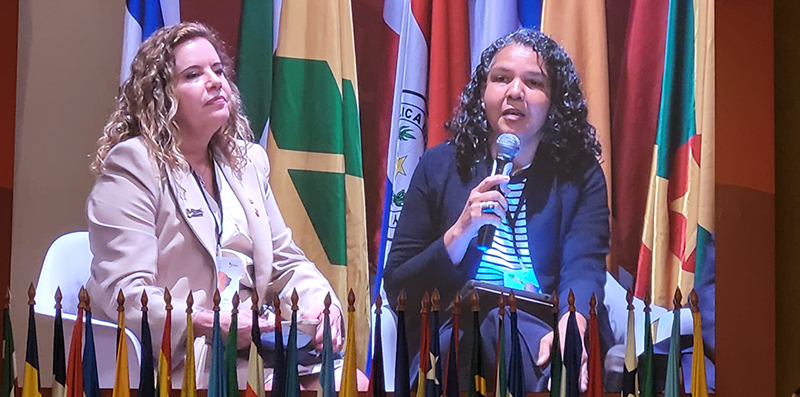
Amézquita Puntiel highlighted the importance of the meeting “because it outlines a regional roadmap that allows for monitoring higher education in Latin America and the Caribbean across 11 key areas, some of which fully align with CLACSO's political commitment, as it orients higher education towards areas such as peace, democracy, social integration, and the recognition of higher education as a fundamental right and a public good. It emphasizes the importance and relevance of higher education in the face of multiple crises, and also recognizes its essential role as a driver of critical, anti-racist, anti-xenophobic, anti-sexist, and anti-patriarchal thinking, and above all, as an integrator of the territorial, linguistic, and cultural diversity that we have in Latin America and the Caribbean.”
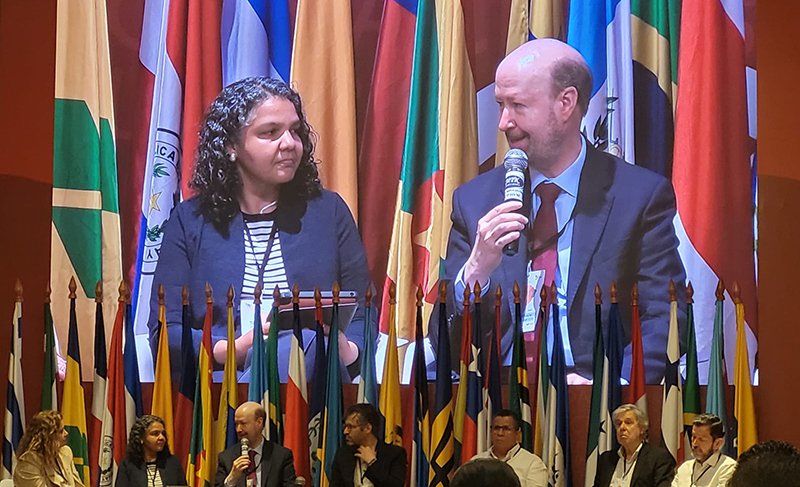
(Photos by Mayra Sotelo)
The call states that “the CELAC Ministerial and High-Level Authorities Meeting on Higher Education is taking place at a particularly challenging yet hopeful political moment for the region. Amid a global scenario characterized by profound transformations—both in the geopolitical order and in development models, forms of production, and knowledge systems—Latin America and the Caribbean face shared dilemmas that demand collective responses, from a solidarity-based, strategic, and long-term perspective.”
In this context, higher education has acquired renewed centrality. Its potential to contribute to social justice, a just ecological transition, ethically sound digital transformation, the consolidation of participatory democracies, and regional integration becomes an invaluable opportunity to redefine the course of development in a human, inclusive, and sustainable way. Higher education is not only a tool for professional training, but also a space for the production of critical thinking, intercultural dialogue, the convergence of diverse knowledge, and the promotion of peace.
Thus, the Ministerial and High-Level Authorities Meeting is envisioned as a prime opportunity to strengthen the institutional framework and adopt a roadmap that will position higher education as a structuring pillar of regional cooperation. This forum also seeks to highlight existing best practices, encourage the creation of strategic alliances between institutions, and consolidate the role of higher education in building more just, resilient, and cohesive societies.

