
Day for the Elimination of Violence against Women
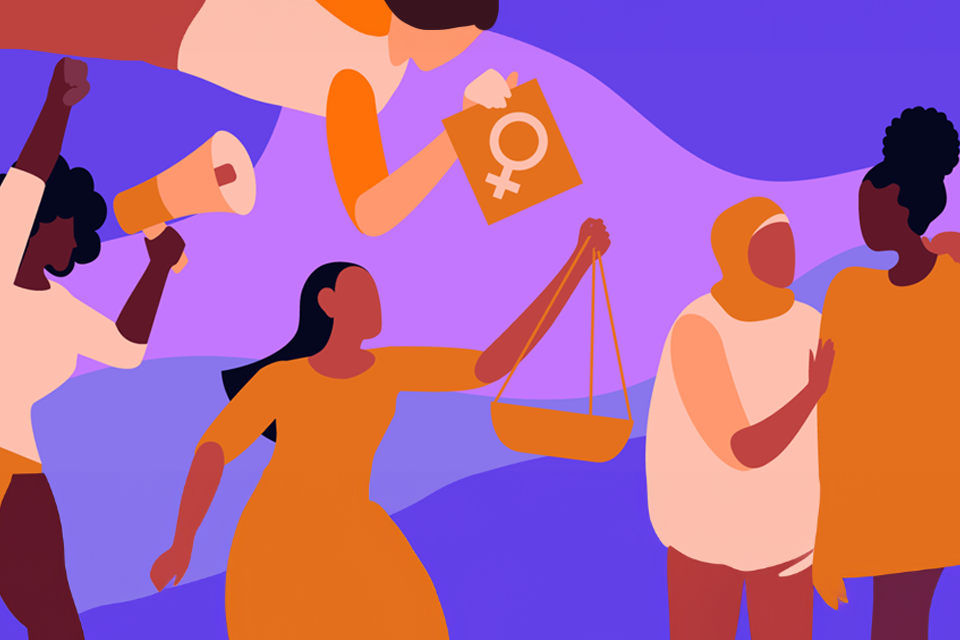
Every November 25th, the International Day for the Elimination of Violence against Women is commemorated, with the aim of making visible the violence against women and girls worldwide, a day that is promoted year after year by the Latin American Council of Social Sciences.
November 25th is the date chosen to put in the foreground what concerns and worries us daily: the violence that is exercised against people, when they are discriminated against because of their gender, and to demand policies for its eradication.
In 1981, the First Latin American and Caribbean Feminist Meeting was held in Bogotá, Colombia. It was there that November 25th was designated the International Day for the Elimination of Violence against Women. The date was chosen to commemorate the 1960 femicide of the Mirabal sisters (Las Mariposas) at the hands of the dictatorship of Leónidas Trujillo in the Dominican Republic.
More than a decade later, in 1993, the United Nations General Assembly adopted the Declaration on the Elimination of Violence against Women. It defined violence against women as “any act of gender-based violence that results in, or is likely to result in, physical, sexual or psychological harm or suffering to women, including threats of such acts, coercion or arbitrary deprivation of liberty, whether occurring in public or in private life.”
Finally, on December 17, 1999, the United Nations General Assembly, through resolution 54/134, decreed that from the year 2000 onwards, November 25 would be the date stipulated as the International Day for the Elimination of Violence against Women, a day that marks the beginning of the UN's UNiTE Campaign, 16 days of activism that conclude on December 10, International Human Rights Day.
Challenges and tensions of feminist struggles in Our America
Women's Month – InfoCLACSO, March 6, 2024
Forever, Marielle Franco – InfoCLACSO, March 13, 2024
"In Milei's Argentina, we suffered a direct attack on gender policies," Andrea Daverio
“Javier Milei has targeted feminist movements,” Verónica Gago
Library of Women, Gender and Diversity

Gender inequalities and violence in Latin America and the Caribbean

Montserrat Sagot
Bodies of injustice. A feminist critique from Central America


Women mobilized in Latin America
In various cities and countries across Latin America, we are witnessing expanded forms of feminism, with unprecedented levels of support and the majority participation of young people. This book presents a series of scenarios from the region in the 21st century, characterized by mass mobilizations with demands and rights aimed at achieving more egalitarian societies.

Policies and lines of action


Newsletters
Reflections and resistance on patriarchal violence in academia

