
Socializing the Costs: Pensions, Public Debt, and State Capture in El Salvador
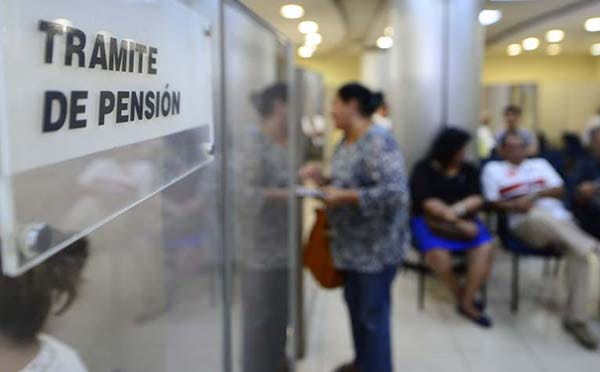
San Salvador, April 03, 2017. AFP Confia pension processing offices. Photos EDH: Marlon Hernandez
Saira Barrera and Armando Álvarez
As part of the research series “Elites, Inequality, and State Capture,” promoted by Oxfam and CLACSO, we studied state capture in public debt policy in El Salvador. Our focus was on the public debt generated by the transition costs of the 1996 pension reform, which shifted the system from a public pay-as-you-go system to a private, individual capitalization system.
To understand the main findings, it is necessary to provide context: during 2017, El Salvador experienced serious public debt problems, which led to the state defaulting in April of that year. As in many other countries, the main explanation given in the media was excessively high public spending, resulting in widespread spending cuts as the recommended economic policies.
The research made it possible to identify the problems of public debt with the transition costs of the 1996 pension reform and the post-reforms that took place to increase the low replacement rates that the private individual capitalization system provided.
The main beneficiaries of this debt process were the Pension Fund Administrators (AFPs), which have been linked to large financial conglomerates. Meanwhile, the general population was the most affected, since, lacking a tax reform that would have provided the State with greater revenue, fiscal adjustments were made primarily through freezes on public spending in sensitive areas such as education, health, and investment. Austerity was (and continues to be) a subterfuge to maintain the privileges of the AFPs and to avoid making the tax system progressive. In short, pension reforms have been a regressive redistribution mechanism in El Salvador.
What mechanisms of State Capture were identified?
- Political mechanism: the revolving door. The investigation revealed that public officials from the governments of the Nationalist Republican Alliance (ARENA) party, who were directly and indirectly involved in the pension reform process, went on to serve on the boards of directors of the pension fund administrators (AFPs) they themselves had promoted. In other words, some of the officials who championed the privatization of the pension system benefited from this process. Furthermore, some of these officials were also members of the Salvadoran Foundation for Economic and Social Development (Fusades), one of El Salvador's leading think tanks, which ideologically contributed to linking the debt problem to wasteful public spending.
- Media mechanism: the support of the main generators of public opinion. The two newspapers with the largest circulation in El Salvador were monitored: Today's Diary y The Graphic Press. Editorials published during the weeks surrounding the pension reforms were revisited, and they confirmed support for the private pension system, public spending cuts, and so on.
- Academic mechanism:the case of Fusades. The position of Fusades during the different pension reforms was studied, which allowed us to verify how the think tank went from pointing out the need for a fiscal reform to solve the costs of transition to the pension system, to being part during 2017 of an initiative that promoted the idea that the public debt was generated by the wastefulness of the government and, in addition, promoted the pension reform carried out during that same year that left the interests of the AFPs intact and further compromised the already low replacement rates.
Challenges to combating state capture in the pension system
One of the enormous challenges societies must face in combating capture within pension systems is pension education. In the various pension reforms studied, the working class had little knowledge regarding how the pension system functioned and the proposed reforms. This makes it difficult for the working class to express its position on reforms that benefit or harm them, and, furthermore, it allows subterfuges such as the need for austerity policies to gain traction in people's thinking.
A second challenge in combating this type of capture is that, at least in the case of El Salvador, pension fund administrators (AFPs) are part of large financial conglomerates that maintain a very close relationship with the state (through public debt, for example). This gives them enormous negotiating power. To counterbalance this power, the working class needs to be organized.

Participate in the 2019 call for applications

