
Panama, Mexico, Dominican Republic and Cuba
In this first communication of the year, I want to wish everyone a very good year in 2020, which presents us with great challenges.
For CLACSO, it will be months, weeks, and days of varied activities, publications, training courses, and dissemination of the social sciences and humanities in Latin America, the Caribbean, and other parts of the world, seeking to deepen a current of critical and political thought destined to continue occupying its rightful place in the broad world of debate on ideas and the development of science.
At the beginning of February I was in PanamaOn Wednesday the 5th, I gave a lecture entitled: “Understanding Reality to Transform It: The Importance of Social Sciences in the Current Context.” My presence in the Central American country was part of the International Summer School of the University of Panama.
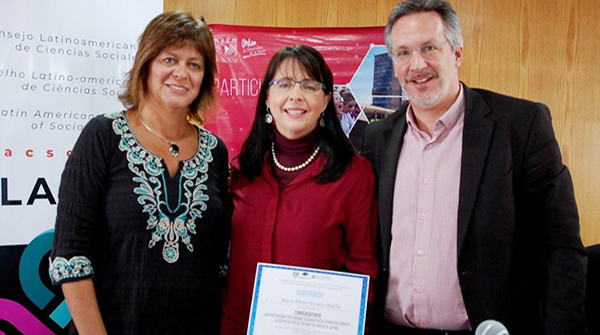
From there I headed to Mexico for two specific activities. First, on February 6, we signed an agreement with the National Council of Science and Technology of Mexico (CONACYT), a government institution that hosted us last November when we jointly organized the Latin American Forum on Scientific Evaluation. The purpose is to promote the training of graduate students in the social sciences and humanities over the next four years, through which 400 of them, belonging to the CLACSO Network, will have access to master's and doctoral scholarships at leading Mexican institutions. We signed the agreement along with María Elena Álvarez-Buylla Roces, Director General of CONACYT; Edwin Triujeque, Director of Scholarships at CONACYT; Nicolás Arata, Director of Training at CLACSO; and Carmen de la Peza Casares, Deputy Director of CONACYT.
On Friday the 7th and Saturday the 8th, along with other members of the CLACSO Executive Secretariat, I participated in the Conversation “Neoliberal Authoritarianism or Democratizing Democracy?: The Dispute for the Future in Latin America”, with the presence of prominent academics from Latin America and the Caribbean and which CLACSO organizes together with the University Program of Studies on Democracy, Justice and Society of the National Autonomous University of Mexico.
Then in Dominican RepublicOn Monday, February 10th, I will participate in a “Knowledge Exchange” on “The Struggles for Gender Equality: What’s Happening in the Dominican Republic and Latin America?” The event—which I will co-host with the #soyCaribeSoyMujer Platform—will take place at the local FLACSO headquarters. The following day, Tuesday the 11th, at the UASD University, I will participate in a discussion with Marcia Rivera, Jacqueline Laguardia, Camille Chalmers, Leopoldo Artiles, and Jesús Díaz on: “Challenges for the Social Sciences in Latin America and the Caribbean in the Face of Current Turbulence.”
Finally, I will participate in two activities in Havana, CubaOn Thursday, February 13th, I will participate in the panel “Debates on Scientific Evaluation: Challenges and Proposals from Latin America and the Caribbean,” along with Axel Didriksson from UNAM in Mexico and María Isabel Domínguez from CIPS in Cuba, coordinated by Pablo Vommaro, Director of Research at CLACSO, and Marta Rosa Muñoz from FLACSO. Following this, I will give the lecture “Debates on Scientific Evaluation: Challenges and Proposals from Latin America and the Caribbean.”
These and other activities will be prominently featured on CLACSO's social media and website. I invite everyone to follow us on:
clacso.org
www.clacso.tv
Facebook: Clacso – Latin American Council of Social Sciences
Twitter: @_CLACSO
Instagram: @clacso_oficial
SEE ALSO:
https://www.clacso.org/firma-del-convenio-clacso-conacyt/
https://www.clacso.org/autoritarismo-neoliberal-o-democracia-democratizante/
If you would like to receive more information about CLACSO's training programs:
[widget id=”custom_html-57″]
to our email lists.

