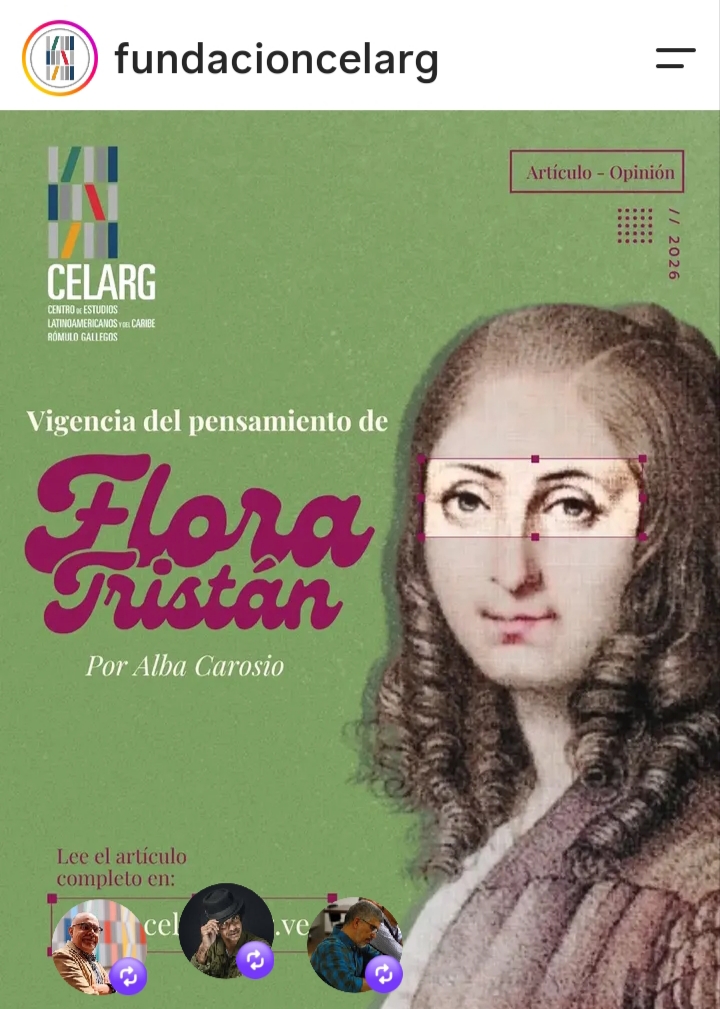
The enduring relevance of Flora Tristan's thought
Why does Flora Tristán's thinking remain an indispensable compass for understanding today's inequalities? In her recent opinion piece, Alba Carosio invites us to revisit […]
Free

Why does Flora Tristán's thinking remain an indispensable compass for understanding today's inequalities? In her recent opinion piece, Alba Carosio invites us to revisit […]
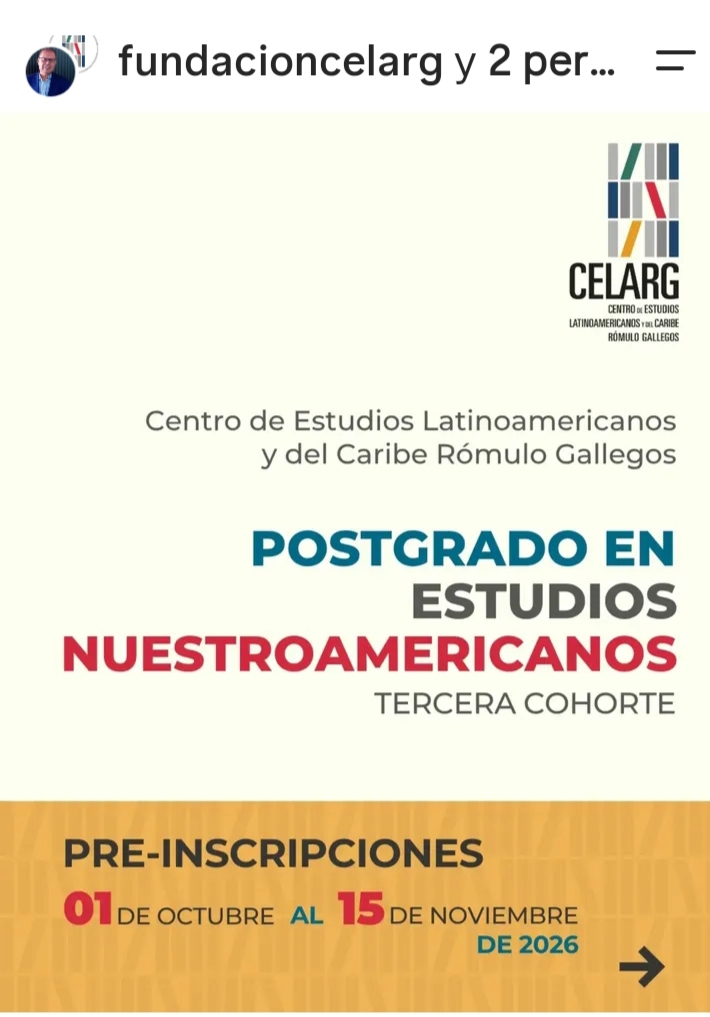
Pre-registration for doctoral and master's programs in Latin American Studies will be open until November 15, 2026. Culture, society, thought, politics, and history, among other topics, will be addressed in these programs.
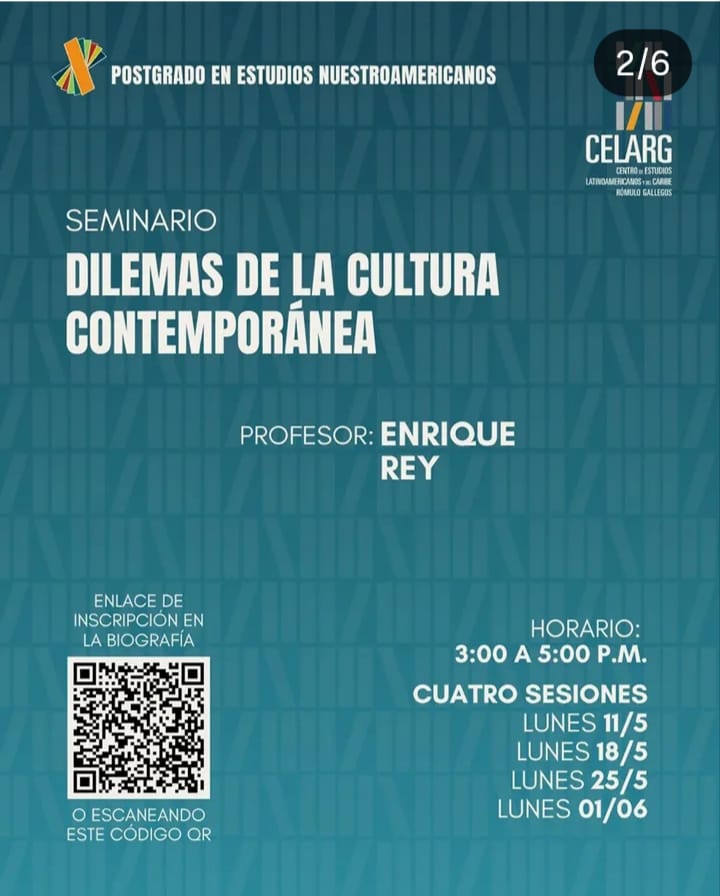
The seminar is structured as a short training cycle consisting of four sessions, designed to comprehensively explore the relationship between culture and power. The activity aims to offer an overview of how these two spheres are interconnected, starting from the classical analysis of popular and mass cultures and moving on to […]
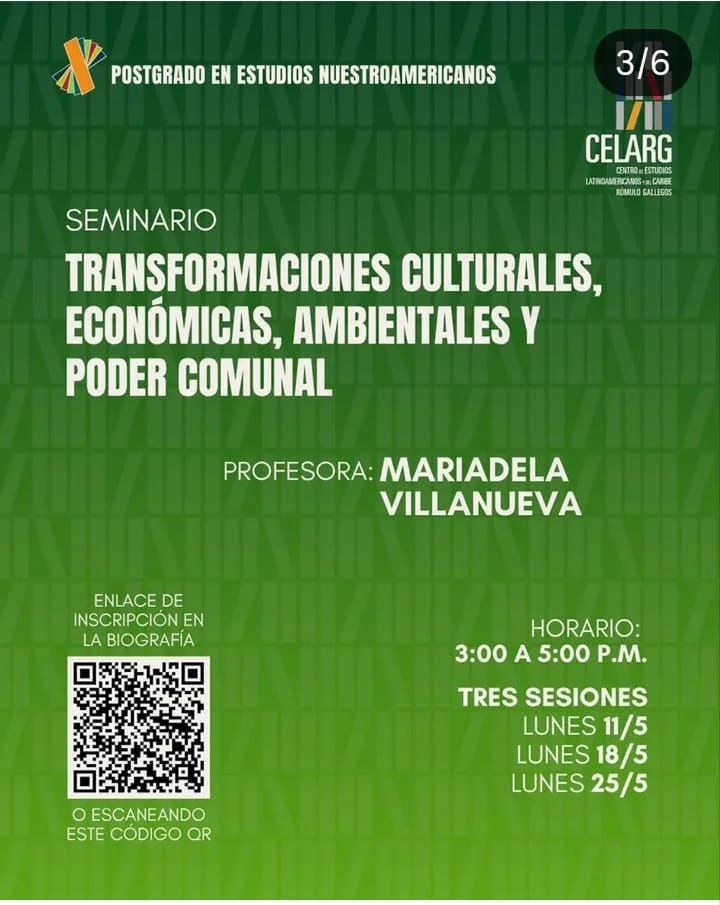
This activity focuses on presenting the fundamental elements of the critical thinking of Riane Eisler, Val Plumwood, Donna Haraway, and Katya Colmenares, analyzing their views on interpersonal relationships and our connection to other species and nature within the framework of Western civilization. The exercise seeks to contrast the proposals of […]
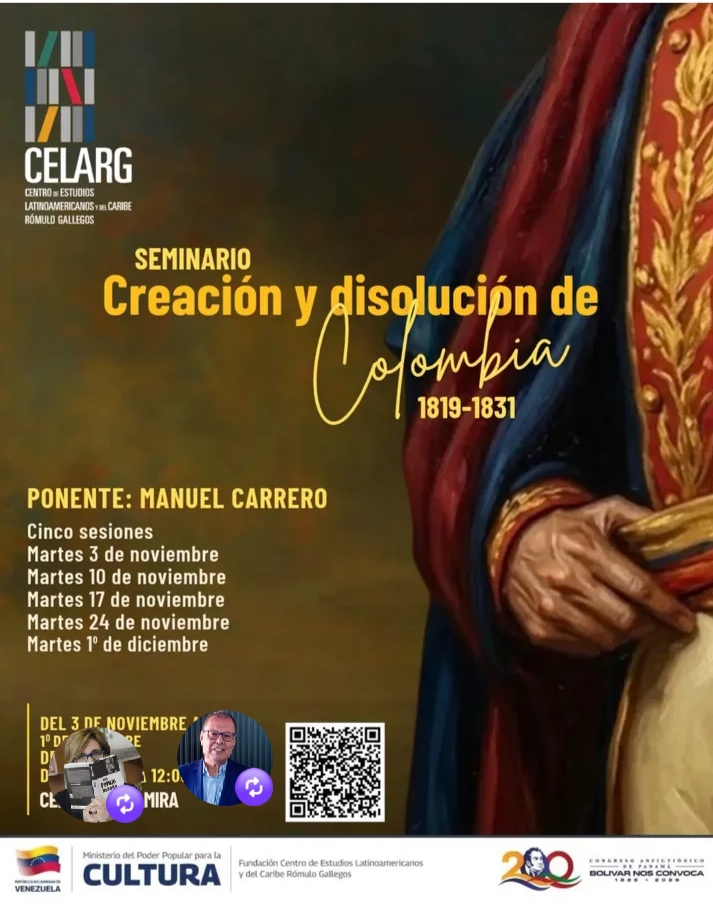
This five-session training program will explore how Simón Bolívar, the Liberator, demonstrated that political, social, economic, and territorial unity was possible to elevate our nations to the level of world powers, highlighting their immense strategic, mineral, and agricultural wealth, as well as their access to the Atlantic and Pacific Oceans. It will also analyze various geopolitical factors and diverse […]
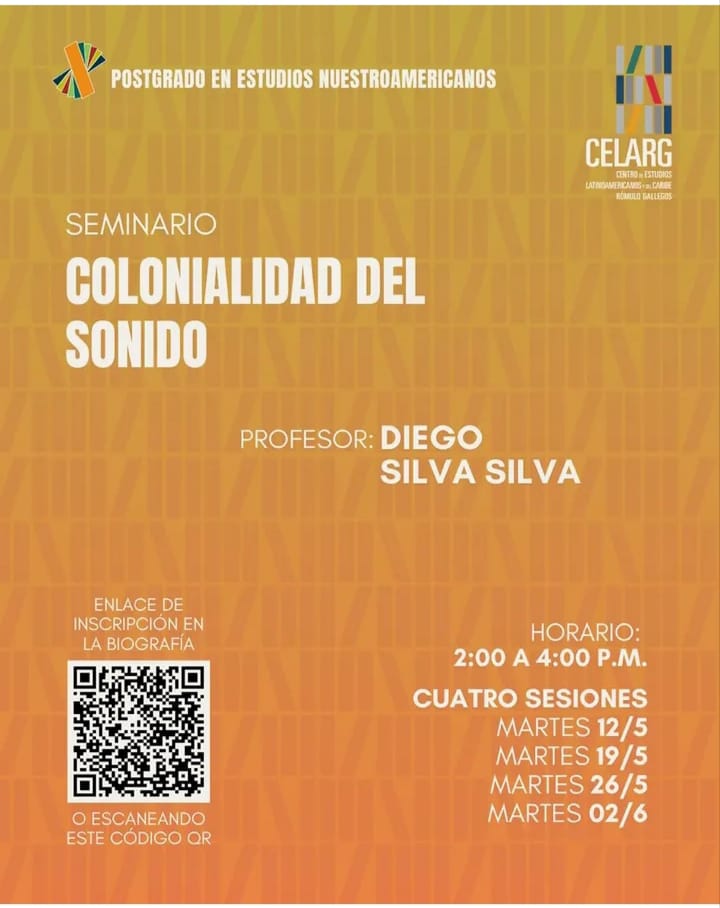
The activity consists of a decolonial critique of traditional written music, aimed at dismantling the myth of its "universality." Through historical and technical analysis, it seeks to demonstrate that European cultural standards are not global laws, but rather localisms and parochialisms that acquired universal status through colonial expansion and the […]
The activity consists of a decolonial critique of traditional written music, aimed at dismantling the myth of its "universality." Through historical and technical analysis, it seeks to demonstrate that European cultural standards are not global laws, but rather localisms and parochialisms that acquired universal status through colonial expansion and the […]
This course focuses on the study of the chronicle through its conceptual foundations and defining characteristics, addressing the theoretical framework necessary for its understanding and interpretation. The program analyzes the historical and foundational bases of the genre and the principles that define it, concentrating on the paradigmatic works of Venezuelan and Latin American chroniclers. […]
The seminar analyzes the construction of knowledge in the social sciences and humanities from the perspective of Zygmunt Bauman's "liquid modernity." The activity examines how, today, truths have become fragile and traditional frames of reference have dissolved, giving way to a knowledge that prioritizes utility […]
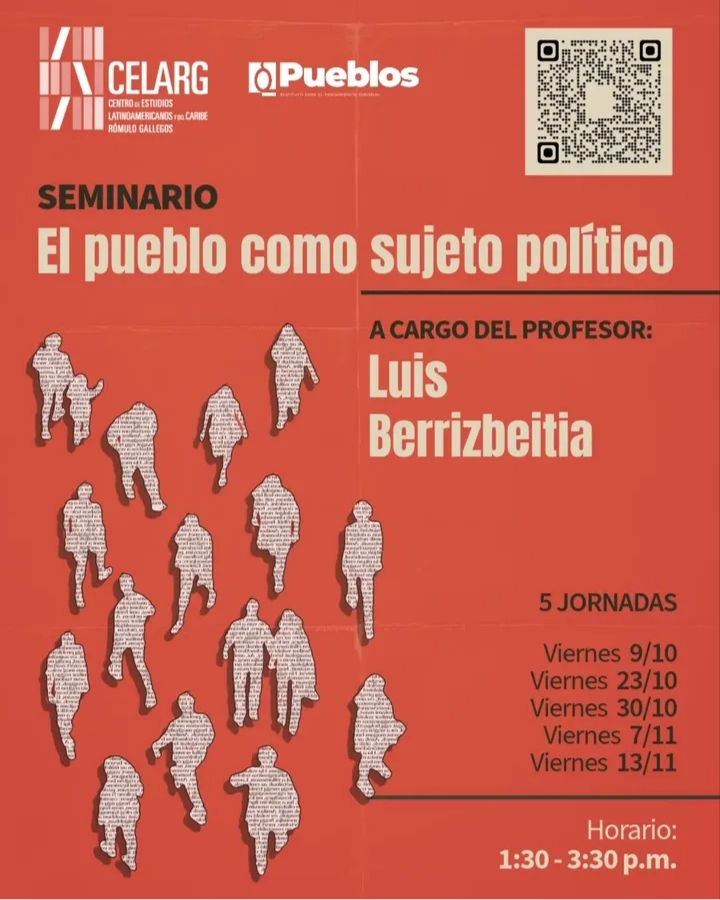
✊ Seminar: The People as Political Subjects The Rómulo Gallegos Center for Latin American and Caribbean Studies (CELARG) and the Pueblos Institute invite you to participate in this five-day seminar dedicated to reflecting on the transformative role of peoples in history. Through a critical approach and from the perspective of subalternity, […]
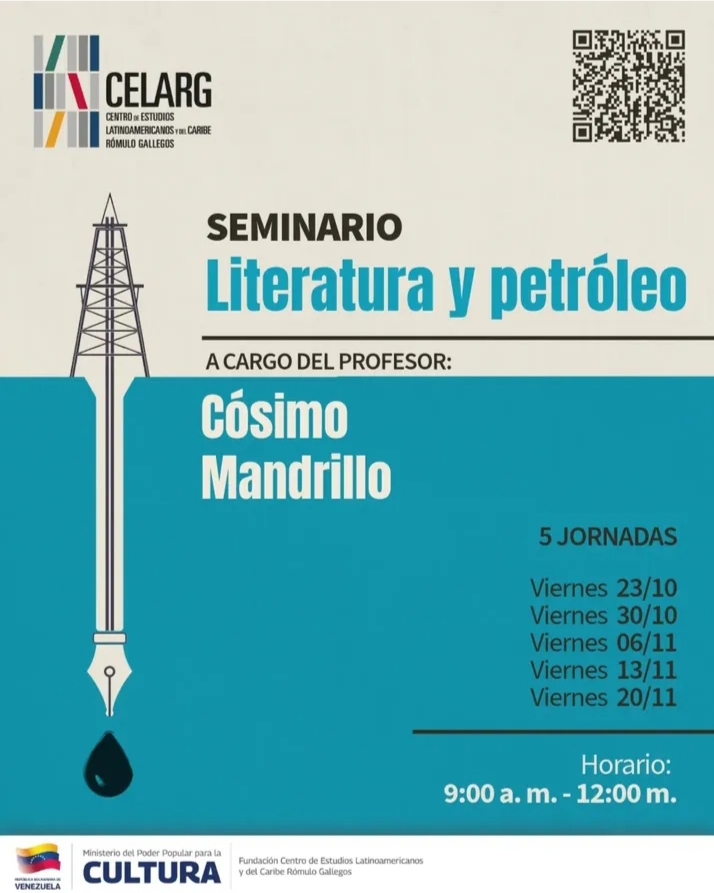
The Rómulo Gallegos Center for Latin American and Caribbean Studies (CELARG) invites you to participate in this five-day seminar, in which the distinguished writer and researcher Cósimo Mandrillo will guide us through the profound mark that oil exploitation and the presence of transnational corporations have left on Venezuelan culture […]


