
The social consequences of the iron fist in Argentina
By Sandra Raggio and Roberto Cipriano García
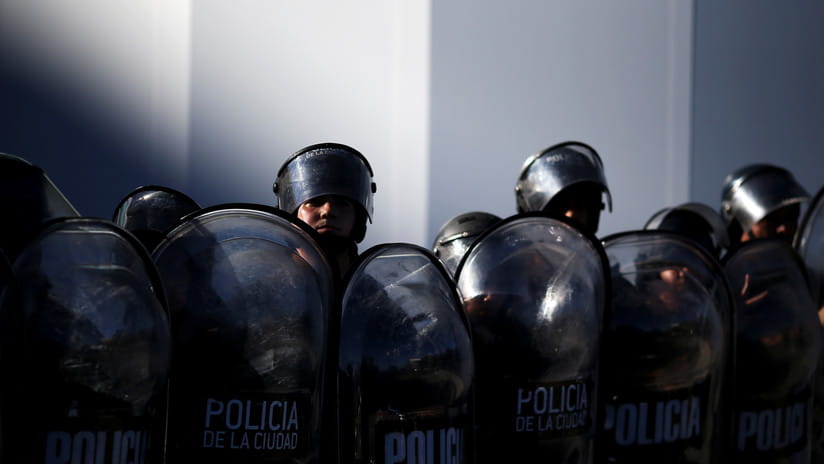
The exacerbation of punitive measures and their repressive counterpart, as the cornerstone of security policy, is not new in our country. In 1999, Carlos Ruckauf, who would become governor of the province of Buenos Aires, campaigned on a platform of "tough on crime," under the slogan "shoot first, kill a criminal." He was a precursor to the "Chocobar doctrine" championed by the current Minister of National Security, Patricia Bullrich, whose motto could be summarized as "shoot first, ask questions later." Ruckauf left the Buenos Aires provincial government in the midst of the 2001 crisis, a record year for deaths at the hands of the police since the end of the dictatorship.
The administration of Buenos Aires Province Security Minister Alejandro Granados, nicknamed "the Sheriff," once again embraced a hardline approach as the policy of his ministry during the final years of Daniel Scioli's administration. Sergio Berni maintained the same course at the national level.
None of these experiences were successful in terms of public safety, but they have been successful as an authoritarian narrative embraced by a significant part of society.
The Macri administration, with Bullrich at the helm, has maintained and deepened this direction as a core part of government policies and has even been a central theme of the electoral campaign, reaching its peak in the proposal to create the "Voluntary Civic Service for Values Training" for vulnerable youth, managed by the National Gendarmerie.
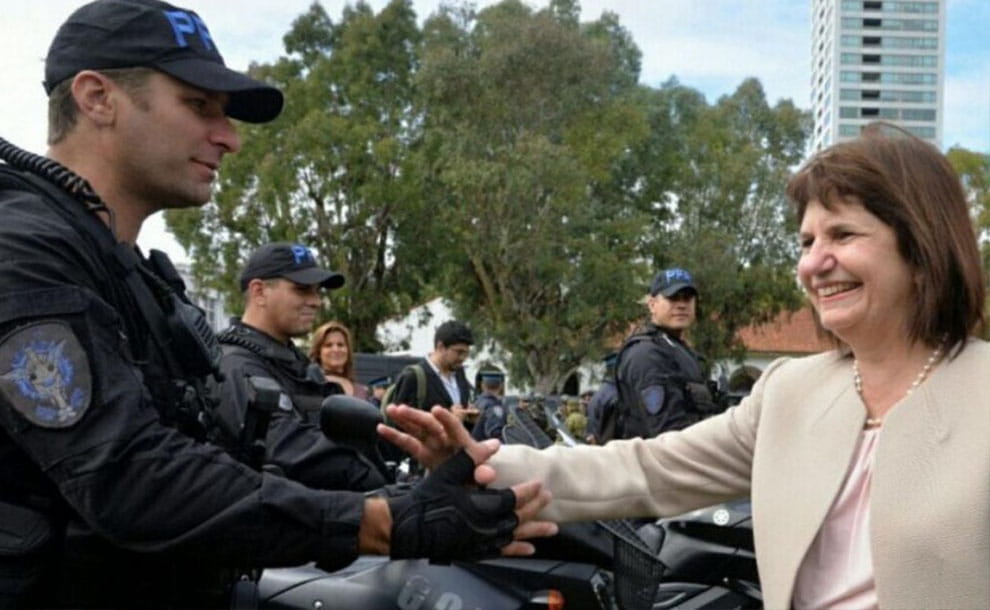
Throughout her tenure, Minister Patricia Bullrich legitimized the excessive use of police force. Her corporate defense of police officer Luis Chocobar and the actions of the Gendarmerie in the operations that resulted in the deaths of Santiago Maldonado and Rafael Nahuel laid the foundation for a state doctrine that promoted violence and even lethal force by security forces. This political message quickly permeated the local level, and the police felt empowered and supported to act outside the law.
The latest example of this occurred on August 19, 2019: a police officer kicked Jorge Gómez to death, and the minister once again defended the officer, downplaying the police action. Even worse, the passive attitude of the other officers present at the scene, in the moments leading up to his death, demonstrates how the security forces have normalized the excessive use of violence.
The national Ministry of Security's policy was mirrored in the province of Buenos Aires. In its annual report, presented on August 21, the Provincial Commission for Memory (CPM) recorded 120 deaths due to lethal use of force in the province during 2018 alone. The majority of these cases resulted from off-duty security personnel, a further indicator of the lack of oversight of the police in the province.
When that figure of 120 is broken down, other alarming data emerges: the vast majority are young people aged 30 or younger. Twenty of them were under 18. And most seriously, in the 15-24 age group, more than half of the homicides were due to lethal use of force. In other words, children and adolescents between the ages of 15 and 24 are more likely to die from police brutality than from any other cause.
The four victims of the Monte Massacre on May 21 of this year—a 21-year-old man, two boys, and a girl—are a painful example of the consequences of police actions under the Chocobar doctrine, which has permeated the Buenos Aires police force, consolidating deeply entrenched illegal practices. In this pursuit, police fired from two patrol cars at five defenseless and panicked people. The car crashed into a parked trailer, and the result was fatal. Following the incident, the Commission for Memory conducted a survey in San Miguel del Monte of illegal and violent police practices before and after the massacre, revealing their systematic nature. In other words, the four deaths were not the result of an accident but rather a sequence of intentional and illegal acts by the police.
This policy, aimed at attracting voters, has reached its extreme in the decision by Cambiemos—the political coalition governing the nation and the province—to nominate Daniel Orzayún as a candidate for city council in Zárate. Orzayún is the butcher who chased a young man for blocks after he had robbed his shop, ran him over, and continued to beat him even after the victim was crushed between the vehicle and a lamppost. The young man died a few minutes later. Orzayún was acquitted in a jury trial.
If the government encourages and rewards these practices, society's responses can reach unsuspected levels of barbarism, violence, and indifference that cut through and damage the social fabric of the community, dismantling bonds and systems of solidarity.
These are the conditions that made it possible for two supermarket security guards to beat an elderly man to death on August 16 for allegedly stealing groceries. In other words, the consequences of punitive demagoguery, which relies on repression and punishment as a means of disciplining and governing impoverished populations, are far too dangerous and damaging to continue pursuing irresponsibly.
We are facing a potential shift in government management. We have a historic opportunity to move away from heavy-handed tactics and implement a comprehensive security policy that is no longer centered on the police and that does not pit the guarantee of rights against the prosecution of crime.
Sandra Raggio is Coordinator of the Working Group “Human Rights and Territorialities” and General Director of the Provincial Commission for Memory.
Roberto Cipriano García, Member of the Working Group “Human Rights and Territorialities”, is the Coordinator of the Executive Board of the Provincial Commission for Memory.
If you would like to receive more information about CLACSO's training programs:
[widget id=”custom_html-57″]
to our email lists.
SEE: What's behind the "Voluntary Civic Service in Values" implemented in Argentina?

