
Convention 25 years after Durban
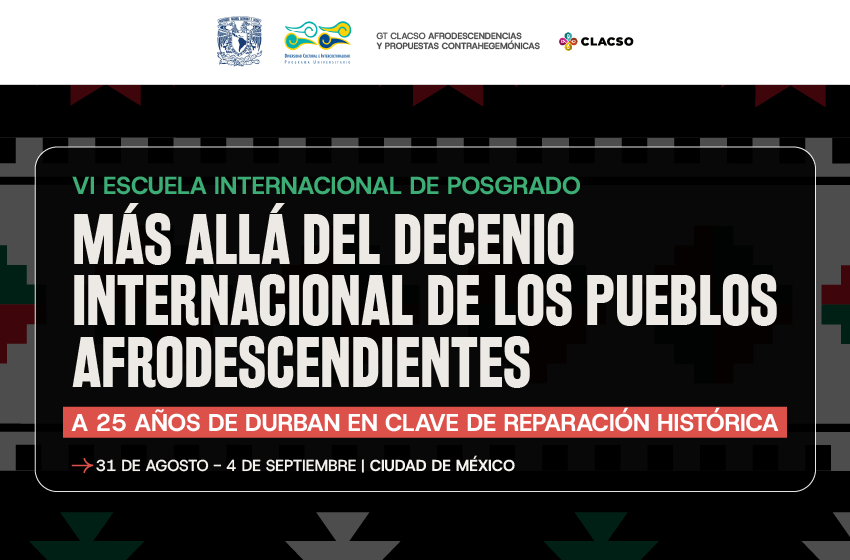
The Convention " 25 Years After Durban " is a macro-event that includes, among various activities: the VI International Postgraduate School: Beyond the International Decade for People of African Descent organized by CLACSO , and the Afrofeminist School 2026 organized by the Simone de Beauvoir Leadership Institute in alliance with the Latin American Council of Social Sciences (CLACSO), from August 31 to September 4 at UNAM in Mexico.
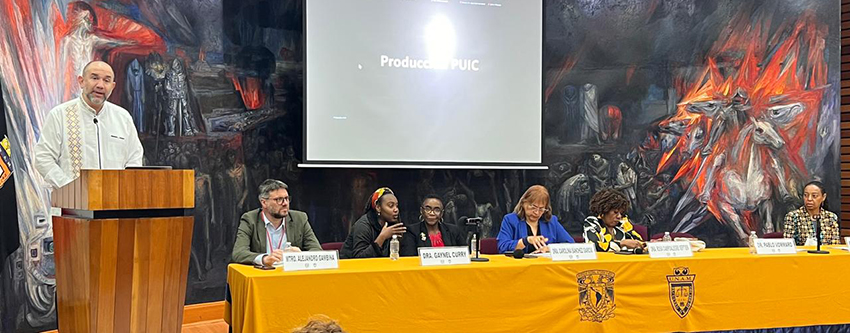
The commemoration of the 25th anniversary of the Durban Declaration and Programme of Action (World Conference against Racism) aims to offer theoretical and methodological tools from feminist popular pedagogy, with an Afrocentric, anti-racist and intersectional approach, and to highlight the role of Afro-descendant, Afro-Mexican and indigenous women's movements.
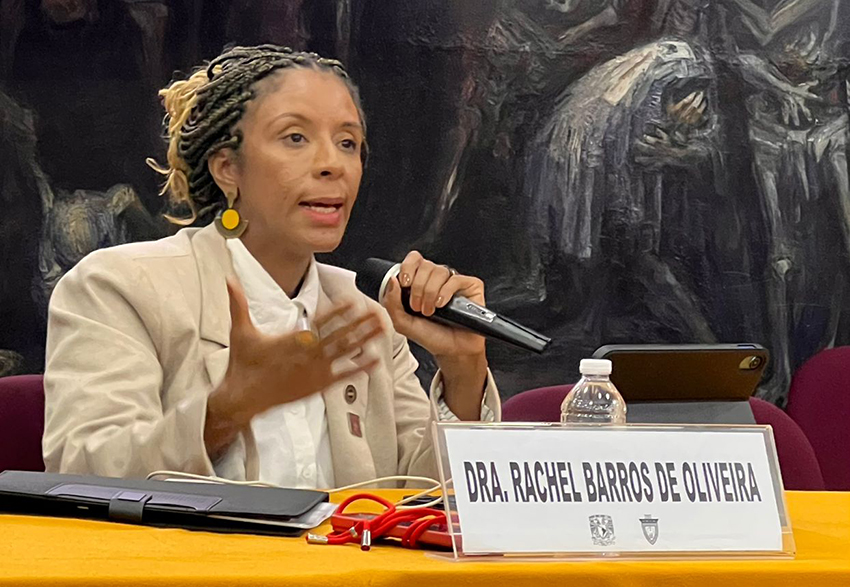
Rachel Barros de Oliveira , Minister of Racial Equality of Brazil
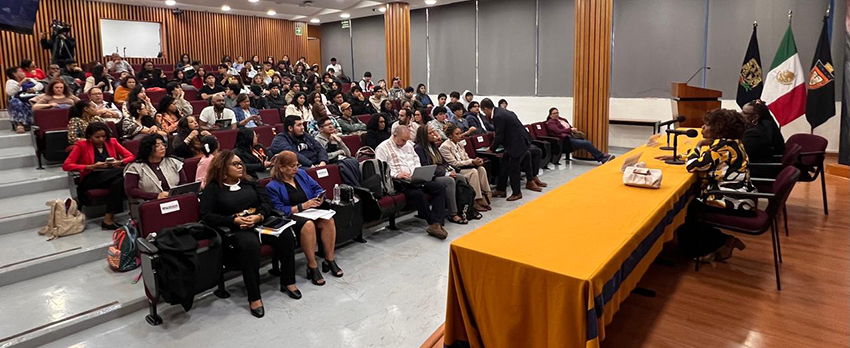
The meeting was aimed at Afro-Mexican, Afro-descendant, Afro-indigenous and indigenous women activists or members of collectives and social organizations.
It also sought to assess the progress, outstanding debts and setbacks in human rights and racial justice for Afro-descendant and indigenous peoples in Latin America and the Caribbean and to create a space for transdisciplinary dialogue between researchers, activists, social organizations and community leaders.
Likewise, to make visible the theoretical and political contributions of Afro-Mexican, Afro-descendant and indigenous women in the face of systemic racism, territorial violence and socio-economic gaps.
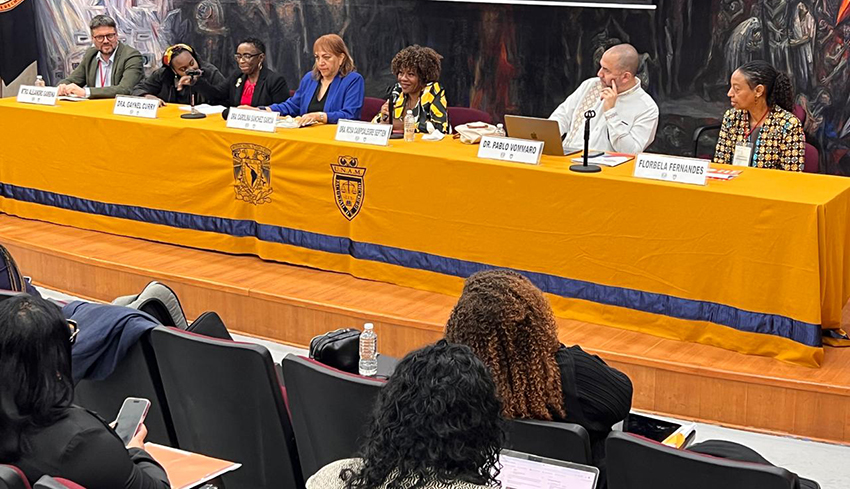
Within the framework of this convention, the in-person phase and final articulation of the participants of the Afrofeminist School 2026 were integrated.
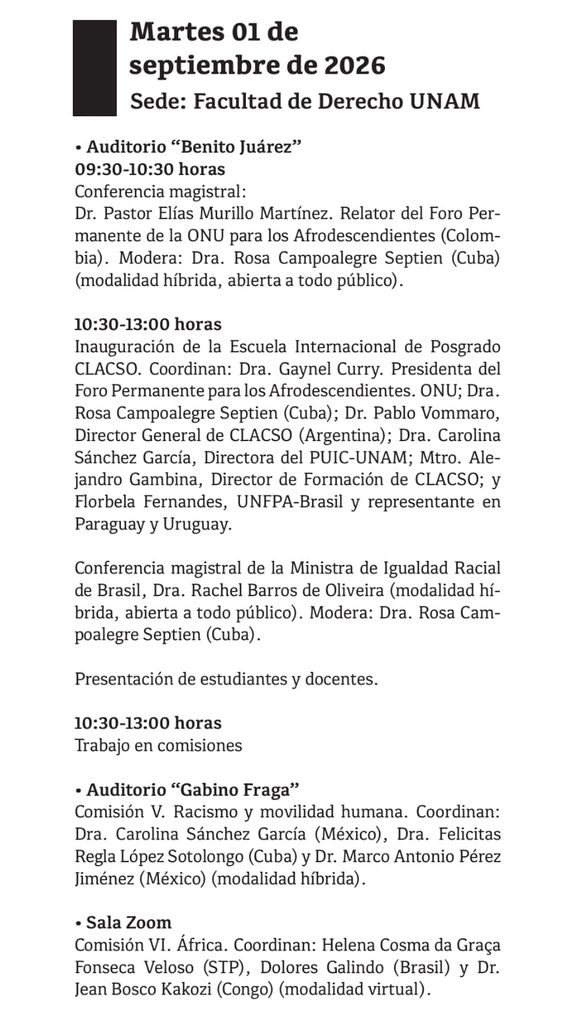
VI International Postgraduate School:
Beyond the International Decade for People of African Descent
The Latin American Council of Social Sciences (CLACSO), the CLACSO Working Group on Afro-descendants and Counter-Hegemonic Proposals , and the University Program of Studies on Cultural Diversity and Interculturality of the National Autonomous University of Mexico (PUIC-UNAM) invited advanced master's and doctoral students, public policy officials, as well as leaders and activists from Afro-descendant movement organizations in Latin America and the Caribbean interested in the topic, to submit their applications to participate in the VI International Postgraduate School “Beyond the International Decade for People of African Descent: 25 Years After Durban in the Key of Historical Reparation,” which takes place from August 31 to September 4, 2026, in Mexico City.
Venue: University Program of Studies of Cultural Diversity and Interculturality of the National Autonomous University of Mexico (Mexico City).
COLLABORATING INSTITUTIONS: Center for Interdisciplinary Research in Sciences and Humanities (CEIICH-UNAM).
Postgraduate Program in Gender Studies, UNAM Mexico
University Program on Studies of Asia, Africa and Oceania (PUEAAO UNAM).
Simone de Beauvoir Leadership Institute (ILSB)
Nelson Mandela Chair of Studies on Afro-descendants, Cuba.
International Association for Afro-Feminist Development (AIDAF), Colombia.
Association of Afro-Latin American and Caribbean Researchers (AINALC).
CLACSO Working Group on International Health and Health Sovereignty, Argentina.
Research Group on Social Theory, Decolonial Studies and Critical Thinking (G-TEP). University of Mar del Plata, Argentina.
CIESAS South Pacific
Rosario Ibarra de Piedra National Human Rights Center, Mexico.
National Human Rights Commission, Mexico (CNDH)
Department of Social Work, Catholic University of Temuco, Chile.
PhD in Communication. University of La Frontera-Austral University of Chile.
International Network of Afrofeminist Voices.
Global Anti-Racist Afro-Indo-American Network
Helping Hand of the Costa Chica AC
Timba laye Project
AFROPODEROSAS, Mexico
ACADEMIC COMMITTEE
Rosa Campoalegre Septien – PUIC UNAM; GT Afrodescendencias y propuestas contrahegemónicas (CLACSO); Cátedra Nelson Mandela, Cuba.
Pablo Vommaro – CLACSO, Argentina.
Carolina Sánchez García. PUIC-UNAM. GT Afrodescendencias y propuestas contrahegemónicas (CLACSO), Mexico.
Anny Ocoró-Loango – AINALC; GT Afrodescendencias y propuestas contrahegemónicas (CLACSO); Universidad Nacional de Tres de Febrero (UNTREF) and CONICET, Argentina.
Pastor Elias Murillo. Permanent Forum of Afro-descendants. United Nations, Colombia.
Karina Bidaseca – GT. Epistemologies of the South and GT Afrodescendants and counter-hegemonic proposals (CLACSO). UNSAM, Argentina.
Nilma Lino Gómes – Federal University of Minas Gerais (UFMG, Brazil) and GT Afrodescendencias y propuestas contrahegemónicas (CLACSO), Brazil.
Santiago Arboleda Quiñones – Universidad Andina Simón Bolívar (UASB, Ecuador) and GT Afrodescendencias y propuestas contrahegemónicas (CLACSO), Ecuador.
Felicitas López Sotolongo – GT Afrodescendencias y propuestas contrahegemónicas (CLACSO) and Centro de Investigaciones Psicológicas y Sociológicas (CIPS), Cuba.
Carlos Álvarez Nazareno– GT Afrodescendencias y propuestas contrahegemónicas (CLACSO), Argentina.
Odeth Santos – GT International Health and Health Sovereignty (CLACSO) and GT Afro-descendants and counter-hegemonic proposals (CLACSO), Mexico.
Nathalie Cook Reyes. AfroLeaders Research Institute on Technology, Artificial Intelligence and Racial Equity, Costa Rica.
Helena Cosma da Graça Fonseca Veloso – Centro Interdisciplinar de Estudos e Investigação da Universidade Católica de Angola.
Elia Avendaño Villafuerte. PUIC-UNAM and GT Afrodescendencias y propuestas contrahegemónicas (CLACSO), Mexico
Jorge García Rincón. Association of Afro-Latin American and Caribbean Researchers (AINALC) and GT Afrodescendants and counter-hegemonic proposals (CLACSO), Colombia.
Arbey Bustamante – AINALC and GT Afrodescendencias y propuestas contrahegemónicas (CLACSO), Colombia.
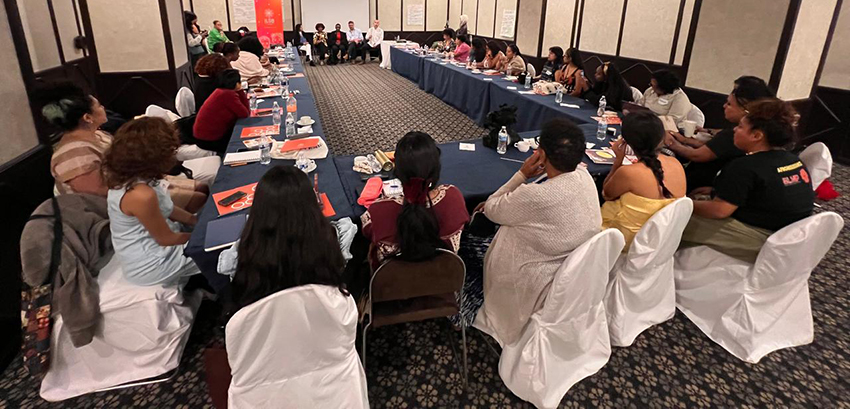
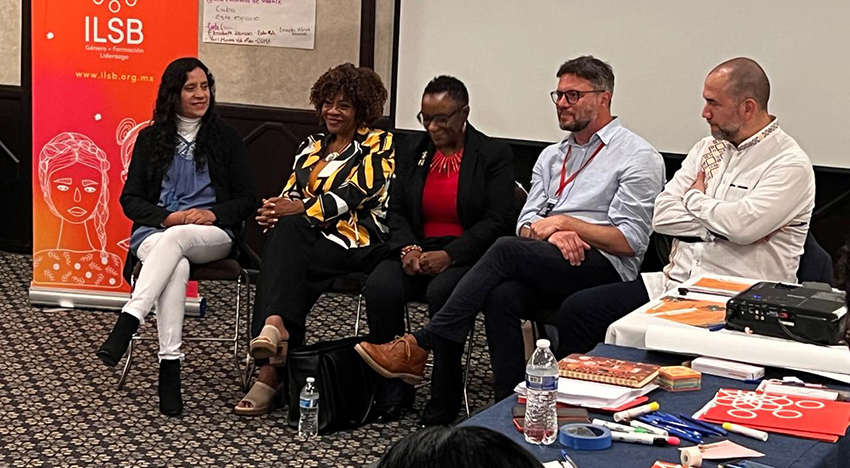
The Simone de Beauvoir Leadership Institute (ILSB) is a Mexican, feminist, and secular civil society organization with almost 25 years of experience in training social leaders and political advocacy in Mexico, Latin America, and the Caribbean.
Its main axes and lines of work are:
-To train women, youth, indigenous leaders, Afro-Mexican women and community activists through feminist popular pedagogy methodologies.
-Promote bodily autonomy, comprehensive sexuality education and access to legal abortion.
-Promote agendas against structural racism, actively collaborating with Afro-descendant and indigenous movements.
-Participate in the construction of public policies, research and regional alliances together with academic institutions and international organizations such as UNAM and CLACSO.
International Convention Program: 25 Years After Durban
August 31 to September 5
Opening Ceremony | International Convention: 25 Years Since Durban
Inauguration of the CLACSO International Graduate School | Convention: "25 Years After Durban"
All activities are broadcast on the PUIC UNAM channel

