
The unfinished dream: Bicentennial of the Amphictyonic Congress of Panama
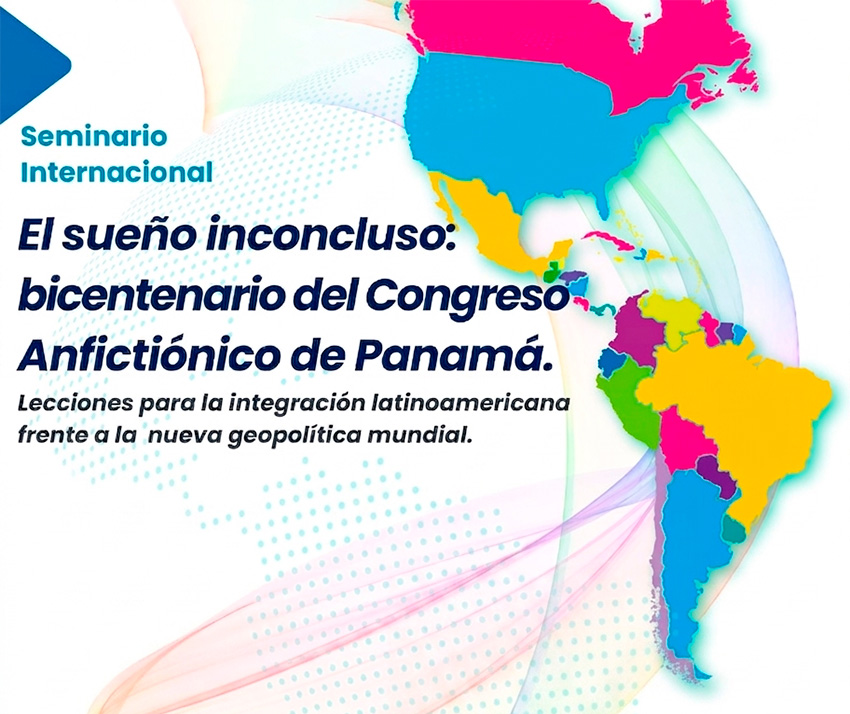
The International Seminar « The unfinished dream: bicentenary of the Amphictyonic Congress of Panama – Lessons for Latin American integration in the face of the new world geopolitics » met on June 8 and 9 at the Autonomous Metropolitan University, Xochimilco Unit of Mexico.
Pablo Vommaro , Executive Director of CLACSO, participated in the opening ceremony along with Carlos Muñoz Villarreal , DPE Manager, and Fortino Vela Peón , Head of the Academic Area of SEM.
Within the framework of the 200th anniversary of the historic congress convened by Simón Bolívar in 1826, this is an academic meeting convened by the World Economic System Area of the UAM Xochimilco , co-organized by the Latin American Council of Social Sciences ( CLACSO ) and its Working Group “ Regionalism, integration and autonomy in the face of the global hegemonic dispute ”, the Department of Economic Production of the Division of Social Sciences and Humanities of the UAM-X , the Society of Political Economy of Latin America and the Caribbean ( SEPLA ), the Network of Studies of the World Economy ( RedEM ), l'Université d'État d'Haïti ( UEH ).
The meeting aims to create a space for debate and critical exchange on the historical and current challenges of Latin American integration. The goal is to examine the impact of the Amphictyonic Congress of 1826 and apply its lessons to the contemporary geopolitical landscape.
Throughout the two days, conferences and panel discussions will be held focusing on four main areas:
-The Monroe Doctrine and the Congress of Panama: Analysis of the historical contrast between the Bolivarian unification project and the principle of US hemispheric influence.
-Multilateralism and regionalism in historical perspective: Evolution of blocs and alliances in Latin America.
-Current debates on Latin American integration: Contemporary political, economic and social challenges for the unity of the region.
-Latin America's strategic options in the world system: The region's role in the face of new global power disputes (such as the transition to multipolarity).
Contact and Reports: [email protected] and [email protected].
The Amphictyonic Congress of Panama was a diplomatic assembly held from June 22 to July 5, 1826 in Panama City, convened by Simón Bolívar , the Liberator, from Lima in 1824, with the aim of bringing together the young republics that had just become independent from the Spanish Empire to found a great confederation of nations.
The term "amphictyonic" refers to the ancient leagues of Greek city-states (amphictyonies), which joined together to protect each other and manage matters of common interest.
Despite Bolívar's intentions to unite the entire continent, attendance was limited due to vast distances, internal instability in each country, and diplomatic pressures. Those present included: Gran Colombia (comprising present-day Colombia, Venezuela, Ecuador, and Panama), Peru, Mexico, and the Federal Republic of Central America. Observers were sent by: the United Kingdom and the Netherlands (interested in trade with the new nations). Those that did not attend were: the United Provinces of the Río de la Plata (Argentina) and Chile; Brazil remained on the sidelines; and the United States delegates did not arrive in time.
The most significant outcome of the Congress was the signing of the Treaty of Union, League, and Perpetual Confederation . Among its most revolutionary points were:
-Mutual defense: Create a common army and institutions to defend sovereignty against any attempt at Spanish reconquest or foreign aggression.
-Peaceful arbitration: Obliging member states to resolve their territorial or political disputes through diplomacy and negotiation, explicitly prohibiting fratricidal war.
-Common Citizenship: Outlining the first concepts of a shared Hispanic American citizenship.
-Abolition of the slave trade: A significant social advance for the time.
Although the treaty was signed, only Gran Colombia ratified it. The agreements were never implemented due to:
-Emerging nationalisms: Local elites and Creole aristocracies prioritized consolidating their own countries and borders rather than subordinating themselves to a supranational federal government.
-Rivalries and misgivings: There was a strong fear of the leadership and political ambitions of Simón Bolívar, whom some accused of wanting to centralize power in an authoritarian way.
-External opposition: Powers such as the United States did not look favorably upon the creation of a bloc of strongly united nations in the south of the continent that could compete with their own hemispheric influence.
Despite not having achieved its immediate goals, the Congress of Panama was recorded in history as the cornerstone of Pan-Americanism and Latin Americanism.
It is considered a landmark event because it was the first time in modern history that a group of sovereign nations sat down to discuss, under conditions of absolute legal equality, the creation of an international organization for collective defense and political cooperation. Modern concepts such as the peaceful settlement of disputes, hemispheric security, and regional integration blocs (such as the OAS, CELAC, and Mercosur) have their direct roots in the debates and ideas formulated in Panama in 1826. For this reason, the UN itself has historically recognized the Congress of Panama as a direct doctrinal antecedent of the Charter of the United Nations.
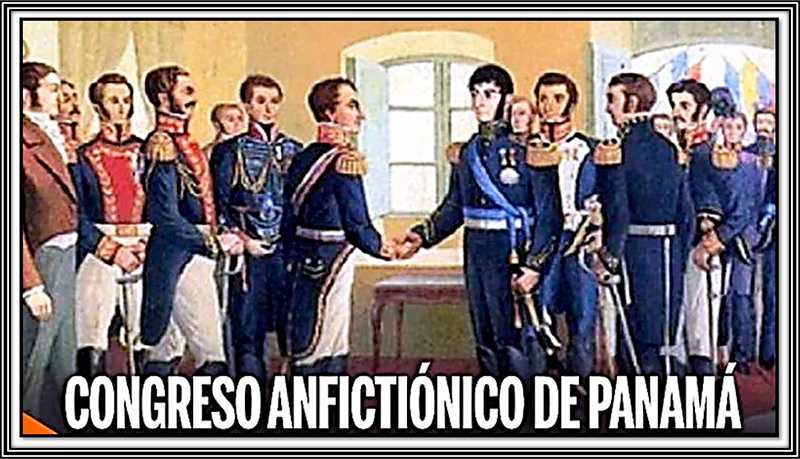
The Amphictyonic Congress of Panama
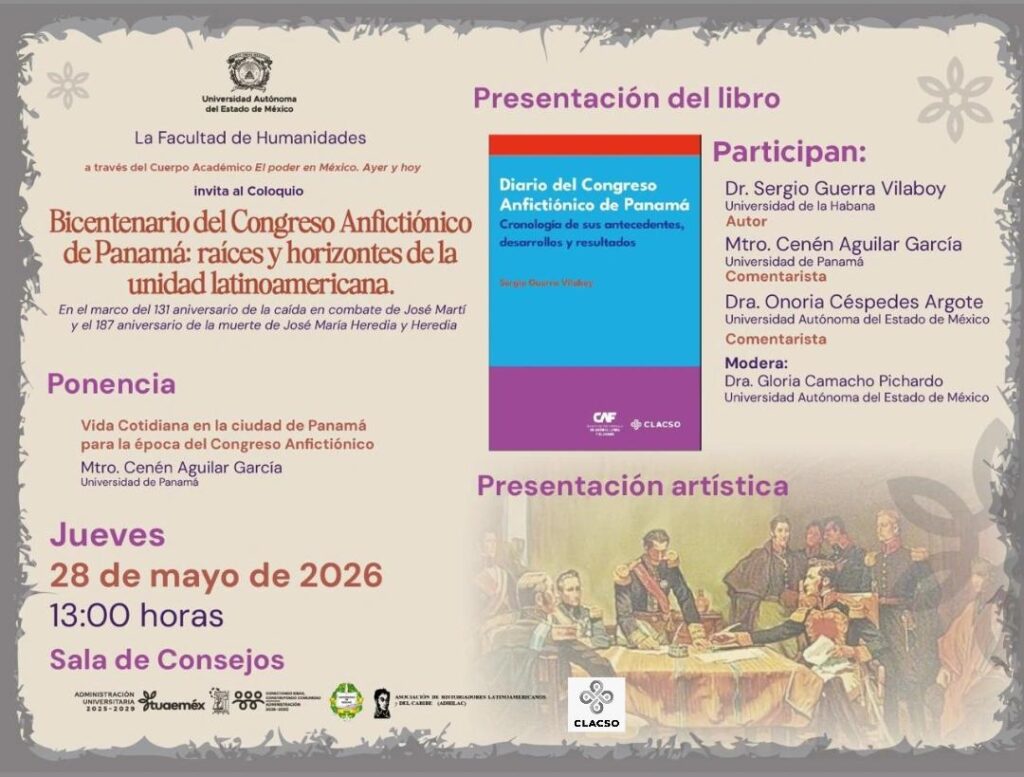
Presentation of the book “Diary of the Amphictyonic Congress of Panama”

