
International Day of the Victims of Enforced Disappearances
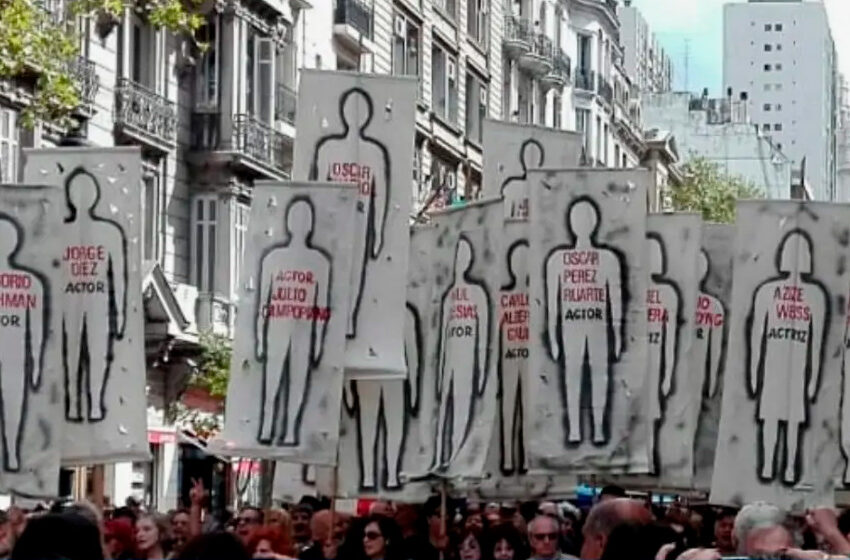
Every August 30th, the International Day of the Victims of Enforced Disappearances is commemorated. The demand spearheaded by the Latin American Federation of Relatives (FEDEFAM) in 1981 led, years later, to the International Convention that established the inalienable right to know the truth and classified enforced disappearance as a permanent crime against humanity. At the session of the United Nations Human Rights Council in Geneva, Switzerland, on June 29, 2006, the draft International Convention for the Protection of All Persons from Enforced Disappearance was adopted.
The purpose of this day is to contribute to strengthening global awareness of the persistent practice of enforced disappearances by states, classified as a crime against humanity by the OAS and the UN. Human rights organizations use this day to reinforce awareness of the importance of preserving the rights that the State itself is obligated to guarantee.
The Latin American Council of Social Sciences has been supporting the denunciations and actions of human rights organizations in our continent, a region marked by this methodology of terror and by the struggles of families and civil society for Never Again and for Memory, Truth and Justice.
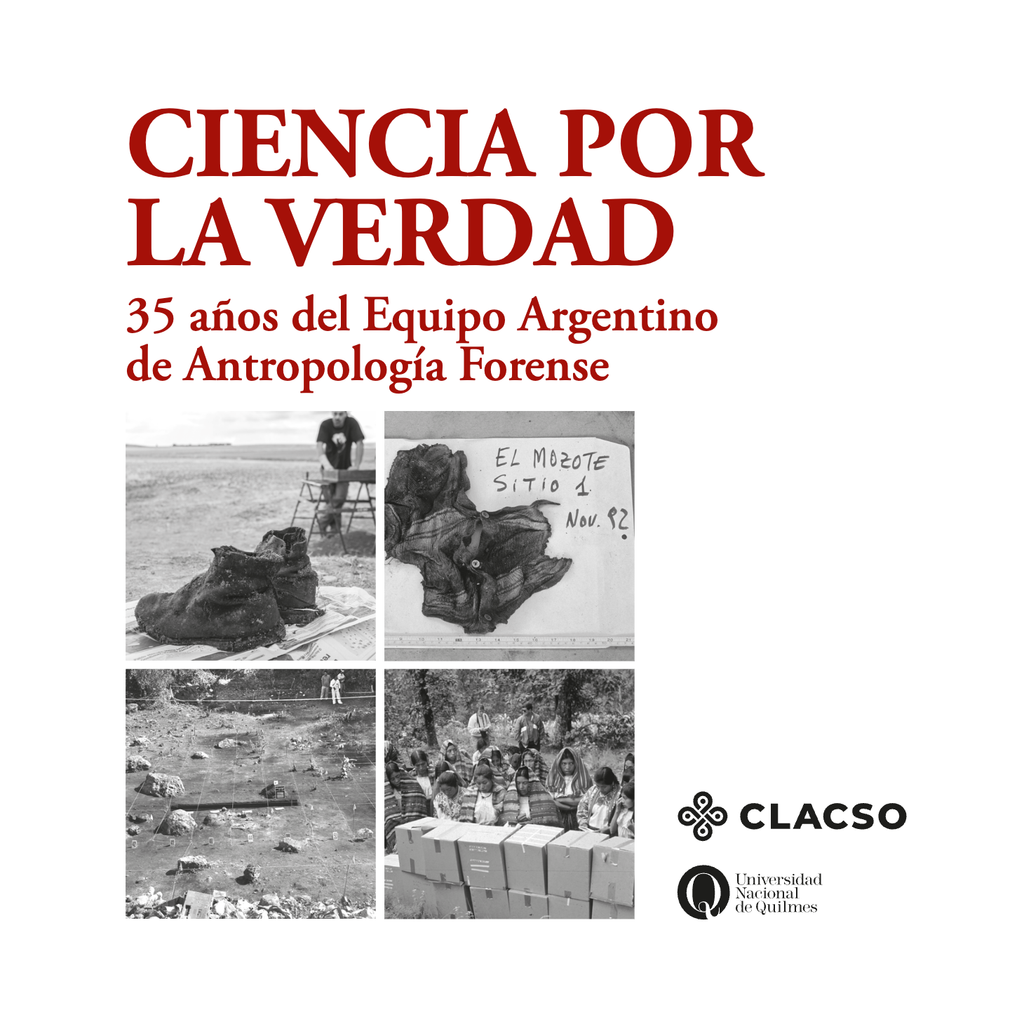
In particular, in 2020 CLACSO, together with the National University of Quilmes, promoted the campaign for the Nobel Peace Prize for the Argentine Forensic Anthropology Team (EAAF), for its tireless humanitarian and scientific work on the five continents, whom we honor again on this International Day of the Disappeared.
“ Science for Truth: 35 years of the Argentine Forensic Anthropology Team ”
CLACSO and the National University of Quilmes also published the book “ Science for Truth: 35 years of the Argentine Forensic Anthropology Team ” and produced the documentary “The traces of death and anthropology ”.
EAAF Podcast - Science for the Truth
To revive, the forced disappearance of people in Colombia
Constanza Ramírez Molano , President of the Other Voices Association of Colombia, conceived, directed and produced in 2015 the performance “VIVIFICAR ¿qué es la desaparecido forzada de personas?” which makes visible the crime of forced disappearance of people in her country.
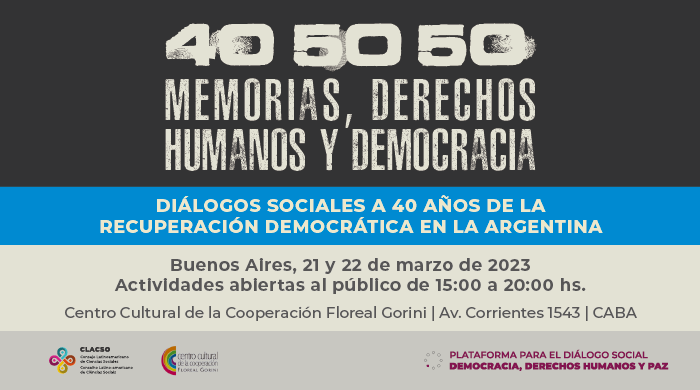
2023 was a year marked by the 50th anniversary of the civic-military coups in Uruguay and Chile and the 40th anniversary of the return to democracy in Argentina, events in the contemporary history of Latin America that shape current challenges in the search for alternatives to strengthen democracy and keep the flame of memory alive.
40 – 50 – 50 “Social dialogues 40 years after the return to democracy in Argentina”
Seminar 40-50-50 + 4. Meeting of memories, resistances and social revolts
50 years after the coup in Argentina
Half a century after the beginning of the darkest period in our history, the Latin American Council of Social Sciences (CLACSO) reaffirms its unwavering commitment to Memory, Truth and Justice.
50 years after the coup: Argentina says NO to dictatorship and authoritarianism
CLACSO produced several materials available in the CLACSO Library.
-Reflections on Ayotzinapa from a national perspective
-National register of cases of torture and/or ill-treatment: 2014 annual report
Will there be justice for crimes against humanity in Colombia?
Punishing and preventing torture: lessons learned 50 years after the coup in Chile
Within the "Latin American Critical Thought Notebooks" Collection, CLACSO presents "Sanctioning and Preventing Torture: Lessons 50 Years After the Coup," an investigation by Sebastián Cabezas Chamorro, Germán Díaz Urrutia, and María Cecilia Jaramillo Michel
The night of the pencils
On the night of September 16, 1976, and the following days, a group of young activists from the Union of Students (UES) and the Guevarist Youth were kidnapped in the city of La Plata, 60 kilometers from the Argentine capital, by members of the Buenos Aires Provincial Police. These were the first months of the civic-military dictatorship that would end in December 1983. The date is etched in the collective memory as "The Night of the Pencils."

