
International Day for the Elimination of Violence against Women 2025
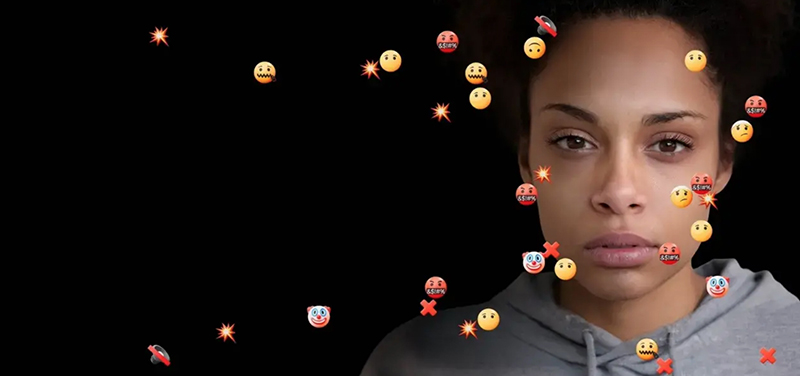
Every November 25th, the International Day for the Elimination of Violence against WomenThis day is essential to raise awareness of the magnitude of violence against women and girls globally and to mobilize action for its eradication. It is a symbolic date that arose from the advocacy of activists in Latin America and the Caribbean.
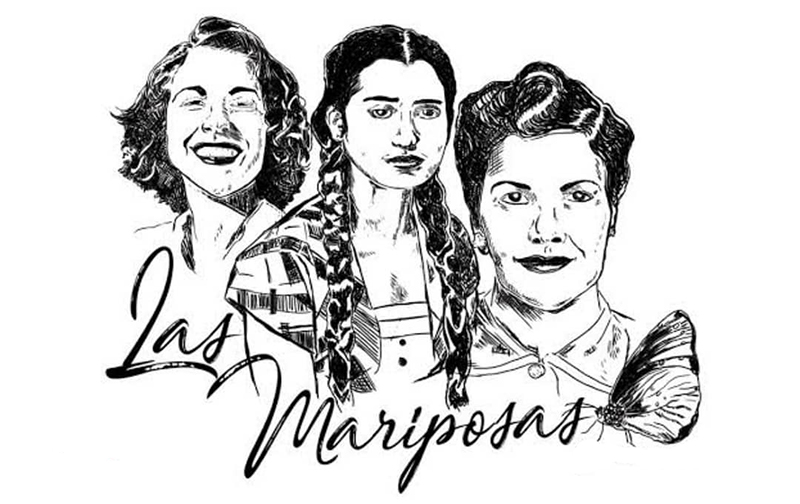
During the First Latin American and Caribbean Feminist Meeting held in 1981 in Bogotá, Colombia, November 25th was established as the International Day for the Elimination of Violence against Women. The date was chosen to commemorate the femicide on November 25, 1960, of the Mirabal sisters—Patria, Minerva, and María Teresa—(known as "Las Mariposas") at the hands of the dictatorship of Leónidas Trujillo in the Dominican Republic.
In 1993, the United Nations General Assembly adopted the Declaration on the Elimination of Violence against Women. It defined violence against women as “any act of gender-based violence that results in, or is likely to result in, physical, sexual or psychological harm or suffering to women, including threats of such acts, coercion or arbitrary deprivation of liberty, whether occurring in public or in private life.”
Finally, on December 17, 1999, the United Nations General Assembly, through resolution 54/134, decreed that from the year 2000 onwards, November 25 would be designated as the International Day for the Elimination of Violence against Women, a day that marks the beginning of the UNiTE Campaign, 16 days of activism that conclude on December 10, International Human Rights Day, days to which the Latin American Council of Social Sciences.
UN Women established the slogan for this year #NOEXCUSE for online abuse.
The appeal is global and includes the use of the color orange as a symbol of a bright and optimistic future, free from violence. The campaign encourages citizens and governments to take concrete steps for prevention and response.
Some key facts:
-80% of women displaced by climate change are women.
-One in five young women aged 20 to 24 married or entered into a union for the first time before the age of 18 (19 percent),
-11 women are victims of violent deaths due to gender every day in Latin America and the Caribbean (Source: ECLAC, Gender Equality Observatory).
-According to the "New estimates on the prevalence of violence against women in the Americas" published by the Pan American Health Organization (PAHO/WHO) in November 2025: 1 in 3 women aged 15 or older in the region have experienced physical or sexual violence from an intimate partner or a third party during their lifetime; and 1 in 4 women between the ages of 15 and 49 have suffered physical or sexual violence from an intimate partner at least once in their lifetime.
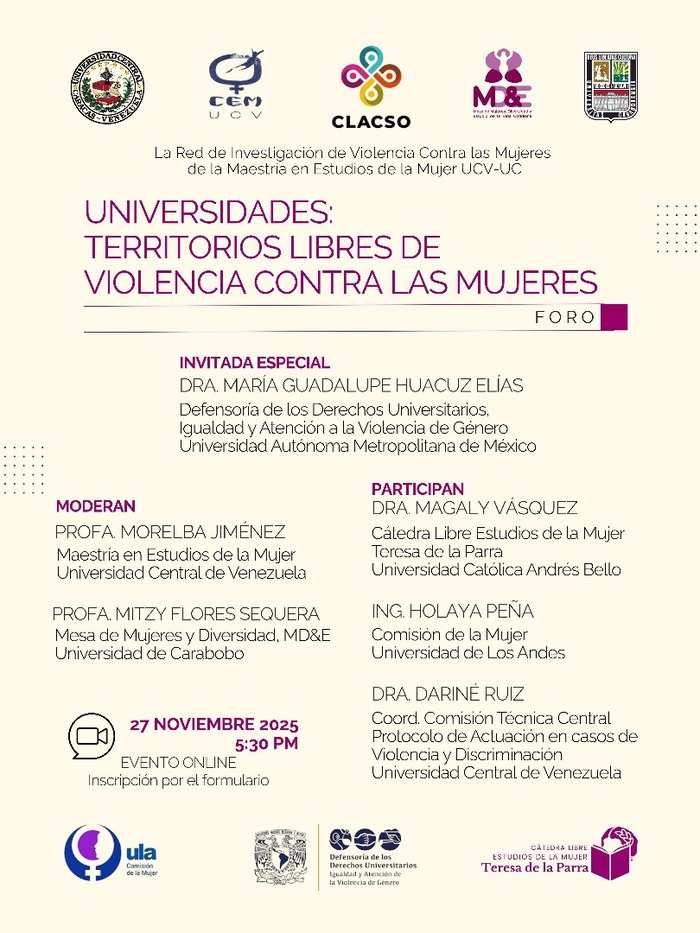
Within the framework of the International Day for the Elimination of Violence against Women, the Research Network on Violence Against Women of the Master's Program in Women's Studies (UCV-UC), together with the UCV Center for Women's Studies and CLACSO, invite you to the forum on Thursday, November 27thUniversities: territories free of violence against women”, a space to reflect and debate on policies, experiences and challenges in eradicating gender violence within university institutions.
Book: Multiple forms of violence in Latin America and the Caribbean: Gender, dissidence, and otherness
In recent years, violence has intensified, due in part to neoliberal policies that have led to a decline in living conditions and environmental degradation. This is compounded by political instability and the crisis of democracy, as well as the rise of religious fundamentalism, which has eroded the guarantee of human rights.
Presentation of Karina Batthyány, Pablo Vommaro y Teresa Arteaga Bohrt.

