
Living Democracy

The 10th edition of “ Democracia Viva ” took place on September 15 and 16 in the city of Buenos Aires, Argentina, in commemoration of the “ International Day of Democracy ”, a date established by the UN.
The meeting and the “ Living Democracy ” festival were a collective initiative co-organized by the political-social organization “ Asuntos del Sur ” together with a network of more than 70 organizations, universities, collectives and civic laboratories from all over Latin America and the Caribbean, including the Latin American Council of Social Sciences.
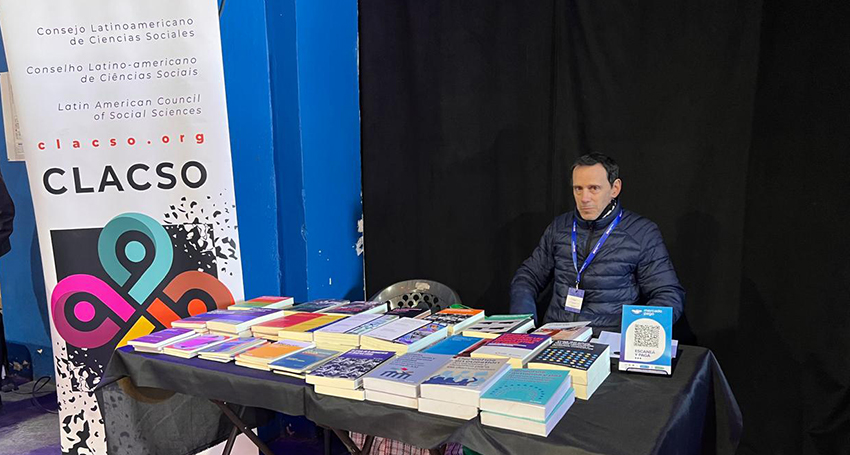
In this context, CLACSO was represented by Pablo Vommaro (Executive Director), Gustavo Lema (Director of Communication and Information), Leandro Morgenfeld (University of Buenos Aires and CONICET of Argentina, and member of the CLACSO Working Group “Studies on the United States”) and Gabriel Merino (CONICET – UNLP of Argentina, co-coordinator of the CLACSO Working Group “China and the map of world power” and member of the Working Group “Studies on the United States”).

AGENDA
Day 1 – Tuesday, September 15: Learning, laboratories and cross-pollination
A common opening, shared learning, seven strategic laboratories, and a closing of intersections. Each axis produces concrete proposals that intersect and are prioritized as the basis of the New Agreement.
Headquarters: UMET – Metropolitan University for Education and Work
Sarmiento 2037 – City of Buenos Aires

Day 2 – Wednesday, September 16: Festival
An open and participatory day: workshops, flash talks, a project fair, art and culture. It concludes with the public signing of the New Agreement and the celebration of ten years of Living Democracy.
Venue: Konex Cultural City
Sarmiento 3131 – City of Buenos Aires
Panel: State of rights, public policies and urban space – 11:00 to 12:00
Objective of the participatory table.
To generate a space for exchange and collective reflection on the state of rights in the Autonomous City of Buenos Aires, based on the preliminary results of four investigations developed within the framework of the research call between CLACSO and the Ombudsman of the Autonomous City of Buenos Aires.
These findings were put into dialogue to build a comprehensive view of the challenges facing democracy in the urban sphere and to discuss what public policies, institutional capacities and strategies for participation and protection of rights are necessary to guarantee a fairer and more inclusive city.
A participatory and dialogical methodology was proposed, which would allow for the exchange between research teams, institutional representatives and participants at the table.
Participants:
Pablo Gordon (Ombudsman's Office of the Autonomous City of Buenos Aires). Opening and presentation of the panel
Ana Clara Camarotti, Martin Güelman, Daniel Eduardo Jones, Ana Laura Azparren, María Agustina Rossi Lashayas. Therapeutic trajectories and gender inequalities in the experiences of people in situations of socioeconomic vulnerability who attend drug use treatment centers in the Autonomous City of Buenos Aires
Hernan Manuel Palermo Haber, Patricia Ventrici, Daniela Denise Krepki, Verónica Casas, Lissette Fuentes Lorca, Antonio Doval Borthagaray, Lautaro Clemenceau, Camila TestónWork and workers in the digital economy in Buenos Aires. Problems of a heterogeneous, emerging and unregulated sector
Tania Julieta Rodríguez, Lucia Bachoer, Daniela Andrea Maciel, Daniel Cieza, María Andrea Cuellar Camarena, Francina CassinoTransformations of work and labor protection in the City of Buenos Aires: inequalities, state capacities and union experiences (2020–2025)
María Mercedes Di Virgilio, Leandro Vera Belli, Denise Brikman, Carolina González Redondo, Florencia Aramburu, Mercedes NajmanThe right to housing in CABA: an analysis of the tenant issue from the perspective of demand, supply and policies
Cross-cutting dialogue. A space for exchange will be opened with the participants.
Closing remarks: Teresa Arteaga (CLACSO)
More voices, better democracy: Other ways of telling the story of migration – 4:00 p.m.
Silvina Molina — journalist specializing in inclusive communication, member of Refugio Latinoamericano.
Liset Luque — Venezuelan social entrepreneur, president of Alianza por Venezuela, part of MIA Latam (Hola America Accelerator).
Juan Manuel López Florez — Mexican journalist for the media outlet Mutante, based in Buenos Aires.
Antonella Delmonte – CLACSO Working Group on Migration and South-South Borders
Moderator: Lucía Tornero , leader of communication strategy and narratives at Hello World and Hola América.
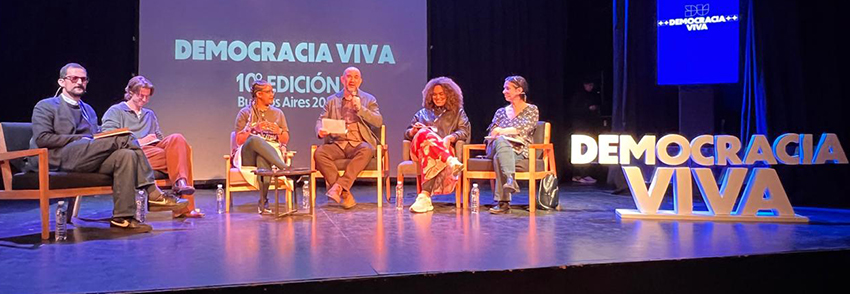
Closing panel: "Who builds what's coming?"«
Tania Ramirez (Update, Uruguay)
Luyara Franco (Marielle Franco Institute, Brazil)
Nicolas Diaz (Extituto, Colombia)
Bernardino Leon (Advance, Spain)
Moderated Pablo Vommaro
State of rights, public policies and urban space
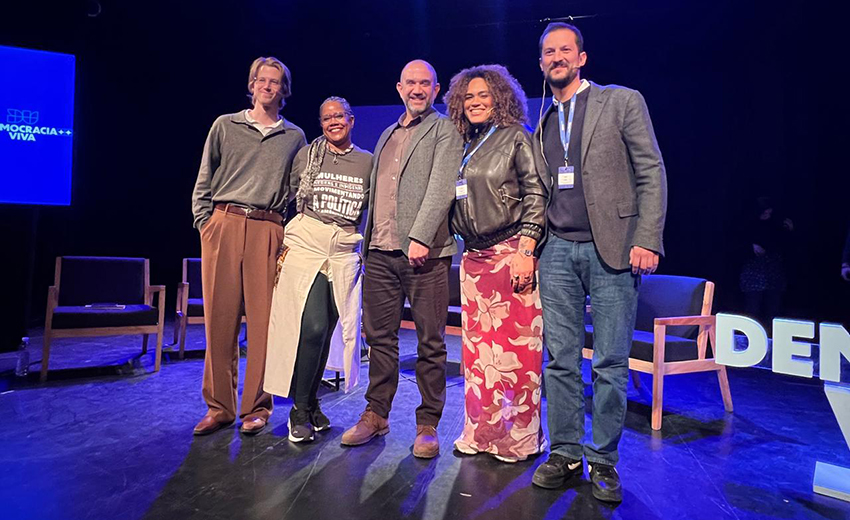
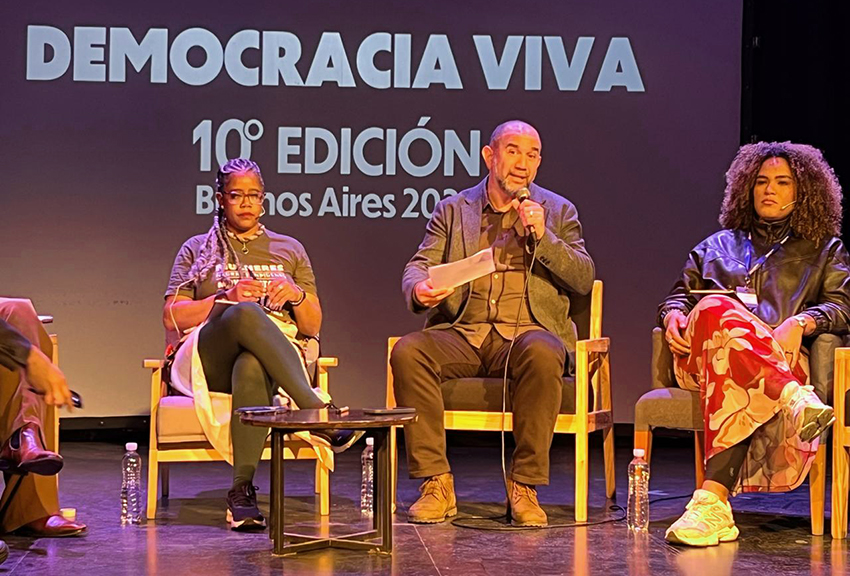
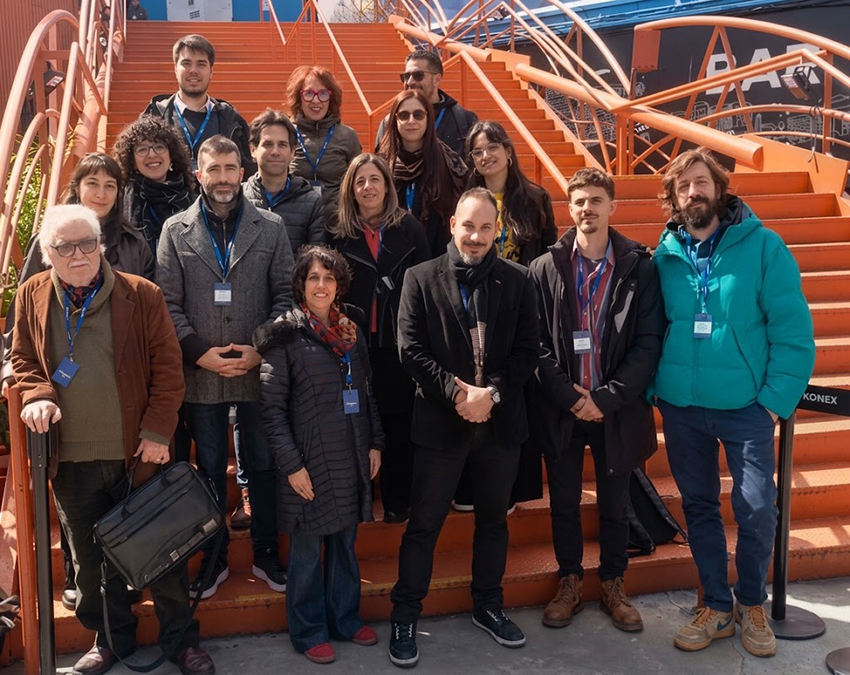
On September 16, as part of the “Living Democracy 2026” Festival, the participatory panel “State of Rights, Public Policies, and Urban Space” was held. This forum provided an opportunity for exchange and presented preliminary results from four research projects developed within the framework of the alliance between CLACSO and the Ombudsman's Office of the Autonomous City of Buenos Aires. Pablo Gordon and Matías Virginillo participated on behalf of the Ombudsman's Office of the Autonomous City of Buenos Aires, while Teresa Arteaga and Sofía Torres represented CLACSO.

The meeting is structured as a festival and a regional laboratory that combines synchronous virtual panels, interactive workshops and artistic expressions that connect multiple countries in Latin America and the Caribbean.
The conference aims to analyze democracy not only as an electoral process, but as a daily objective and a way of life that extends far beyond the ballot box. It seeks to discuss the need for an inclusive, participatory, and deliberative democracy in the face of the erosion of rights, curtailment of freedoms, and crisis of representation in Latin America and the Caribbean.
The main topics to be discussed are: Guarantees to freedom of expression – Elimination of violence, discrimination and racism – Active participation of young people in politics – Commitment to climate change and institutional openness.
Among the participating organizers, we can mention, among others, international citizen articulation entities such as the Latin American and Caribbean Network for Democracy (REDLAD) and global foundations dedicated to public deliberation such as the Kettering Foundation; international coalitions such as the Global Democracy Coalition; international experts from human rights organizations and UN special rapporteurs focused on the protection of civic space; academics, researchers; activists and social collectives from youth movements, Afro-feminist groups, environmental defenders and territorial grassroots organizations from the Global South; creators and artists.
The activities are structured as follows:
-Virtual debate panels and discussions: Live broadcasts focused on urgent issues such as "Electoral challenges in Latin American democracies" or "Political participation of youth."
-Collective intelligence workshops: Digital creation spaces where activists, researchers and citizens design proposals to combat hate speech and the closing of civic space.
-Artistic and cultural interventions: Presentation of works of photography and writing under slogans such as "Thinking about democracy from art", intended to make visible the resistances of the Global South.
-Political innovation labs: Virtual and in-person presentations on digital tools and smart public management to improve government transparency.
Registrations for the Festival on September 16th at Konex Cultural City

