Latin American Network Open Chair: Women Transforming the Economy (REMTE)
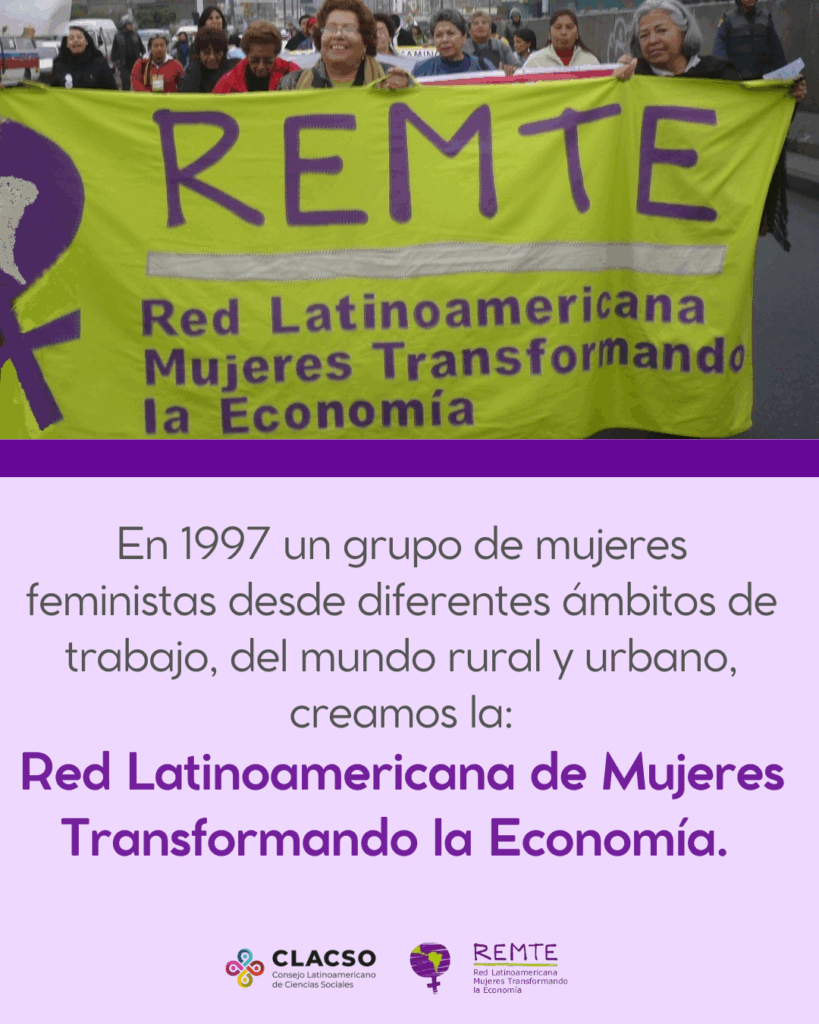
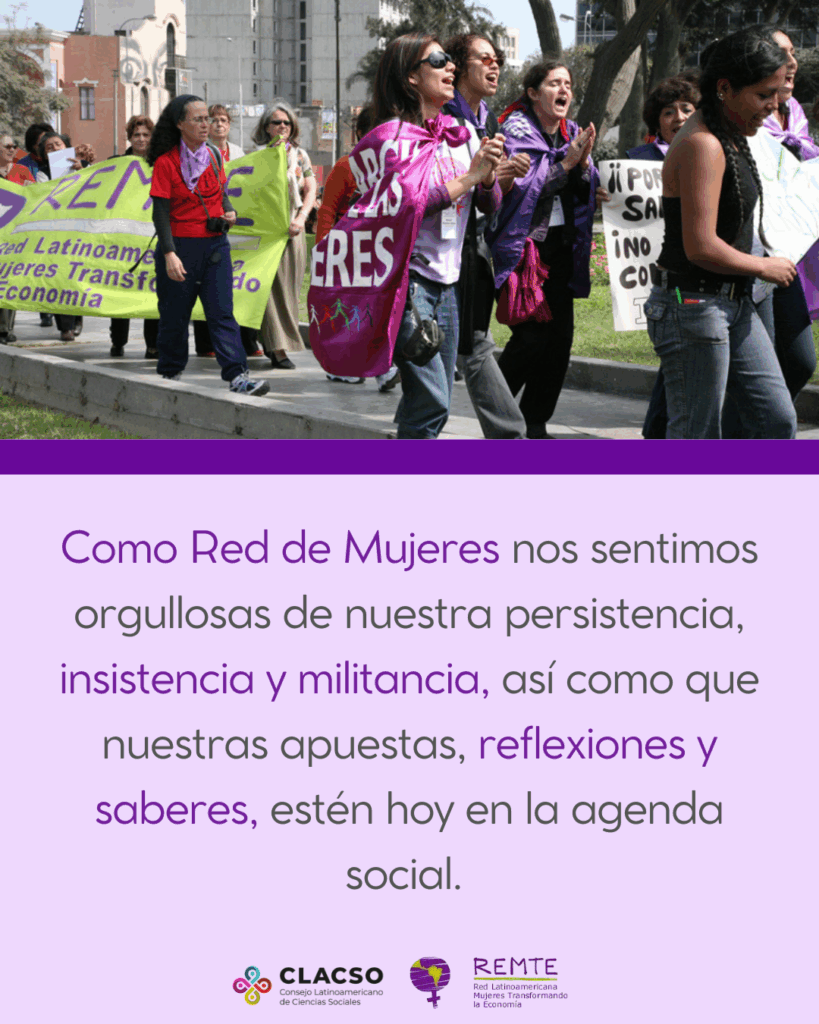
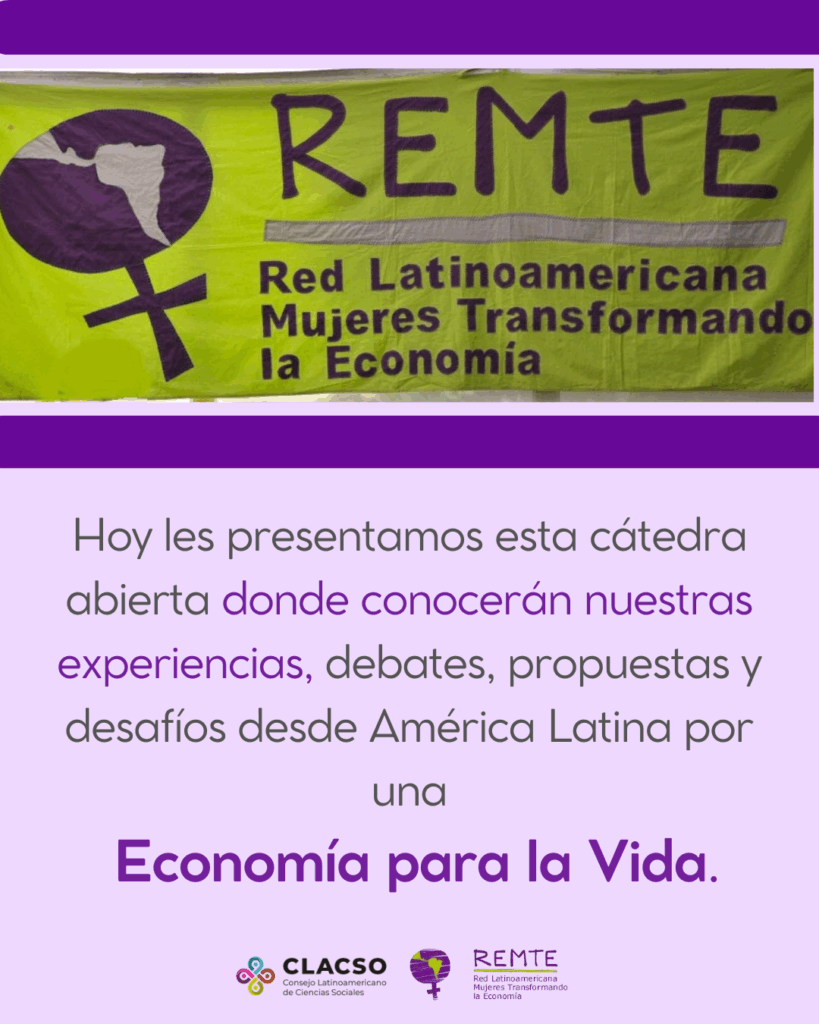
The Open Chair of the Latin American Network Women Transforming the Economy (REMTE) Transformative Economies from a Feminist Perspective aims to disseminate and debate the thinking, knowledge, and practices generated over more than twenty-five years in the construction of a feminist economy rooted in our reality, with work linked to the women's movement and the broader space of social movements in Latin America.
REMTE has contributed a systemic and situated perspective on the interrelationship between capitalism and patriarchy. Its interpretations and proposals have been fundamental both in placing specific issues on public agendas and in integrating a feminist perspective into resistance and alternative initiatives driven by organizations and social movements in the region.
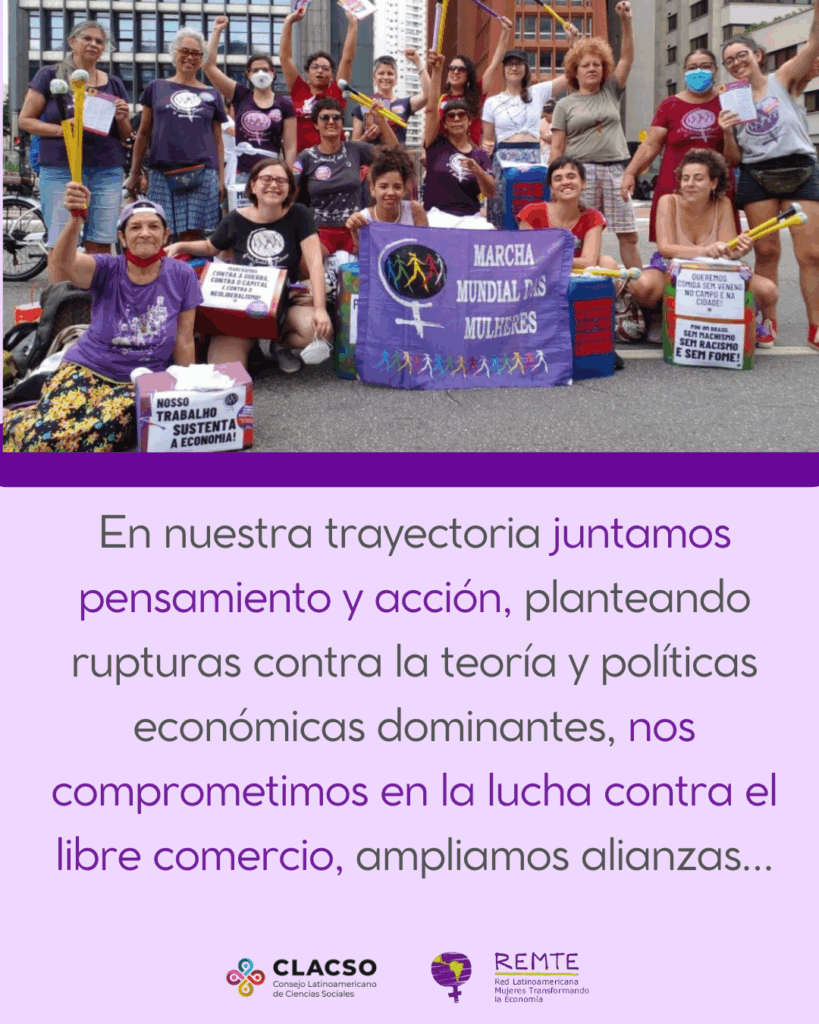
REMTE was ahead of its time in identifying and criticizing the commodification of life that characterizes the current phase of capitalism, and from that perspective it has developed novel analyses and proposals regarding work, the dynamics of production and reproduction, the economic role of women in the processes of subsistence and care, food sovereignty, the productive matrix, fiscal policy and indebtedness, economic diversity as the key to transformations, regional integration, among other topics.
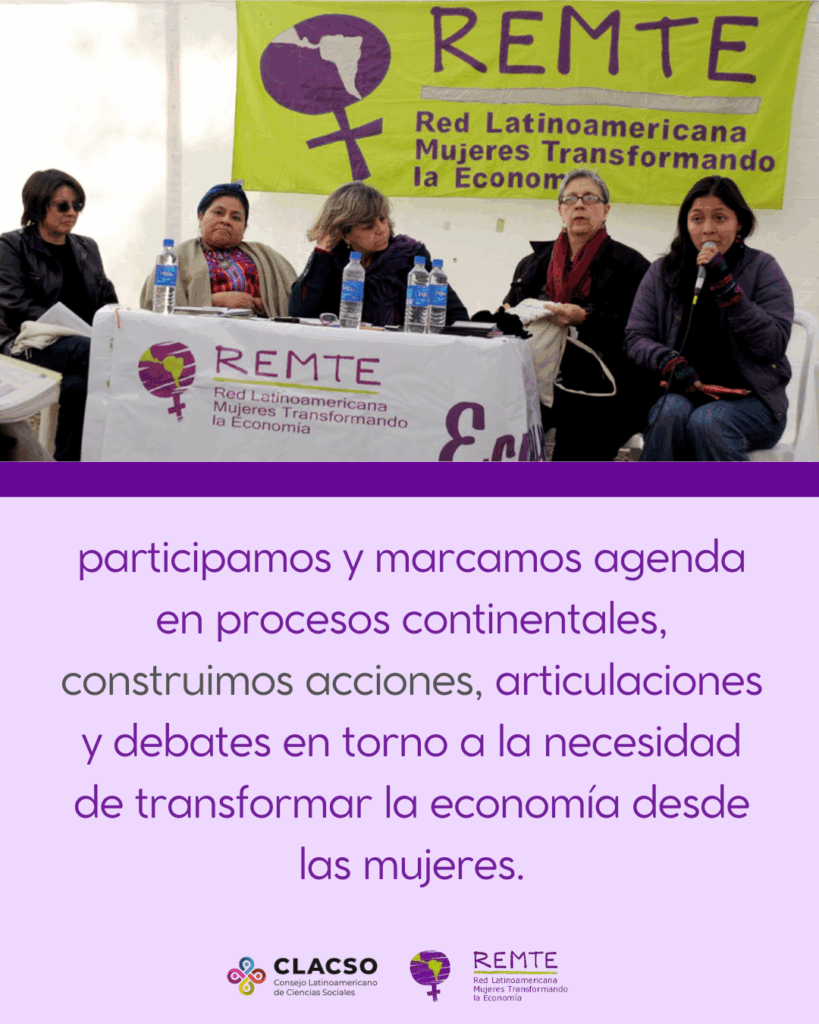
REMTE has shared critical perspectives and spaces with organizations working on agroecology, food sovereignty, the social and solidarity economy, the commons, and the centrality of labor and care. Part of this shared journey is reflected in the book Transformative Economies from a Feminist Perspective which will be a central reference in the development of this course that we will be sharing over 4 sessions.
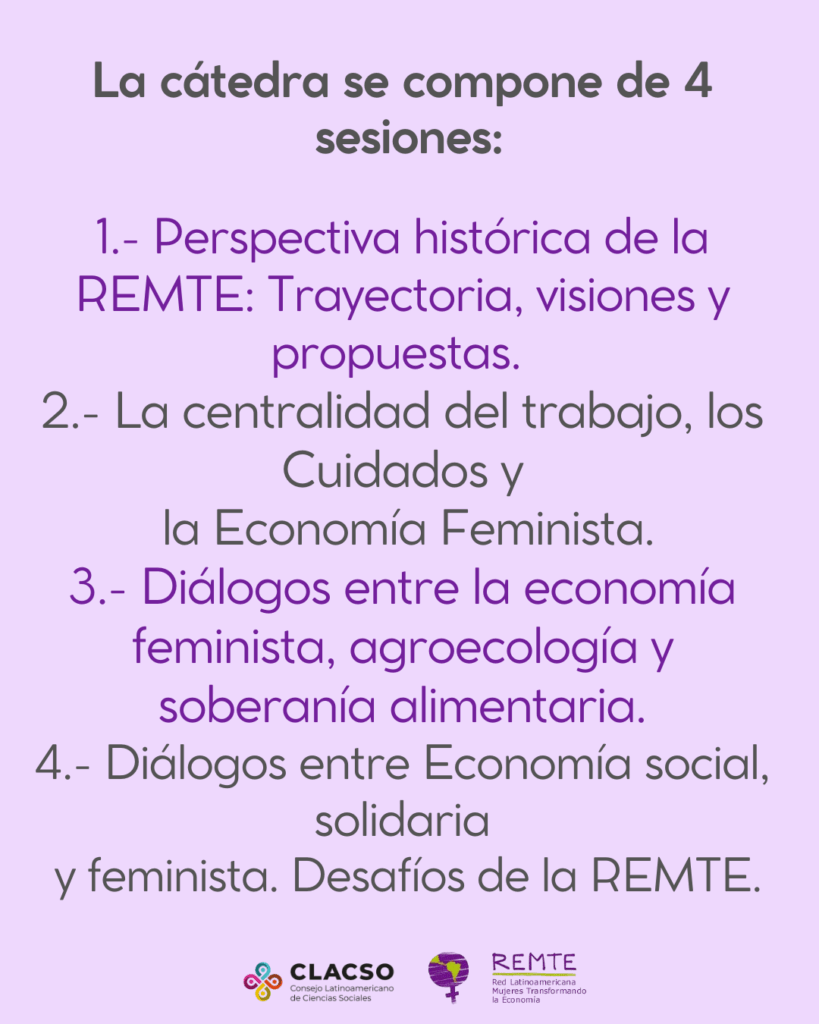
SESSION 1
Historical perspective of REMTE: Trajectory, visions and proposals
In this session we will have the opportunity to learn about the historical perspective of the Latin American Network of Women Transforming the Economy, its development, trajectory and some of its proposals.
Participants:
Tania Elíaz – (REMTE Venezuela) – Coordinator of the open chair.
Patricia Amat (REMTE -Peru) - Gender and Economy Network
Tamy Cenamo (REMTE- Brazil)
Rosa Guillén (REMTE Peru) – Gender and Economy Network, World March of Women.
Tica Moreno (REMTE Brazil) - Siempre Viva Feminist Organization, World March of Women
SUGGESTED READINGS:
- Diaz Alba, C. (2007) The Latin American Network of Women Transforming the Economy: building bridges between economic justice and gender equality. https://www.redalyc.org/pdf/884/88432605.pdf
- Imai Cenamo, Tamy (2020) Women say no to the tyranny of the free market: the Latin American network of women transforming the economy and the free trade area of the Americas (1997-2005). https://repositorio.unam.mx/contenidos/las-mujeres-dicen-no-a-la-tirania-del-libre-mercado-la-red-latinoamericana-de-mujeres-transformando-la-economia-y-el-are-3570958
- Social Movements Information Gathering - REMTE: https://www.movimientos.org/remte
- REMTE (2015). Women against free trade: a story of resistance and struggle. Sao Paulo: REMTE. https://www.bilaterals.org/IMG/pdf/las_mujeres_contra_el_libre_comercio._una_historia_de_resistencia_y_lucha.pdf
- Sanchez, M. (2001) Structural adjustment and its impact on women's work in Bolivia. La Paz: REMTE Bolivia. https://bivica.org/file/view/id/4356
- Life and Struggle of Nalú Faría https://www.sof.org.br/vida-luta-nalu-faria/
Food for thought:
How do women construct an alternative view of the economy?
SESSION 2
The centrality of work, care, and feminist economics.
In this session we will share reflections on the centrality of work and care economies in the commitments to sustaining life in the face of the current multi-crisis ecosocial crisis.
Participants:
Tania Elíaz – REMTE Venezuela – Coordinator of the open chair
Alba Carosio – REMTE Venezuela, General Coordinator of REMTE
Graciela López – REMTE Bolivia, World March of Women
Bisheli Elías – REMTE Bolivia
SUGGESTED READINGS:
- León, M. (Comp.) (2003) Women and jobs. Changes that cannot be postponed. Porto Alegre: Veraz Comunicação. https://www.alainet.org/publica/mujtra/mujeres-trabajo.pdf
- REMTE (2019). Agroecology. A change for life. Without gapsNo. 20.
https://www.flipsnack.com/remtebolivia/sin-brechas-n-20-agroecologia/full-view.html - REMTE (2014). Feminism and food sovereignty. Without gapsNo. 19.
https://www.flipsnack.com/remtebolivia/revista_18/full-view.html
Food for thought:
How can we approach a broad conception of work from a feminist perspective of economics?
SESSION 3
Dialogues between feminist economics, agroecology and food sovereignty.
In this session we will share perspectives from feminist economics on agroecology and experiences of food sovereignty, highlighting the ways in which women have historically built relationships with nature in the sustainability of life.
Participants:
Tania Elíaz – REMTE Venezuela – Coordinator of the open chair.
Miriam Nobre – REMTE- Brazil, Sempreviva Feminist Organization (SOF) and World March of Women.
Rosa Guillén – REMTE Peru, Gender and Economy Group, World March of Women.
Mafalda Galdames – REMTE- Chile, National Association of Rural and Indigenous Women – ANAMURI, World March of Women.
Lídice Ramos – REMTE- Mexico. Gender and Economy Network. REDGE.
SUGGESTED READINGS:
- Concha, Leonor (Comp.) (2012Feminist Economics as a Right. Mexico: REGGE. https://1library.co/document/dzxxwjvz-la-economia-feminista-como-un-derecho.html
- IALA Sowers of Hope. https://iala.anamuri.cl/iala/
- Renata Moreno (Org), (2020) Feminist critique of corporate power. São Paulo: SOF Sempreviva Organização Feminista. https://www.sof.org.br/critica-feminista-poder-corporativo/
- Sustainability of life in the center. https://www.youtube.com/watch?v=mw6jIjKYGH0
Food for thought:
What is the role of women in food sovereignty and in building ways of producing that prioritize the sustainability of life?
SESSION 4
Dialogues between social, solidarity and feminist economy.
In this session we aim to highlight the convergences between the principles and practices of the solidarity economy and those of the feminist economy, showing the links between the dynamics of production and expanded reproduction of life, to finally close the lecture with the current challenges of the REMTE.
Participants:
Tania Elíaz – REMTE Venezuela – Coordinator of the open chair,
Ivonne Farah – REMTE Bolivia.
Maritza Alba – REMTE Peru, Gender and Economy Group
Alba Carosio – REMTE Venezuela, General Coordinator of REMTE
SUGGESTED READINGS:
- Carosio, A. (Coord.) (2021) Transformative economies from a feminist perspective. La Paz: REMTE-World March of Women. https://remte-bolivia.org/attachments/article/193/Libro%20Brasil.pdf
- Workbooks. REMTE. https://remte-bolivia.org/index.php/publicaciones/cuadernos-de-trabajo
- Booklets. REMTE. https://remte-bolivia.org/index.php/publicaciones/cartillas
- Faria, Farah and López (Coords.) (2020) Challenges of the solidarity economy in times of Covid-19. La Paz: REMTE-World March of Women. https://remte-bolivia.org/attachments/article/194/remte%20economia%20solidarias.pdf
Food for thought:
What are the contributions of the feminist perspective of economics to the approaches of the social and solidarity economy?
Diffusion kit