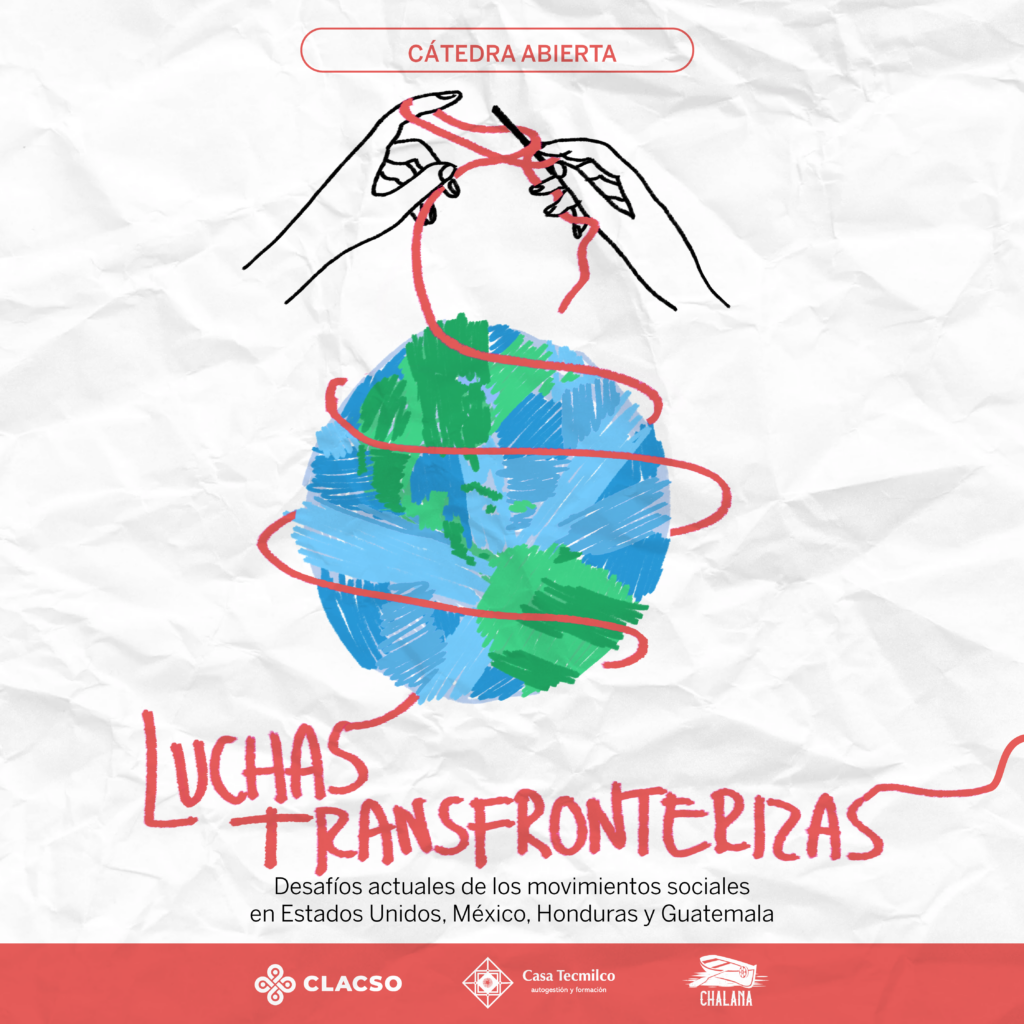
Open Chair Weaving Transborder Struggles
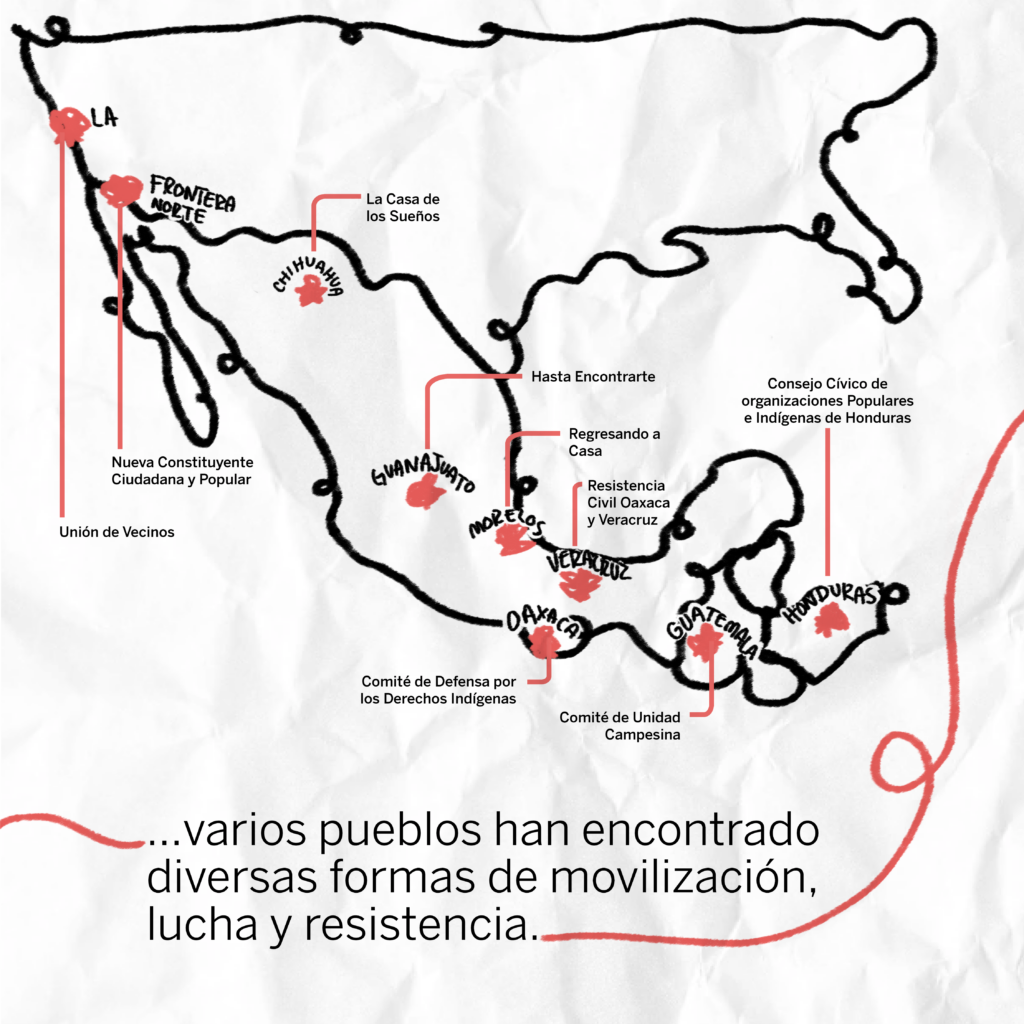
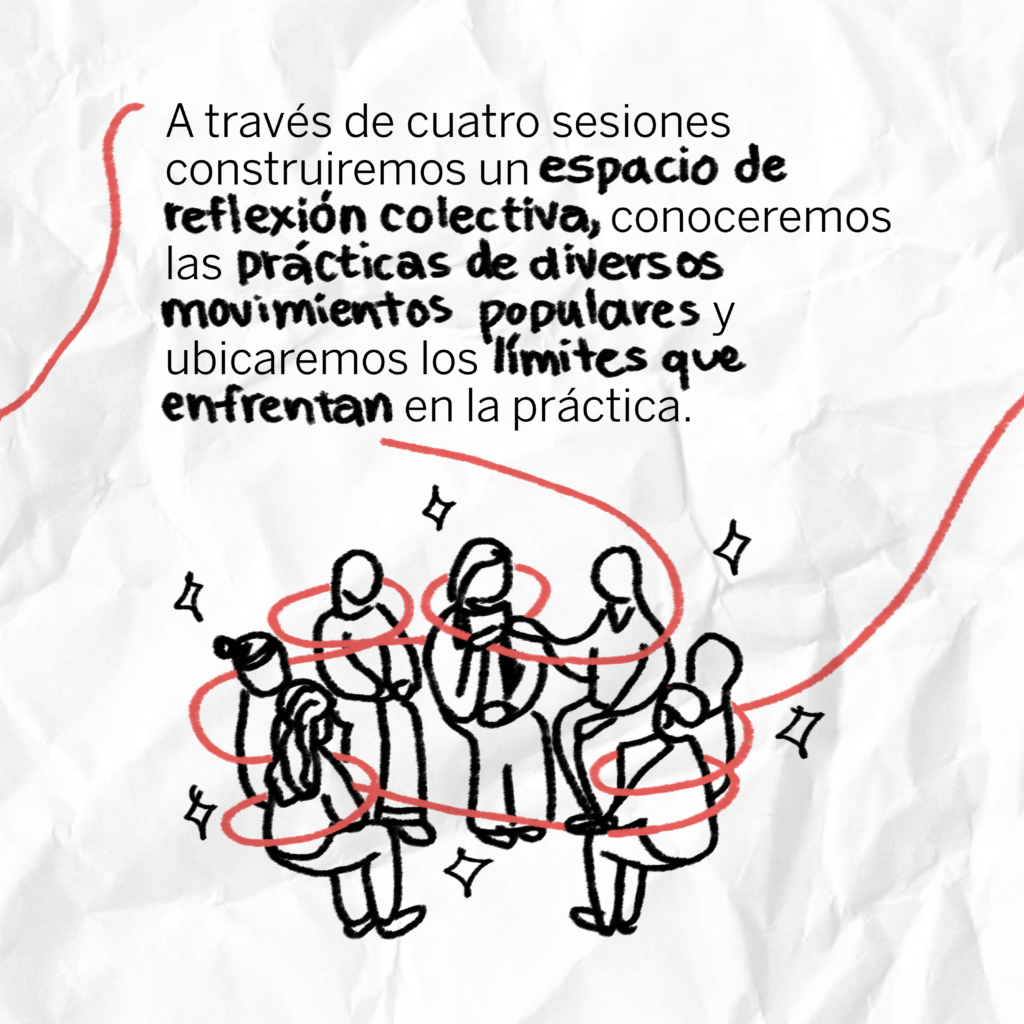
The Open Chair on Transborder Resistances: Weaving Struggles from the Belly of the Monster (Mexico and Central America) aims to analyze the historical context of the forms of domination that have emerged in this region and its diverse expressions of resistance. Through four sessions, focusing on the organizational experiences of movements in Mexico, Guatemala, Honduras, and organizations working on migration issues from the United States, we will create a space for collective reflection that contributes to characterizing the situation in the subregion, understanding the practices of various popular movements, and identifying the challenges and limitations they face in practice.
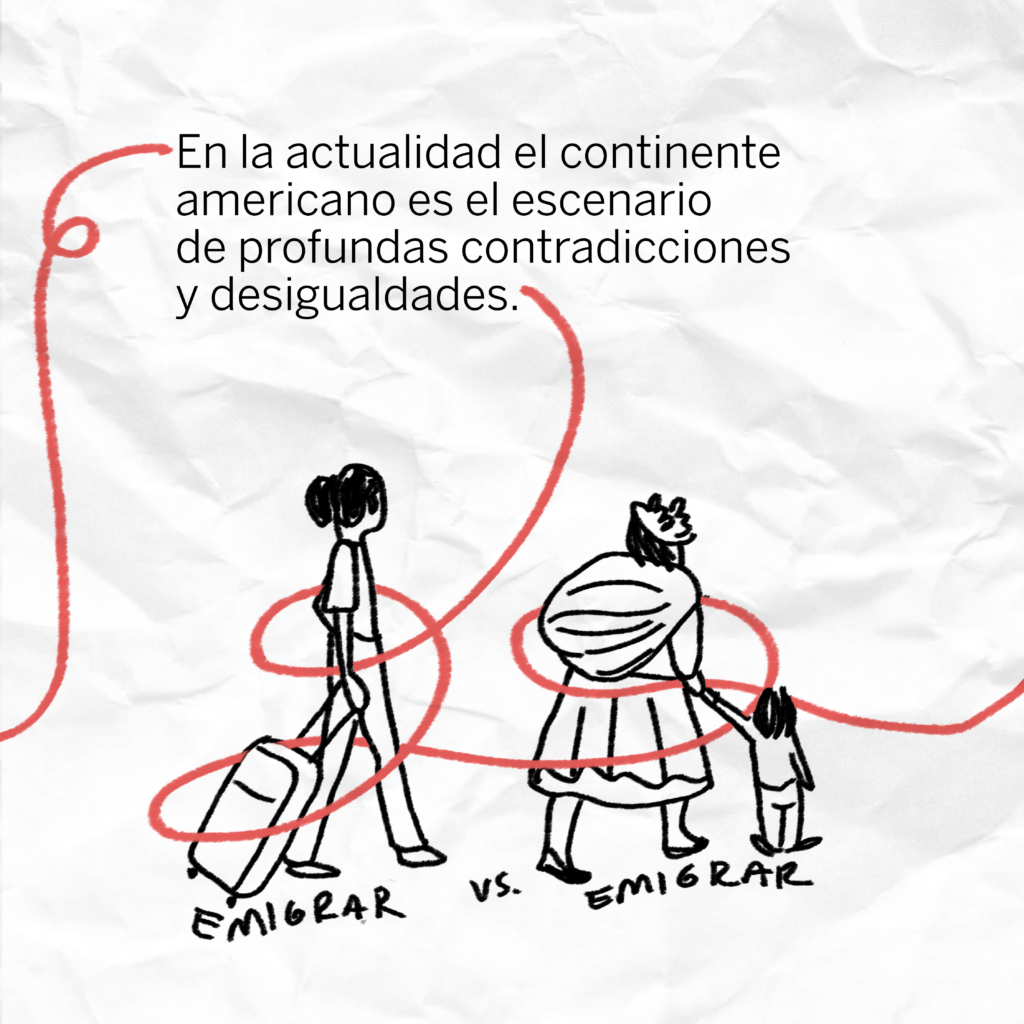
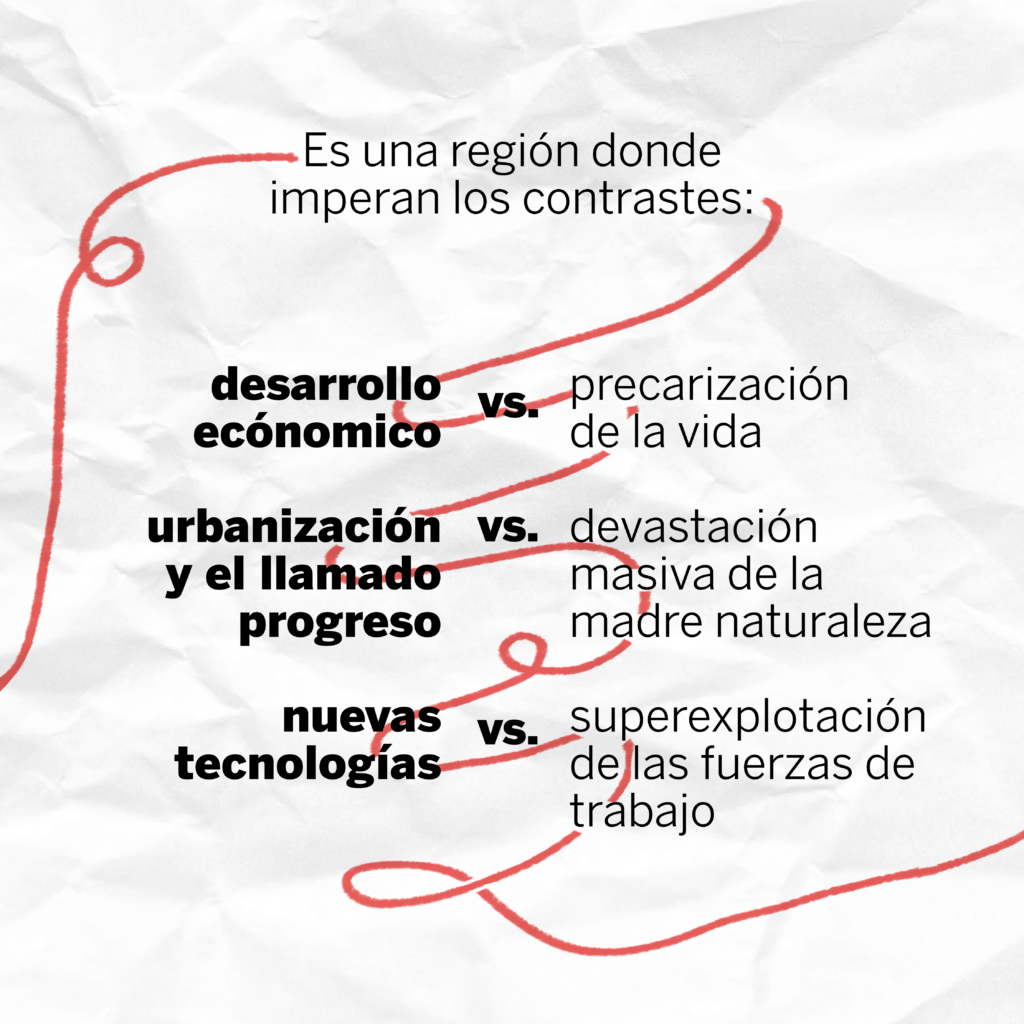
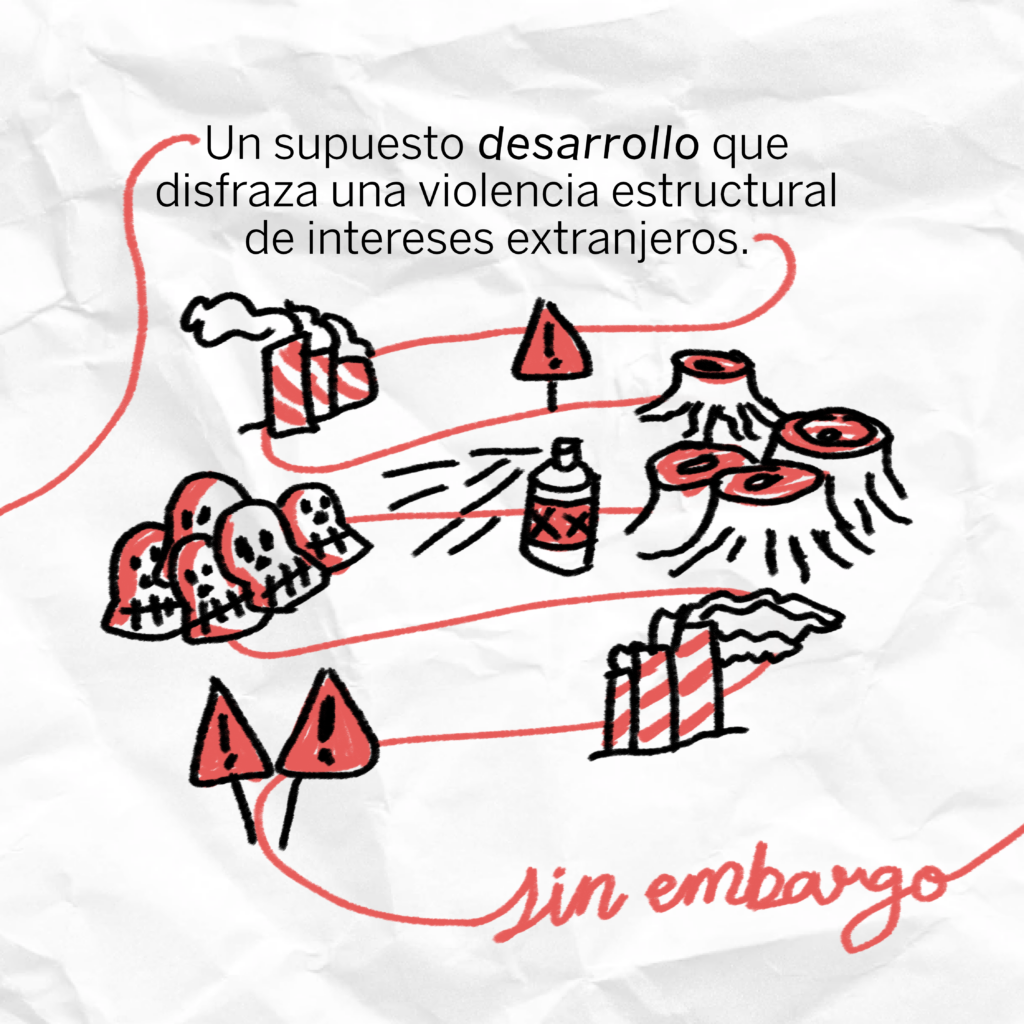
This territory is a stage for profound contradictions and inequalities. Here, the dynamics of economic development and new technologies stand in stark contrast to poverty, the super-exploitation of labor, and the destruction of nature. The role of organized crime, violence, and forced displacement has become commonplace. However, the people also resist this onslaught through various forms of mobilization, community building, and organization. We reflect on this territory through the lens of the cross-border conflicts that permeate it.
Each session is accompanied and coordinated by the Casa Tecmilco training team , a member - along with most of the experiences recounted - of Tejiendo Luchas , a meeting space for different resistances from all over Mexico.
We hope it will be useful for those seeking to delve into the deep-seated problems of the region and the peoples struggling throughout Latin America and the Caribbean.
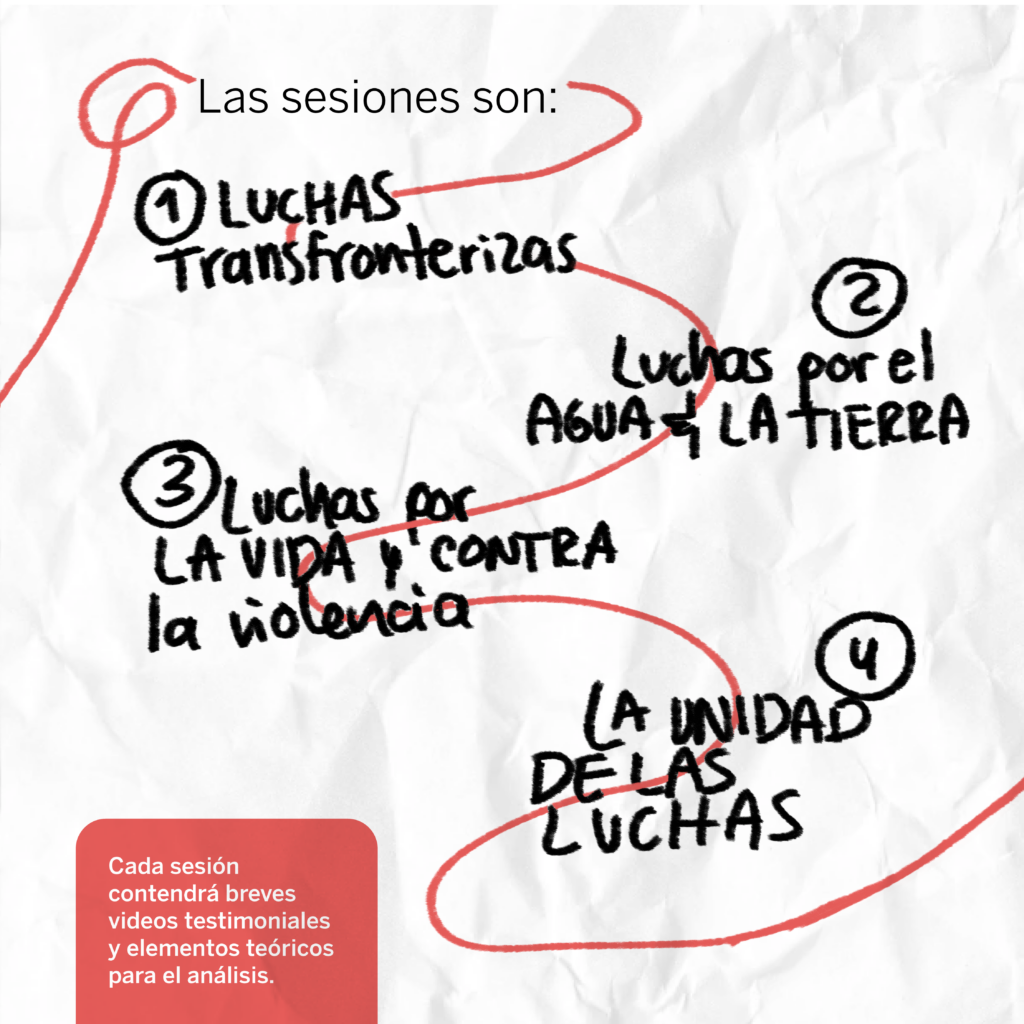
SESSION 1
Critical Cartographies
A geopolitical analysis of the region: the interests of U.S. imperialism, the routes of communication and dispossession, the strategic importance of this part of the map, among other things. This will be accompanied by the voices of women organized on both sides of the border: from the United States and from Guatemala.
For further reflection
We propose that you, with your groups or workspaces, discuss the following questions:
- How does the presence (direct or indirect) of American imperialism impact their territories?
- Were you familiar with the forms of domination and resistance discussed during this first session? If not, why do you think this lack of awareness exists?
SESSION 2
Territories
The second session is dedicated to addressing the problem of land dispossession, starting with the northern border and ending with the megaprojects in southern Mexico and Honduras.
For further reflection
We suggest that for this session you carry out a mapping activity in which you locate the following elements of your territories:
- Natural resources essential to sustaining the current model of domination
- Forms of exploitation and dispossession of territories
- Forms of resistance that have existed historically and that exist today. Relationship between peoples and organizations.
- Companies in charge of said operation
Identify any issues you don't know or that require further research so you can divide the task among yourselves. Once you finish the map, you can think about creating a small, easily accessible resource that you can share and collaborate with others.
SESSION 3
Violence and enforced disappearance
The third session adds to the complexity of the violence that pervades this entire region: How can structural violence in this region be explained? What is the relationship between forms of domination and this strategy of control? In addition to an introduction proposed by the training team, we include reflections from various key figures involved in the search for missing persons and those who fight for peace, justice, and dignity.
For further reflection
For this session, we propose reflecting on the relationship between the state violence unleashed in your countries during the 1960s and 1970s and the other forms of violence that persist today. We know that this relationship is often not obvious, and in certain contexts, we may believe it doesn't exist. However, we encourage deeper analysis to uncover the roots of repressive forms of state and paramilitary violence and their current repercussions.
- What was the systematic plan that existed then? What social repercussions does it have today?
- What repressive measures does the State currently employ against these struggles? Are there other agents linked to the State that threaten our projects? Who are they?
SESSION 4
Weaving Struggles: Strategic Challenges for Unity
In the final session, we aim to discuss the challenges of unity within organizations. There, collectives and organizations participating in Tejiendo Luchas and other coordinating bodies share their perspectives on the significance of spaces like these.
For further reflection
For this session, we propose discussing: What do you believe are the current challenges* for social organizations at both the local and regional levels? How can we connect the struggles that are closest to us?
*When we refer to challenges, we mean the difficulties (both external and internal), the strengths we have acquired, the opportunities, and the medium- and long-term perspectives. Include a characterization of your movement/organization/collective/knowledge space in relation to the State, the powers that be, and existing forms of social organization.
SESSION
REFERENCES
- COPINH (2016) “Summit of the Peoples Against Extractivism”.
Available on: https://copinh.org/2016/11/cumbre-de-los-pueblos-contra-el-extractivismo/
- González Casanova, P. (2019). “Where is Mexico going?”, in La Jornada, 07/04/2019.
Available on: https://jornada.com.mx/2019/04/07/politica/006a1pol.
- López y Rivas, G. (2012). “Old and new dirty wars” in El Cotidiano. (Mexico City), no. 172, March-April.
Available on: https://www.redalyc.org/pdf/325/32523118013.pdf
- Pine, A. (2022) “Caravans. On the fundamental causes of Central American migration”. Available at: https://thetricontinental.org/es/argentina/nuestraamerica2-pine/
- Saxe-Fernández, J. (2023) “War and omnicidal irrationality” in La Jornada, 29/06/2023.
Available on: https://www.jornada.com.mx/2023/06/29/opinion/020a1eco
- Various Authors (2020) “Mexico. Analysis in a time of tensions” in Incendiar el Océano, 08/07/2020. Available at: https://incendiareloceano.org/2020/07/08/mexico-analisis-en-un-momento-de-tensiones/
Diffusion kit