
Axel Didriksson – UNAM
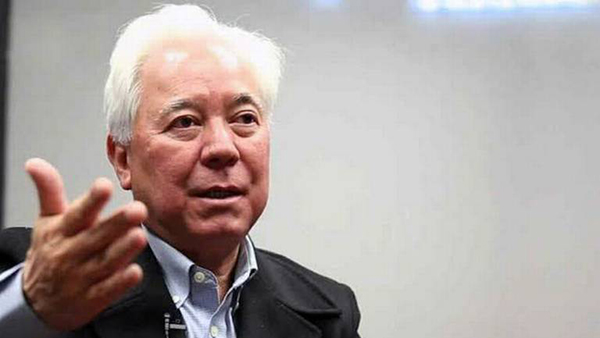
Within the framework of the “Latin American and Caribbean Campaign for the Democratization of Higher Education and Knowledge: Higher Education is Not a Commodity,” which is sponsored by numerous educational institutions for whom higher education is a social public good, a universal human right, and a responsibility of states, he was interviewed Axel DidrikssonResearcher at the National Autonomous University of Mexico (UNAM). President of the Global University Network for Innovation (GUNI) for Latin America and the Caribbean.
The regional campaign, which is taking place on the road to the World Conference on Higher Education (WHEC2022) to be held in Barcelona, Spain, from May 18 to 20 and organized by UNESCO, was launched with the purpose of defending public higher education as a right and heritage of our peoples.
With what expectations and with what diagnosis do we face this new World Conference?
In the data and trends I analyzed in research I conducted between 2017 and 2019, before the pandemic, in fifteen countries across Asia-Pacific, Europe, and Latin America—as part of a project I'm coordinating for the Latin American regional chapter of the GUNI (Global University Network for Innovation) global report—I found that some countries have practically embraced the complete privatization of their higher education systems, while others have shown a trend toward commodification. This means that a portion of the budget for their public universities, those still receiving state subsidies, must come from the universities themselves: from selling their services, commercializing patents, undertaking projects with multinational corporations, competing with the market, and developing technologies to secure funding. I've termed this a process of corporatization. In other cases, it has been practically privatization. Take Thailand, for instance: two decades ago, it eliminated all public universities, transforming them all into private institutions. Similarly, Malaysia, along with Singapore, imposed a model of corporatization and privatization, even transforming universities into market-driven entities, creating what are known as "World Class Universities." In Japan, universities also ceased to be national universities, as they were constitutionally called, subsidized by the state. Now they have been given more autonomy, but as corporations, to secure resources. For them, the concept of autonomy is financial autonomy, not academic freedom, freedom of research, or a campus that becomes a free space for learning, as our universities are. Even China, which continues to subsidize the vast majority of its system, has a project to create one hundred world-class universities using this corporate model. So, what these countries are going to bring to the World Conference on Higher Education is a model that they will assume to be the best in the world, the highest quality, the one that is presenting radical, innovative changes, research, competitiveness, in the cutting-edge areas of scientific and technological development (automotive, electrical, use of new nanotechnology miniaturization materials).

And what is being lost in this mutation? Why isn't this type of model a university that serves our countries or our world?
It's a deception, really. This isn't even real for their own countries. In the study I conducted, I demonstrated that fundamentally, the construction of free knowledge, the management of open access data, and tacit knowledge continue to operate, and that the researcher, the academic, and the student work on the basis of autonomy and academic freedom. So, it's a scam. Where corporatization and privatization are taking place is in the administration. The administration has been greatly strengthened. Rectors, deans, and administrators have to follow the corporate model, but at the bottom, those who develop creativity, innovation, and knowledge production are the researchers themselves, who are governed by their own rules, canons, methodologies, epistemes, etc., which depend on academic freedom. So, it's a kind of double standard. They present that model as the best, but ultimately autonomy, academic freedom, peers, etc., still have an influence. But they are beginning to face conditions of persecution. In China, the Communist Party delegate sits alongside the rector, and the two of them make the decisions. The academic develops his project, but if he is told "this is not convenient for us", the researcher is deprived of the funding. The same thing is happening in the United States, where Slaughter, Leslie and others have described this model as academic capitalism. Universities continue to be subsidized by the State, the military industry, defense or health expenditures, in cutting-edge research projects that they consider competitive, but the moment a researcher deviates from standard protocols due to academic freedom, he is persecuted, even prosecuted, his funding is taken away and he is put on a blacklist. The university teachers' union has strongly denounced this because it is also contributing to the precariousness of professionals within the framework of universities of this type. In Europe there is a much more resilient system, where there are universities that defend, as in ours, their autonomy and academic freedom, that mobilize with the students, and that create a scenario of polarization. Because there are also universities there that are moving towards commercialization or Americanization, with the whole Bologna project, which works within the framework of open commercialization and commodification, towards the creation of the global knowledge space. Other models, for example the Nordic one, basically from Sweden, Norway and Denmark, have adopted a high level of production of science, technology and innovation in relation to the well-being of their people. There's a nuance there. For example, the League of European Research Universities (LERU) has adopted the concept of no rankings or standards, and of research with innovation as long as it has a social impact. That's a little closer to our general principles. In Latin America, the big problem is that we not only have the most unequal region but also the most privatized and commodified region in the world, because, despite the inequality, the growth rate of private higher education institutions, some of very low quality, in some countries already reaches 70, 80 and even 90 percent of the total enrollment and number of institutions. For example, in Mexico, the current government has slowed this situation, but in the past it was the country with the highest per capita growth rate of the commodification and privatization of higher education in the world. It's not that we have a dominance of private universities in Mexico, but the growth rate was the highest in the world. Countries like Brazil, Colombia, some Central American countries, Ecuador, Peru, Chile… there are 7, 8, 10, 15 countries that have privatization rates of 65 or 70 percent. The only ones who are spared here are Argentina, Uruguay, Cuba, Venezuela…
How can these trends towards privatization be addressed at the World Conference?
We need to be very well organized, even with the governments. Right now I am communicating with four, five or six Ministers of Higher Education, even under the mandate of the Mexican government itself, to do so together with networks, associations, unions, student groups, groups of rectors, to arrive and say first that it is not a model that we can classify as world class. Because who controls that world class? USA? Is it a special higher education body that governs the destinies of universities worldwide? No. We stand for internationalization based on solidarity, not for world-class universities. We advocate for peer-to-peer, horizontal cooperation, and not for competition based on patents monopolized by large transnational corporations, as happened during the pandemic. The major breakthroughs in accelerating vaccine production came from universities and public working groups, which had been working for many years, since the 60s or 70s. Of course, when the business came, they went after the universities, the working groups, they released millions of euros or yen or dollars, they made their patent, the big pharmaceutical companies concentrated them, and they didn't even sell us the patent to make our own production, as it should have been done humanely. In Latin America, the only ones who were able to do it were Argentina and Mexico. We made an agreement to work in Argentina on the production and distribution of a vaccine that served us all and allowed us to vaccinate more or less quickly without paying so much to pharmaceutical industries, although we did continue to buy them out of necessity. We will address this situation at the World Conference. The OECD, the World Bank, and the IMF will arrive saying, "Here's the money for universities to continue producing commercial knowledge, and we want this global service model to expand." We are going to say no. We must harness humanity's knowledge for the benefit of all. We believe that higher education is a public good; it cannot be commodified. It is the duty of the State. If we see that the trend is going - as I foresee it will happen - towards saying that it is a global service and that we have to compete because that gives us quality, we are going to commit ministers so that when a declaration of that magnitude is made, contrary to the resolutions of previous conferences, they say "no, it is not a commodity". We fight for the internationalization of widely accessible knowledge, for solidarity and cooperation, for respect for autonomy and academic activity, for respect for universities that develop knowledge from the perspective of social impact linked to the major problems we have to solve as countries and as a region. Even developed countries have these problems because of course there is poverty, misery, lack of education, lack of services, and millions of immigrants. This model is elitist, sectarian, pro-market, and doesn't even work for its own countries.

What is happening in European countries or in the United States with this university model? Are there movements of questioning or resistance?
There's a movement underway. I'm in contact with the academic unions in Canada, the United States, and Mexico that make up the Trinational Coalition in Defense of Public Education. They're active every day, facing precarious employment, fighting for job security, academic freedom, and autonomy. Of course, the Latin American university unions that are part of the IEAL will also be coming to Barcelona to voice their concerns. Right now, there are mobilizations of Spanish students in Barcelona itself, speaking out against the new university law. Obviously, they're going to take advantage of the fact that there will be important international representatives present, and the professors will also be there to demonstrate. We're going to be organized and very strong. We've already told them this, and perhaps that's why they're a bit apprehensive and relegated the conference to the fourth level within UNESCO's nomenclature. They want to present it as a group of experts and highly selected individuals. However, since it's an intergovernmental body, we'll be joined by associations representing universities, higher education institutions, and governments (unfortunately, not many). This strong group will clearly and critically express its views on these supposed hegemonic models that must be reversed and regulated. We'll propose that private universities be regulated by the State to ensure they serve as a public good, because the principle of higher education as a social and public good isn't just for public institutions. It's also a responsibility of private universities, which must be accountable to society. They must define social quality from the perspective of interculturality and problem-solving; they can't simply sell degrees. We're going to demand much stricter regulations for private universities, with far greater restrictions on their operations.
Ver: Higher education is not a commodity
If you would like to receive more information about CLACSO's training programs:
[widget id=”custom_html-57″]
to our email lists.

