
“The dictatorship brought about changes in Uruguay that would alter the fundamental bases of society.”
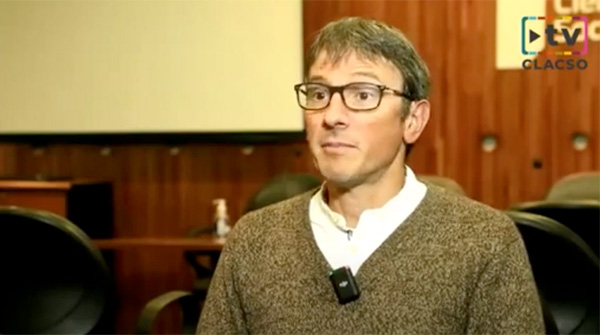
Miguel Serna , Associate Professor at the University of the Republic, Faculty of Social Sciences and Faculty of Economic Sciences, University of the Republic, moderated the Panel “Underground social changes here and beyond political authoritarianism: contributions and debates from the social sciences before and after the coup d'état” organized by CLACSO and its Member Centers in Uruguay on June 21 in the framework of the 50th anniversary of the coup d'état of June 27, 1973.
In an interview with CLACSO.tv, he explained that “talking about Uruguay 50 years after the coup of June 27, 1973, reveals a significant shift in eras, subtle changes, because this dictatorship, which came to restore or establish order, to generate repression, to attempt to demobilize and meticulously discipline Uruguayan society, at that moment of such profound upheaval, simultaneously generated a series of changes that would alter the fundamental bases of society, I would say despite and against the dictatorship's wishes. These are epochal shifts, a change of cycle. And they are true revolutions, but different kinds of revolutions. They are silent revolutions, revolutions that appear in daily life, in the pillars of society—we are talking about the family, education, the relationship between generations—and they will indeed mark a before and after.”
Interviewed by Gustavo Lema

50 years after the coup in Uruguay
If you would like to receive more information about CLACSO's training programs:
[widget id=”custom_html-57″]
to our email lists.

