
"In Paraguay there is a historic opportunity to recover the institutions"
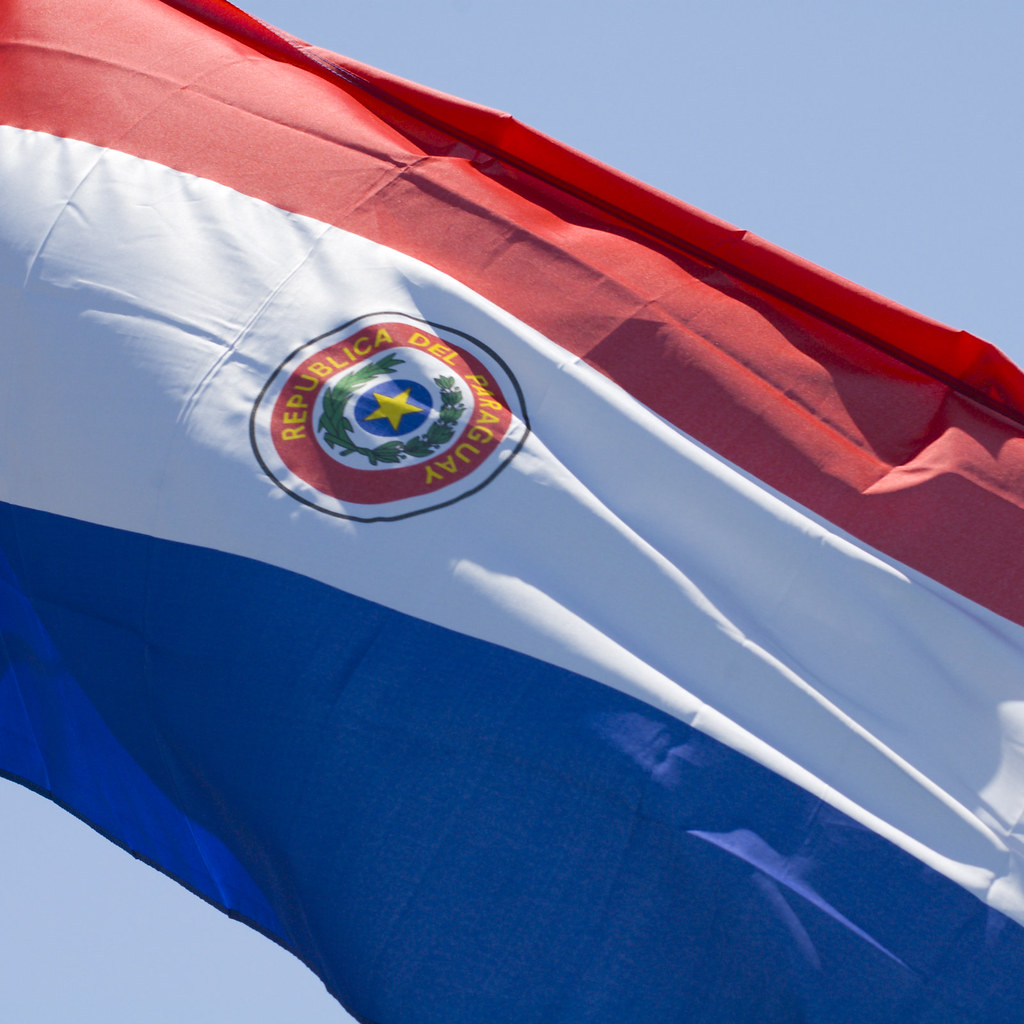
Paraguay goes to the polls on April 30 to elect a new president. From Asunción, sociologist Luis Ortiz , founder of the Paraguayan Sociological Association and former member of the CLACSO Steering Committee from 2015 to 2018, analyzed the current situation for InfoCLACSO.
– What is the current situation in Paraguay and what is the specific dispute that is being played out towards April 30, 2023?
The elections taking place on April 30, 2023, are general elections, because they not only include the election of the president and vice president of the Republic, but also legislative and departmental positions, including governorships. Therefore, they involve a series of elected offices within a current context marked by at least two key factors that are important to understand.
The first is that the ruling party, the National Republican Association, or Colorado Party, is heavily constrained by a series of sanctions imposed by the United States government on its current president, Horacio Cartes, former president of the Republic. These sanctions fundamentally affect the party's liquidity and ability to finance its campaigns, as has been the case in the last two elections. Furthermore, in the last three elections involving the Colorado Party, the availability of liquidity associated with the sanctions—not only political in nature but also imposed by the Treasury Department—has directly impacted its economic interests.
So, a major player in the Paraguayan political system over the last 15 years has been severely affected by these sanctions. This is due to the actions of an external actor, in this case the United States government, and not so much as a result of the functioning of institutions, especially the justice system. Ultimately, this is a tremendously important factor because it is restricting the Colorado Party's room for maneuver in the electoral process. Before, there were giant billboards, extraordinary advertising at various levels, advertising in the press and in all media outlets; now that is greatly reduced, and of course, it gives the National Concertation a certain degree of leeway.
The second factor to mention is precisely how the National Concertation is positioning itself to compete in this space, where it has a certain chance of winning. The latest poll published by the international consulting firm Atlas shows a 2 percentage point difference between the National Concertation's presidential ticket of Efraín Alegre and Soledad Núñez and the Colorado Party's ticket of Santiago Peña and Pedro Alliana. But we have a virtual tie.
– In this situation, taking into account this technical tie and this small difference, in the event that the opposition parties win against the current government, what room for maneuver do you think there really is within a government with different characteristics after what happened in 2012?
– Your question leads us to consider the characteristics of the Concertación Nacional. The Concertación Nacional is not a center-left coalition, but rather a diverse, much more open and pluralistic group that includes a certain social-democratic sector. Because it's not the entire Frente Guasú that's involved in the Concertación Nacional; it's a part of it, some of the parties that make up the Frente de Izquierda (Left Front). The Frente Guasú's decision is electoral, not legislative. Currently, they form a parliamentary group and plan to continue as a coalition, but for the purposes of these elections, they have split.
And part of the Frente Guasú supports the Concertación Nacional, but its main member is the Authentic Radical Liberal Party. This party doesn't differ significantly from the Colorado Party in terms of history, its social base, or its oligarchic nature. However, one key difference is that it has never held power, except for a very brief period following the legislative coup against Fernando Lugo's government. During that time, Federico Franco was in power.
But the National Concertation also includes a party like Patria Querida, a right-wing, conservative party, which, through one of its legislators, was instrumental last year in passing one of the most egregious laws persecuting and criminalizing social activism, in conjunction with a senator from the Colorado Party. This law increases the penalties and criminal sanctions against land occupations by landless peasants, who are, of course, engaged in a struggle and constant demand for access to land.
All of that is the National Concertation. The difference is that it's led by the Liberal Party, unlike in 2008, when it was led by the former bishop and current senator, Fernando Lugo. So, I think that provides some protection. In other words, an impeachment trial wouldn't succeed so easily, given that the Liberal Party has a significant electoral base, the second largest in the country, and even has the largest membership after the Colorado Party. And precisely when it withdrew its support for Fernando Lugo, it joined the sector that initiated this impeachment action, which ultimately resulted in that legislative coup. This second factor is related to the heterogeneous nature of the National Concertation.
– So, it wouldn't affect the establishment's logic, since it would be an electoral strategy. There are two issues that raise concerns and become questions: Doesn't either of the possible victories entail profound, major changes? What are the key principles that a candidate with a perspective outside the economic and neoliberal establishment should have?
– Yes, there is a marked difference between the projects represented by the Colorado Party, the National Republican Association, and the National Concertation. The latter, for the time being, doesn't focus so much on modifying the structural foundations of the economy and society in Paraguay. However, it does focus on an aspect that has truly eroded public institutions in this country: organized crime. The Colorado Party currently represents a criminal organization that has made the State the foundation of its power, expanding businesses that have always been linked to public procurement and a system of patronage that ensured its continuity through a clientelist model.
This serves today as a pretext for channeling and institutionalizing the spurious, illegal, and even criminal origin of funds linked to drug trafficking and organized crime in general. This is indeed the main point emphasized by the National Concertation, with the slogan of its candidate, Efraín Alegre: “Fatherland or Mafia.”
These sanctions against former President Horacio Cartes are directly related to his identification with this contemporary model of organized crime that has permeated the State. And therefore, to a certain extent, that is what is at stake. In other words, there is a segment of the citizenry that would support the Concertación coalition, a citizenry tired of a State organization model captured by these groups and which even has a mafia-like and criminal character.
In Paraguay, the objectives of public policy aimed at ensuring inclusion, well-being, and strengthening democratic institutions have been shifted. They have shifted so far that institutions have deteriorated to such an extent that they must first be restored. It is essential to return to the starting point, to the situation of 1989, before the overthrow of Alfredo Stroessner, which was problematic because it was also orchestrated by powerful special interest groups.
Therefore, we must return to a point where we can consider building new institutional foundations for the Paraguayan state and, from there, undertake much-needed, long-awaited, and of course, delayed reforms in this country, such as overcoming inequalities, modifying its productive structure, and creating the conditions for social mobility. Today, we must reclaim the state and its institutions.
– In that sense, we saw many speeches linked to the center-right and the right wing about reducing and minimizing the state, almost criminalizing state spending. What happened in Paraguay, and how much of this minimization of the state ended up deepening inequalities in the country?
Paraguay has not undergone the same type of neoliberal reforms as other countries, where the shrinking of the state was indeed the main characteristic. This is because the necessary institutions have not been built, and, above all, the Paraguayan economy has not been market-driven. In other words, it has not gone through an institutional process of import substitution industrialization, nor has it developed a developmental state like Brazil, Argentina, or Mexico. In this sense, the reforms that have been undertaken have, to some extent, focused on how the government intervenes in public life, prioritizing certain market-oriented or, more simply, neoliberal interests and agendas.
But, for example, regarding this specific election campaign, it should be noted that the National Peasant Federation, a historically very combative federation of regional and local peasant organizations, joined the National Concertation. Their assessment is that the most urgent and priority task today is, to the extent possible, to defeat the Colorado Party.
Therefore, within that framework, the Concertación has an electoral platform that doesn't require shrinking the state. It implies maintaining the state at its current size, and even strengthening certain areas related to education and public health. For example, a major achievement of the Patriotic Alliance for Change, which brought Fernando Lugo to power in 2008, was precisely a public policy.
– Understanding that in many parts of Latin America, the establishment is generally linked to various power structures, and that real power doesn't necessarily reside within the governments that win elections, but sometimes even outside of them, in the hands of business and media sectors, what roles are the media playing today in Paraguay with respect to the 2023 elections?
In this electoral process, the mainstream media, which have historically played a very important role in favor of one candidate or project or another, are now also supporting the National Coalition. There is an urgent need in this country to shift the direction of its political leadership.
In this regard, there is a media conglomerate owned by former President Horacio Cartes that is certainly playing into this hands. Given that the country has such stark inequalities and such limited participation of different groups in public life, it is not immune to the distortions to which the media contributes. However, in this electoral process, most media outlets are showing very clear signs of support for political change in government leadership.
– In that sense, what is the influence of the Latin American framework on Paraguay's internal affairs, and how do the victories of governments with other political leanings in the region impact it?
Paraguay has a rather unique history. The so-called leftward shift wasn't a decisive or influential factor in bringing about a change in the country's political orientation in the 2000s. This only occurred at the end of that decade, and it wasn't with a strictly left-wing ideology, but rather a pluralistic coalition that included the Liberal Party. As I mentioned, its historical and institutional characteristics are similar to those of the Colorado Party, with the difference that the Colorado Party today represents a mafia-like organization.
Due to the characteristics of its society and political system, Paraguay is the last country in South America that still maintains a significant two-party system. The third sector is always a minority and has little political power compared to the main parties. Furthermore, because of the particularities of its society, it faces a challenge in overcoming the patterns of political relations that have historically shaped the country, namely clientelism, patronage, and patrimonialism.
Therefore, it becomes difficult to envision a progressive project due to the influence of other countries and their democratic electoral experiences. What I do see as a historic opportunity is to bolster the recovery and strengthening of institutions, to refound the Republic. A democratic state, free from capture, is required, because today it is heavily gripped by powerful vested interests. So, indeed, that is the primary objective, in order to then embark on this path through institutional means, implementing all the necessary reforms to achieve social justice and greater equity, which are among the major dilemmas this country faces.
How much of Paraguay's support for Taiwan and its strained relationship with China is related to its relationship with the United States? How much of this might change with the arrival of a new government in Paraguay?
Paraguay is the only South American country that maintains diplomatic relations with Taiwan and, therefore, has not established diplomatic relations with the People's Republic of China. The current situation in the region is extremely complex. Paraguay is one of Taiwan's key allies, having historically received significant cooperation to provide political support to that country.
It's also important to understand that, beyond the bilateral relationship between Paraguay and Taiwan, there's a long-standing context in which Paraguay, as a member of Mercosur, faces pressure to establish multilateral relations as a bloc. Therefore, sooner rather than later, Paraguay will have to resolve this dilemma within the Mercosur framework regarding how to maintain its international relations with both the People's Republic of China and Taiwan.
Because proposals for trade agreements, exchanges, and cooperation at various levels with the People's Republic of China are increasingly becoming a crucial agenda item for Mercosur, where Paraguay presents a kind of obstacle. The United States' focus on Paraguay stems from the problem this country represents for its interests, as it serves as a route for trafficking, money laundering, and a series of business dealings and mechanisms for promoting organized crime, which effectively threatens its sovereignty.
It's very interesting to see that the current geopolitical priority for the United States is to make certain Paraguayan institutions transparent so they serve its interests. I wouldn't dare say there's a concern for Paraguay itself. But that's precisely the line taken by the National Concertation and other social sectors, who see a historic opportunity not only to bring about a change in power, but one that allows them to project themselves forward and control those factors that could lead to instability and an eventual overthrow, as was the case with the legislative coup in 2012.
Related Posts:
Where is Paraguayan democracy headed?
If you would like to receive more information about CLACSO's training programs:
[widget id=”custom_html-57″]
to our email lists.

