
XIX International Congress on Regional Integration, Borders and Globalization in the Americas
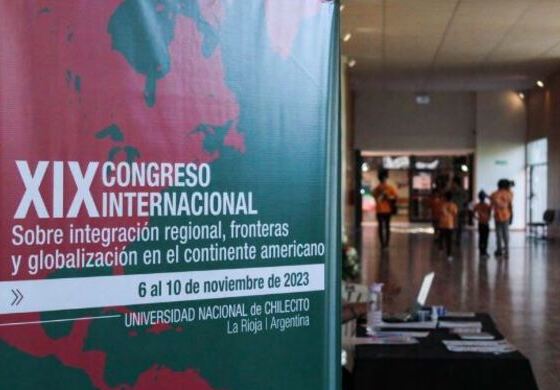
November 6-10 | La Rioja, Argentina
National University of Chilecito (UNdeC)
Between November 6 and 10, 2023, the XIX International Congress on Regional Integration, Borders and Globalization in the American Continent was held at the National University of Chilecito, La Rioja, Argentina.
The event was attended by leading figures in the social sciences and political ecology from various countries, including Argentina, Brazil, Colombia, Spain, the United States, Honduras, Mexico, Peru, Poland, and Venezuela. This facilitated a significant exchange of experiences and knowledge, strengthening current and future networks between the University and the rest of the world. In addition to the academic community, participants included assemblies and NGOs from the region, such as: the Chilecito Assembly for Life; the Water Defenders of Famatina, La Rioja; the Uspallata Assembly, Mendoza; the Concepción Assembly, Catamarca; and the Diaguita Union, Tafi del Valle Community, Tucumán.

Equitable gender participation was encouraged, with the participation of researchers, professors, students, and members of Indigenous and social organizations: Women: 163 (90 in person, 73 virtually) and Men: 115 (55 in person, 60 virtually). Furthermore, during the five days of the congress, the Gender and Diversity Commission of the National University of Chilecito maintained a continuous presence, commemorating the women victims of femicide in our region and the struggles and achievements of women in Argentina: "against the violence, abuse, and for those killed by the patriarchy in La Rioja."

This event brought together more than eight international academic and scientific institutions from six countries, united through the CLACSO Working Group on Borders, Regionalization, and Globalization . A highlight was the 57 activities that gathered over 240 participants, both in person and virtually.
- 1 Keynote address
- 13 Tables/Panels
- 21 Tables with 4 speakers each
- 7 workshops
- 14 Book Presentations
- 1 Artistic performance
A website was created to upload materials resulting from the pre-congress and congress work: https://congresoirfg.undec.edu.ar/ . Starting in February 2024, the book of abstracts and other materials currently being produced and compiled as a result of the 5-day congress will be accessible from there.

Convening institutions
CLACSO Working Group on Borders, Regionalization and Globalization
Permanent Seminar on Chicano and Border Studies (DEAS-INAH), Mexico
University of the Andes, Venezuela
La Salle University, Colombia
National University of Southern Patagonia, Argentina
Federal University of Maranhao, Brazil
National Autonomous University of Honduras
National University of Chilecito, Argentina
Organizers
International Academic Committee (members of the CLACSO Working Group)
Dr. Raquel Álvarez de Flores (University of Los Andes, Venezuela)
Dr. Myriam Alba Jiménez (La Salle University, Colombia)
Dr. Cindia Brustolin (Universidade Federal do Maranhao, Brazil)
Master's student Luis Manuel Martínez Estrada (National Autonomous University of Honduras)
Dr. Alejandro Fabián Schweitzer (CONICET/National University of Southern Patagonia, Argentina)
Dr. Juan Manuel Sandoval Palacios (National Institute of Anthropology and History, Mexico)
Local-Regional Academic Committee
Master Pablo Javier Montilla (National University of Chilecito, Argentina)
Dr. Laura M. Torres (Argentine Institute for Arid Zone Research/CONICET National University of Mendoza, Argentina)
The CLACSO Working Groups on Borders, Regionalization and Globalization , Political Ecology(ies) from the South/Abya-Yala , Bodies, Territories and Feminisms , and Social Metabolism/Environmental Justice participated in the creation and dialogue of an Inter-Working Group panel. Each group presented its main lines of inquiry, revealing several areas of common ground. It was decided to promote similar initiatives in the future, including those groups that were unable to attend this time and potentially incorporating other Working Groups, among them those with whom they collaborated at the 2022 Mexico conference.

View full report and program:

