
XII Congress of the International Association for Development Ethics
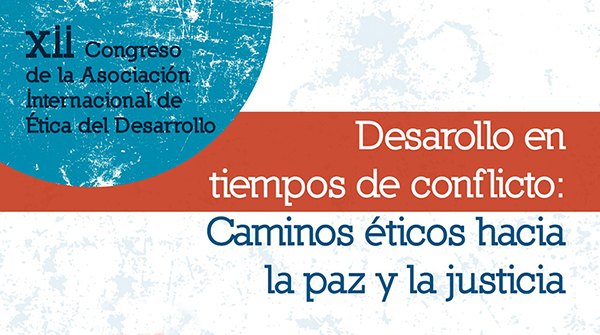

From July 13 to 15, the event takes place in Medellín, Colombia. XII Congress of the International Association for Development Ethics under the title: “Development in times of conflict: ethical paths towards peace and justice.”
In that context, on Thursday, July 14, the Executive Director of CLACSO, Karina BatthyányThe Conference dictated:Care policies as a central dimension of development"at the Latin American Autonomous University – Casa de La Memoria Museum, in Medellín."

The organizers of the Congress state in their announcement:
For decades, Colombia has experienced one of the most complex armed conflicts in South America. More than fifty years of armed conflict have eroded institutional foundations, torn apart the basic social fabric, created distrust in the state, and hindered the construction of a shared national project. These events, along with the current exclusion, reflect a failure of development, which is as troubling in conflict and its perpetuation as it is in a more orderly society. In some regions, violence, normalized as a means of resolving conflict, has become an ethos in which resentment and revenge are commonplace, and taking up arms is often seen as the only option for settling disputes, while persistent exclusion and recurring acts of injustice shape the national reality of Colombia.
The signing of the peace agreement between the Colombian state and the FARC guerrillas has ushered in a crucial moment in the country's development. In this new post-agreement period, words such as truth, justice, reparation, non-repetition, forgiveness, and reconciliation, among others, point to the possibility of political and moral paths for resolving the conflict. They open spaces for dialogue, reflection, and action in which ethics education must play a central role; otherwise, building a pluralistic and democratic society is impossible. The current context demands proposals for maintaining peace, as well as the critical engagement with new paradigms framed within a special jurisdiction for the peace process and the implementation of transitional justice.
It is of great importance for this region in particular, and for the national and Latin American context in general, to promote spaces for dialogue and research on the peace agreement, transitional justice, the post-agreement environment, and community building, among other topics. Therefore, the conference organizers particularly encourage presentations on the following themes related to ethical development:
Conflict, transitional justice and reconciliation
Experiences of organizations and collective action in the transformation of territories for peace
Peacebuilding and maintenance: the challenges
Share and compare peacebuilding experiences from other regions of the world
Internal and international displacement due to conflict: immigration and refugees
Paths to peace: development, post-development, decolonial approaches, good living and other aspirational ideas for dialogue
Limits of the liberal paradigm of peace
Hybrid conceptions of peacebuilding
The congresses of the International Association for Development Ethics are open to proposals relating to all aspects of ethics in the context of development:
Urban planning/development displacement
Ethics of development in times of climate change
Complexity, uncertainty and sustainable development
Social and grassroots innovation for transformative change
Whose knowledge? Epistemic justice and the ecology of knowledges
Progress and social protest
Human rights and social protest
COVID-19 in development and in times of conflict
Recent political action and the disruption arising from grassroots movements and universities within Colombia
Practitioners and academics are encouraged to submit papers that examine these issues from diverse practical, theoretical, and conceptual perspectives, such as philosophical arguments, empirical analyses, observer and participant accounts, policy reviews, and action strategies. The conference will feature the participation of scholars and practitioners from around the world and from a wide range of disciplines and activities (including philosophy and other humanities, social sciences, policy studies, development, social work, NGOs, local and global agencies and organizations, government officials, and policymakers). IDEA particularly welcomes contributions from scholars and practitioners from the Global South.
If you would like to receive more information about CLACSO's training programs:
[widget id=”custom_html-57″]
to our email lists.

