
Vocabulary of Latin American and Caribbean Marxism
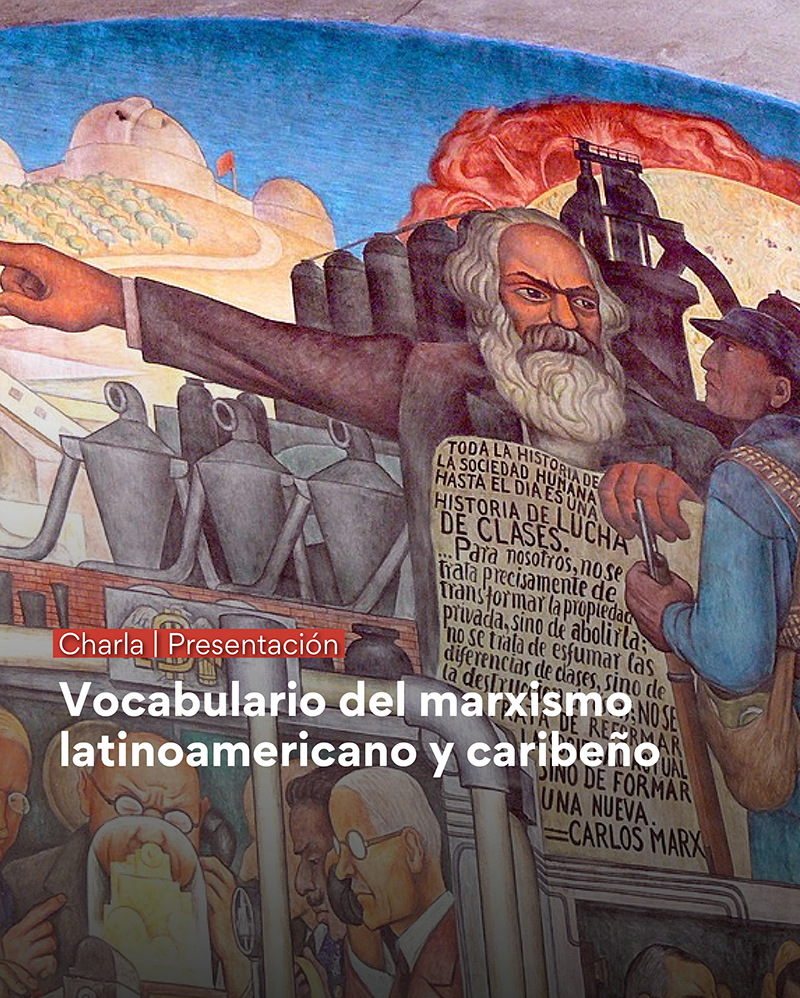
The "Vocabulary of Latin American and Caribbean Marxism“is an initiative of the CLACSO Working Group”History and circumstances: Marxist perspectives”, which seeks to constitute a space for the preservation and enhancement of the theoretical production of Latin American and Caribbean Marxism, as well as offering a critical input for the analysis of the social and political reality of the region.
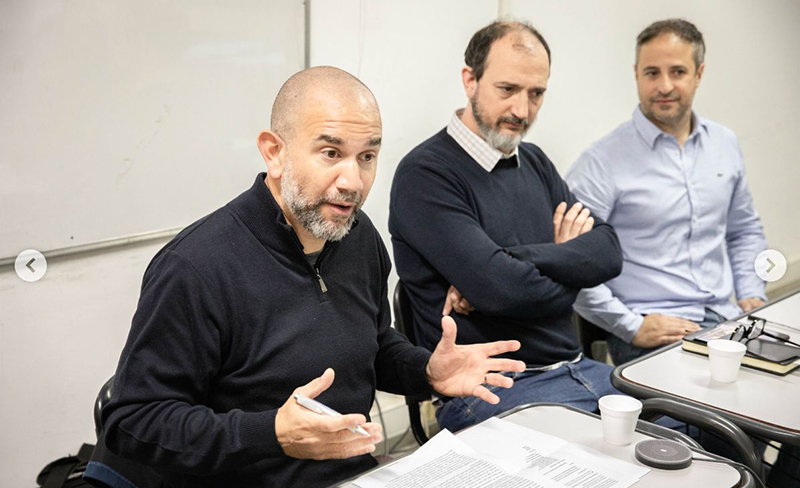
The study was presented on Tuesday, October 28th, in Room C-202 of the Faculty of Humanities and Education Sciences at the National University of La Plata. Participants included: Pablo Vommaro, Executive Director of CLACSO; Juan Ennis, Director of IdIHCS; Natalia Romé, member of the Working Group “History and Conjunctures: Marxist Perspectives” and UBA; and Marcelo Starcenbaum, coordinator of the GT “History and conjunctures: Marxist perspectives” and UNLP.
They coordinated: Patricia González San Martín (University of Playa Ancha – Chile) – Jaime Ortega Reyna (Autonomous Metropolitan University – Mexico) – Marcelo Starcenbaum (National University of La Plata – Argentina)
Adviser: Edgar Miguel Juárez-Salazar (Michoacan University of San Nicolas de Hidalgo – Mexico)
Regional managers: Marcelo Starcenbaum (Argentina) - Marcelo Delgadillo (Bolivia) – Danilo Martuscelli (Brazil) – Mauricio Sandoval (Central America) – Patricia González San Martín (Chili) - Daniel Barrera (Colombia) - Mylai Burgos (Cuba) – Sofia Lachimba (Ecuador) – Edgar Juárez (Mexico) - Yuri Gomez (Peru)
They organized: CLACSO – IdIHCS – FaHCE
This is a collaborative work, bringing together members of the Working Group along with specialists in the various topics covered in the volume. Through the study of intellectuals, concepts, and journals, the Vocabulary restores the complexity of Latin American and Caribbean Marxism in its multiple dimensions.
This proposal allows us to recognize a tradition of thought structured around the concepts originating in the work of Karl Marx and his successors, disseminated by actors and intellectuals who marked the political and intellectual life of Latin America and the Caribbean, and conveyed by periodical publications that contributed to the formation of the regional political culture.
Unlike a dictionary or an encyclopedia, a vocabulary has an open will, inviting each entry to reflect the diverse possibilities, uses, scopes, appropriations and debates surrounding the issues addressed.
More on the Vocabulary of Latin American and Caribbean Marxism

