
Exacerbated violence: complexity and perspective
Seminar 1935
Chair: CLACSO
Coordination: Clara Arenas Bianchi (AVANCSO, FLACSO, IIPS/USAC, INCEDES, IDGT, ISE, Guatemala)
Home: 25 / 07 / 2019 | Registration: 04/02/2019 al 22/07/2019
Teaching team: Clara María Josefina Arenas Bianchi, Marco Antonio Chivalán Carrillo, Alejandro Manuel Flores Aguilar, Juan Pablo Gómez Lacayo and Alba Lily Muñoz López
Workload: 12 weeks – 90 hours.
Payment methods
If you have a link with a CLACSO Associated Center:
- Paying in one payment: USD 95 (includes issuance and shipping costs of the digital certificate).
If you have a link with a Network or Institution Associated with CLACSO:
- Paying in one payment: USD 140 (includes issuance and shipping costs of the digital certificate).
If you do NOT have a link with a CLACSO Associated Center:
- Paying in one payment BEFORE 15/07/2019: USD 150 (includes issuance and shipping costs of the digital certificate).
- Paying in one payment: USD 190 (includes issuance and shipping costs of the digital certificate).
Course presentation:
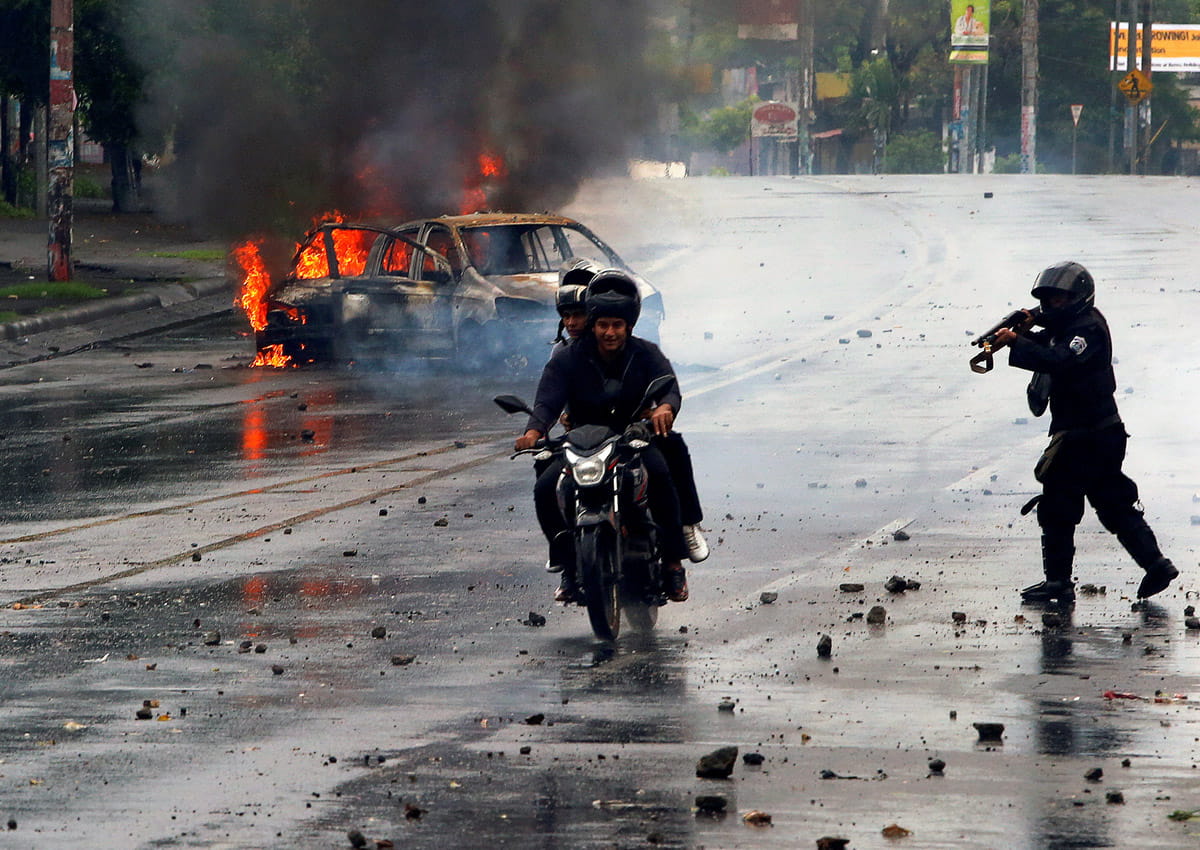
The seminar will explore the complexities of multiple forms of violence, their historical and societal roots, and their multicausal and symbiotic nature. It will focus on fundamental processes, dynamics, and interconnections, such as: policies of extractive capital imposition, racism stemming from the intensification of colonial perspectives and relationships, the resurgence of fascist ideologies and policies, religious fundamentalisms, and the struggle for control of drug trafficking markets and organized crime.
It will be organized around the following thematic blocks: 1) Theoretical, historical and phenomenological perspective; 2) Capital, State and fascism in the production of violence; 3) Vectors of relationship: class struggle, patriarchy, racism and anthropocentrism; 4) Women and indigenous peoples: violence they experience, resistance, rebellion and the development of alternatives.
Participants will be enriched with theoretical, epistemological and methodological tools, from the perspectives of feminism, decoloniality, Marxism, among others, and from the recovery of diverse contexts, experiences and proposals for research and transformation.
Contents:
- Main theoretical currents on violence.
- Historical dimension of violence.
- Areas and manifestations of violence.
- Reason of State and Violence.
- Current dynamics of capital accumulation and policies of violence.
- Neoliberalism, new imperialism, everyday life: the return of fascism?
- Violence and class struggle at the beginning of the 21st century.
- Web of violence: gender, sex, race, species.
- Resistance, rebellion and alternatives to violence from women.
- The production of subjectivities in resistances.
- Judith Butler, The Psychic Life of Power. Theories of Subjection (Stanford: Stanford University Press.1997)10-11.
- Slavoj Zizek. On Violence. Six Marginal Reflections. Paidos, 2009.
- AVANCSO. New Glosses on the Same War. Peasant Rebellion, Pastoral Power and Genocide in Guatemala. Guatemala: AVANCSO, 2009.
- Patricia Alvarenga. Culture and ethics of violence. El Salvador 1880-1932. San Salvador: Directorate of Publications and Printing, 2006.
- Severo Martínez Peláez. The Creole Homeland. An Interpretive Essay on Guatemalan Colonial Reality. Mexico: Fondo de Cultura Económica, 1998.
- Agudo Sanchíz, Alejandro. (2011). State, society and violence. Reflections from qualitative perspectives of the social. (Unpublished text).
- Muñoz, Alba Lily. (2014). Towards a state of the art of studies on violence in Guatemala (1997 – 2012). University Texts of Critical Reflection No. 5, period 2; June-August 2014. Pp. 11-31. Guatemala: Institute for Conflict Transformation for Peacebuilding in Guatemala –INTRAPAZ-, Rafael Landívar University.
- Agamben, Giorgio. 2005. State of Exception. Homo Sacer, II, I. Buenos Aires: Adriana Hidalgo. (pp. 9-70)
- Butler, Judith. 2006. Precarious Life: The Power of Mourning and Violence. Buenos Aires: Paidos.(45-78)
- Dreyfus, Hubert L., and Paul Rabinow. 2001. Michel Foucault: Beyond Structuralism and Hermeneutics. Buenos Aires: Nueva Visión. (pp. 155-214)
- González Guevara, Lilian (Coordinator). (2015). “Extractivism in Central America: an assessment of the development of extractive industries and their impacts on Central American countries.” Panama: FES Central America.
- Grandia, Liza. (2009). “Tz´aptz´ooqeb: the recurring dispossession of the Q´eqchi’ people.” Guatemala: AVANCSO –Guest Authors Series, No. 20–. Vilchis Onofre, Alejandro, Lilia Zizumbo Villareal, Neptalí Monterroso Salvatierra, Emilia Arriaga Álvarez, Alejandro Palafox Muñoz. Capitalist dynamics for accumulation by dispossession. Social Sciences Journal no. 151, 2016 (1), pp. 31–41
- Villavicencio Rodríguez, Erandi and Ana J. Bengoa Valdés. Policies of state violence: the cases of Colombia and El Salvador. Buenos Aires: CLACSO, 2015.
- Harvey, David. 2007. A Brief History of Neoliberalism. Madrid: Akal. Mbembe, Achille. 2011. Necropolitics. Madrid: Melusina. (pp. 17-66).
- Sánchez-Sanz, José, and Piedras Piedras-Monroy. 2011. “Regarding Walter Benjamin: New Translation and Reading Guide to the 'Theses on the Philosophy of History.'” “Duererías. AnalectaPhilosophiae”, Journal of Philosophy II (II): 1–32.
- Levenson, Deborah. (2007). Trade Unionists Against Terror, Guatemala City 194-1985.” Guatemala: AVANCSO –Guest Authors Series No. 15-.
- Oglesby, Elizabeth. (2007). “Work and governance on the South Coast”, in The Threshold: exploring Guatemala at the beginning of the 21st century. Guatemala: AVANCSO.
- Zizek, Slavoj. (2016). The New Class Struggle: Refugees and Terror. Barcelona: Anagrama.
- AVANCSO (2015) Sex and Race. Analytics of Whiteness, Desire and Sexuality in Guatemala. Guatemala: AVANCSO.
- Dorlin, E. (2009). Sex, gender and sexualities. Introduction to feminist theory. Buenos Aires: Ediciones Nueva Visión.
- Haraway, D. (2008). When Species Meet. Minneapolis and London: University of Minnesota Press.
- Preciado, PB (2008). Testo Junkie. Madrid: Espasa Calpe.
- Lugones, M. (2008). “Coloniality and gender”. In Tabula Rasa 9. 73-101. Bogotá.
- Barrios, Mayra, Iván Monzón, Martha Gutiérrez and Vicenta Tzirin. Ruptures, reconstruction and continuity in five q'eqchi' communities: women and access to land. Guatemala, URL, 2007.
- Cabanas, Andrés. All the pain (and the transformative rage) of Monte Olivo. In Memorial de Guatemala (August 2013).
- Federici, Silvia. Domestic work, reproduction and feminist struggles. Revolution at point zero. Guatemala, School of History USAC. Karl Marx Chair, 2017. Pp 223 to 259.
- AVANCSO Various Authors [Macz, Rosa, Moreno, Elisabeth, Salvadó, Camilo] (2016) Elq'ak ut KawilCh'oolej: rilb'al li teepreleb'aliq' b'arnake' risixq'emal li xch'ochelTezulutlan- Verapaz -Dispossession and resistance: a look at the Northern Extractive Region from Tezulután-Verapaz, Research Notebook No. 28 AVANCSO: Guatemala.
- Cabnal, Lorena (2013) 'For indigenous women, the defense of the land territory is the defense of the body territory itself', PBI Opening Spaces for Peace.
- Lovell, W. George; Christopher H., Lutz; Kramer, Wendy (2016) Frightening the Earth: Pedro de Alvarado and the Conquest of Guatemala, 1520-1541. Guatemala: FyG Editores.
- Tsing, Anna Lowenhaupt (2015) The Mushroom at the End of the World: On the Possibility of Life in Capitalist Ruins, Princeton and Oxford: Princeton University Press.
FAQ
The basic requirements for taking a seminar are:
- Availability of at least 4 hours per week to dedicate to the seminar course.
- Internet access.
- Reasonable handling of communication and computer tools.
- Language proficiency in the language in which the course will be taught. The official languages are Spanish and Portuguese.
|
|
Discount for one payment until 16/03 |
In one payment after 16/03 |
|
CM Plenos |
$75 |
$150 |
|
CM Associates |
$95 |
$190 |
|
No link |
$95 |
$190 |

