
Vigilantism, punitive violence, and the production of security
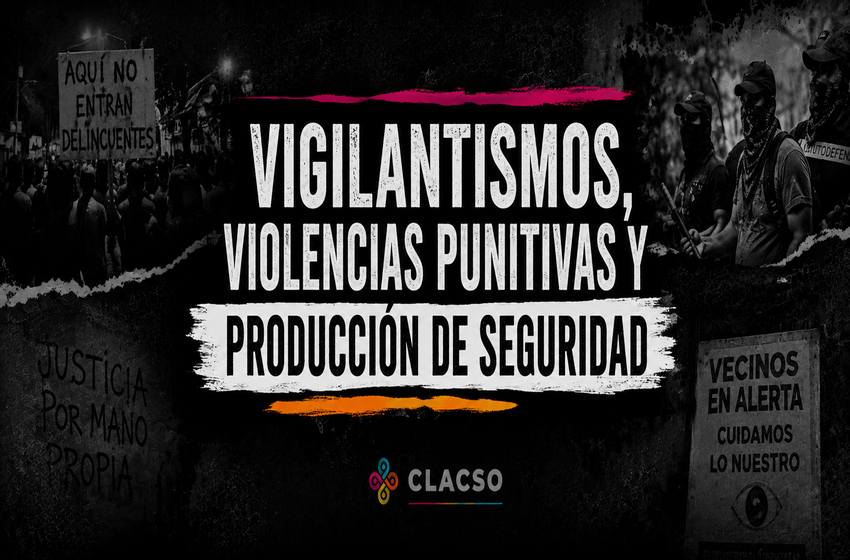
The research carried out in the Working Group Vigilantism, punitive violence, and the production of security They start from the current Latin American context, which demands a rethinking of the relationship between democracy and violence. The region is characterized today by deregulated market economies, expanding inequalities, impoverishment and social vulnerability, as well as by the emergence of illicit markets that transform the
Violence as a structural resource.
The Working Group expands the discussion on violence and democracy into the field of vigilantism, bringing together at the center of the analysis diverse forms of participation—exhibiting varying degrees of organization, intensity, and legitimacy—in the co-production of “security” and its relationships with state actors. We investigate the actions of containment, regulation, and control, as well as punitive collective violence (such as lynchings) carried out by rural communities, urban grassroots organizations, middle- and upper-class neighborhood groups, self-defense groups, community guards, criminal groups, and informal street security networks.
We understand that these organizations can fulfill ambivalent roles with equally ambivalent relationships with the state: reproducing punitive discourses and legitimizing violent responses; or articulating resistance, care practices, and demands for non-punitive justice. This tension makes civil society an indispensable actor for understanding vigilantism and participating in debates on security and democracy. For this reason, our Working Group considers it an academic and political task to strengthen collaborations with movements, collectives, and territorial organizations that address security issues from a human rights perspective.
coordinate
Fabio Magalhães Candotti
Institute of Philosophy, Human and Social Sciences
Federal University of Amazonas
Brazil
[email protected]
Loreto Francisca Quiroz Rojas
Millennium Institute for Research on Violence and Democracy
Chile
[email protected]
Antonio Fuentes Díaz
Postgraduate Program in Sociology
Institute of Social Sciences and Humanities
Benemérita Autonomous University of Puebla
Mexico
[email protected]

