
Public universities in resistance
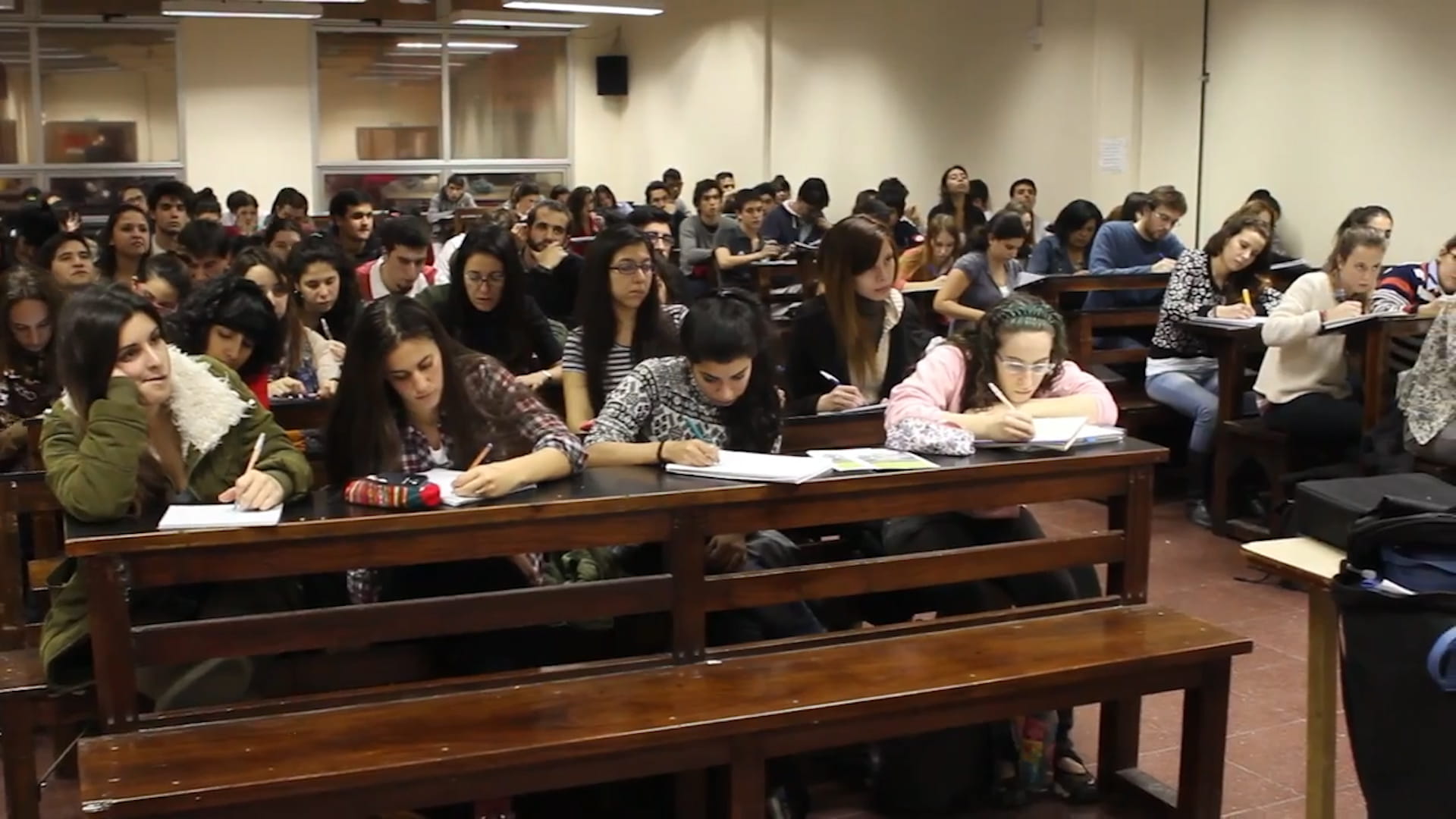
Rectors and presidents of various public universities in the Argentine Republic expressed concern about the situation of higher education institutions in their country and in much of Latin America.
This took place on March 19th during a meeting between university authorities from Argentina, at the CLACSO headquarters with its Executive Secretary, Karina Batthyány, and directors from different areas of the Latin American Council of Social Sciences.
Alejandro Villar, rector of the National University of Quilmes, noted that "there is clearly an advance of the right wing throughout the continent, especially in South America," which particularly affects public universities "because they are the ones financed by the State."
In turn, Sandra Torlucci, rector of the National University of the Arts, considered that what Argentina is experiencing coincides with what is happening in Brazil, in Ecuador and in other places "that had changes of government that were the reverse of the previous ones in terms of university development policies."
Carolina Mera, dean of the Faculty of Social Sciences at the University of Buenos Aires, spoke of an attack on the social sciences and a disciplining of the public university because "we have a fundamental role in the production of critical knowledge at a time like the one the country and the entire continent are experiencing."
Coincidentally, Graciela Morgade, dean of the Faculty of Philosophy and Letters at the University of Buenos Aires, emphasized that national universities have become a political actor and that, "in conjunction with other social movements, we are a key factor at this moment, which we could consider to be one of resistance."
Finally, Karina Batthyány differentiated the “very worrying situations that put the exercise of knowledge construction at risk” from those countries “where there is an important policy of development of both knowledge construction and public universities”, for example Mexico and Uruguay.
In the exchange between university presidents and CLACSO authorities, there was agreement on the need to put the social sciences in the public debate and to coordinate communication policies between the different academic institutions.
The commitment of everyone was to maintain and expand this space for meeting and exchanging ideas and proposals.
[spreaker type=player resource=»episode_id=17670847″ width=»100%» height=»200px» theme=»light» playlist=»false» playlist-continuous=»false» autoplay=»false» live-autoplay=»false» chapters-image=»true» episode-image-position=»right» hide-logo=»false» hide-likes=»false» hide-comments=»false» hide-sharing=»false» hide-download=»true» ]
