A regional commitment to critical thinking and socio-environmental justice
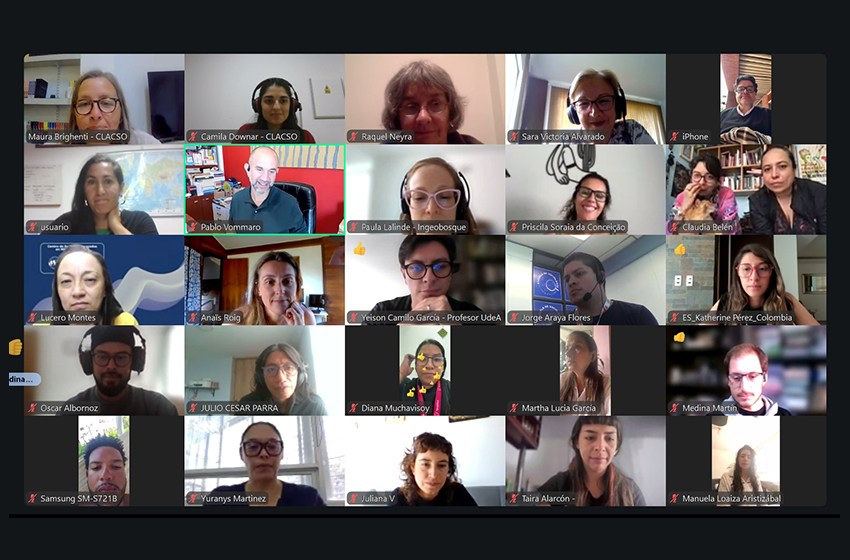
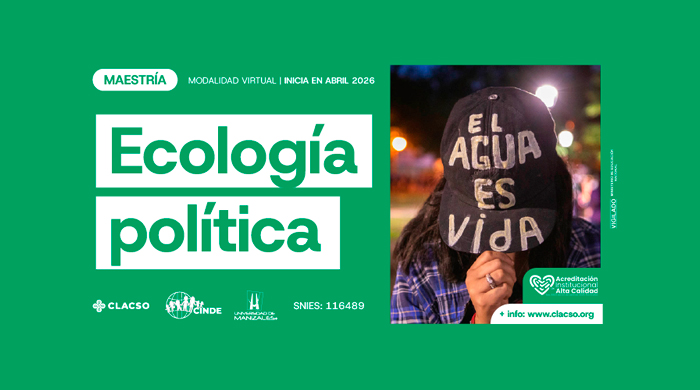
The Latin American Council of Social Sciences , together with the University of Manizales and CINDE of Colombia, launched the first cohort of the Master's in Political Ecology , an international academic program that brings together Latin American students and teachers committed to understanding and transforming socio-environmental conflicts.
During the opening ceremony, authorities emphasized the strategic importance of this educational program in the context of the global ecological crisis. In his remarks, the Rector of the University of Manizales, Duván Emilio Ramírez Ospina , underscored that the Master's program represents a key space for strengthening critical thinking in the region, combining rigorous academic production with social commitment. He also highlighted the institutional partnership with CLACSO as an opportunity to develop an internationally recognized educational program rooted in Latin American realities.
For its part, CLACSO emphasized that the Master's program is part of a broader commitment to democratizing access to knowledge and promoting a social science engaged with the major challenges of our time. Along these lines, Pablo Vommaro , Executive Director, highlighted the importance of political ecology as a field capable of questioning dominant forms of the relationship between society and nature, as well as contributing to the construction of alternatives based on environmental, social, and territorial justice.
From CINDE, Salim Chalela and Sara Victoria Alvarado Salgado , in turn, emphasized the formative and pedagogical dimension of the program, highlighting the importance of building educational processes that recognize the diversity of knowledge and experiences in the territories and emphasizing the need to promote approaches that articulate education, human development and sustainability, training professionals capable of influencing their contexts from an ethical, critical and transformative perspective.
The speakers agreed that this program not only seeks to train specialists, but also to strengthen regional networks of critical thinking and action, promoting dialogue between academic knowledge, territorial experiences and social practices.
The Master's program lasts two years, is offered online, and proposes an interdisciplinary approach that integrates politics, environment, territory, and culture with a strong research component. It is aimed at graduates, professors, researchers, activists, and public officials interested in delving deeper into contemporary debates on political ecology from a Latin American perspective.
With this first cohort, the organizing institutions promote a training space that not only responds to current challenges, but also contributes to imagining and building horizons of transformation in the region.