
“They tried to erase them from history”
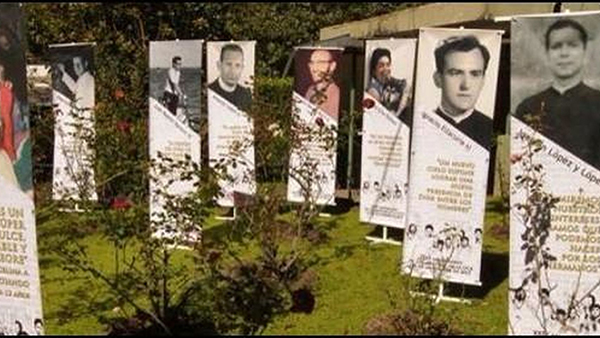
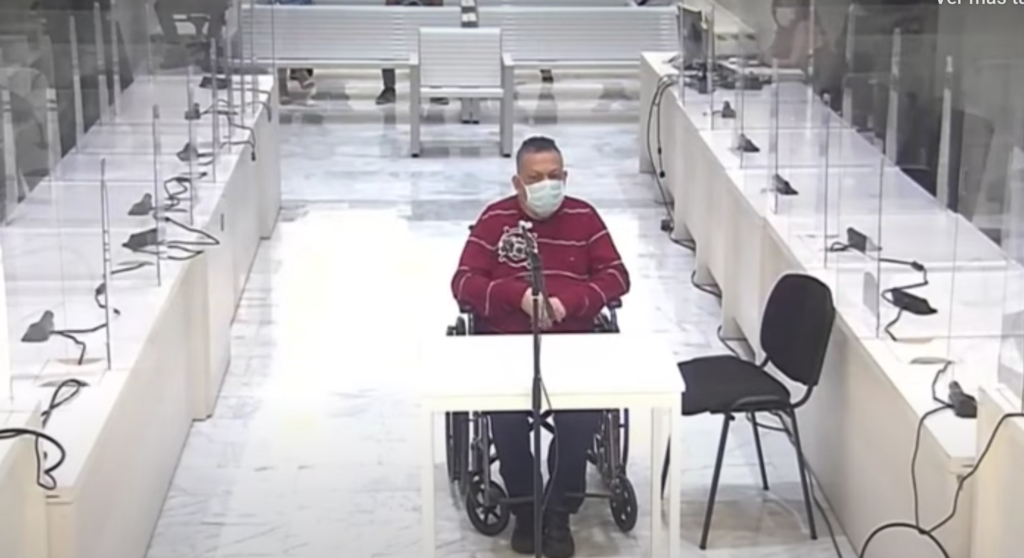
Nearly 31 years after the murder of the Jesuit priests of the UCA in San Salvador—Ignacio Ellacuría, Ignacio Martín Baró, Segundo Montes, Amando López, and Juan Ramón Moreno—on November 16, 1989, Spain's National Court sentenced Colonel and former Deputy Minister of Security Inocente Orlando Montano to 133 years in prison on Friday, September 11, 2020—26 years, 8 months, and 1 day for each murder. That same November morning in 1989, Salvadoran priest Joaquín López and his assistant Julia Elba Ramos and her 16-year-old daughter, Celina Mariceth Ramos, were also murdered. Although the Court also found Montano guilty of these deaths, it could not sentence him "because he was not extradited by the United States for those crimes."
At a press conference, Father Andreu Oliva, rector of the Central American University José Simeón Cañas (UCA), and Father José María Tojeira, director of the UCA Human Rights Institute (Idhuca), announced the position of the high school of San Salvador.
“Judicial convictions for homicide, terrorism, or crimes against humanity are never a cause for celebration,” Andreu Oliva stated. “They express the sad reality of a painful, tragic past that we lived through in our country. They also express the worst of the human condition: its capacity to gravely offend life, to break with the fraternity to which humanity is called. But the outcome of a judicial case is always a formal, legal, and democratic recognition of the truth and an incentive, a guarantee of non-repetition of these inhuman acts. The judicial resolution is also an ideal means of moving forward with what the UCA and the Society of Jesus have expressed since the massacre occurred: the path to reparation lies in knowing the truth, practicing justice, and forgiveness. That is why it is also important that the judicial process already initiated here in El Salvador regarding the UCA massacre—which is maliciously stalled—continue in order to determine who the other intellectual authors of this horrendous massacre were. This is a debt that the Salvadoran justice system owes.” "We must not wait any longer, just as we must not wait any longer for all those crimes, massacres, and disappearances that were committed in our country during those years."

In turn, José María Tojeira asserted: “The murderers and those who gave the order to kill the Jesuits tried to erase them from history, to erase them from existence, and it is the Salvadoran people and other peoples in solidarity who are bringing them back to life. And a trial is a way to restore dignity to these people who were crushed and mistreated, not only the Jesuits and the two women who were murdered with them, but also the many victims of massacres and other reprehensible acts committed here in El Salvador. In that sense, I would like to express this desire to build peace with justice; justice is a way to give force to the truth. We live in a country where the only saint canonized is Archbishop Romero, and the United Nations has declared the day of Archbishop Romero as the Day of the Victims' Right to the Truth.”
The massacre occurred in the early morning of November 16, 1989, when members of the Salvadoran High Command, including Montano, ordered an army battalion to storm the UCA. A group of 40 men dragged the Jesuits from their rooms and machine-gunned them to death. Seconds later, the soldiers found two women hiding in a room and shot them as well.
The Salvadoran army accused the Jesuits of collaborating with the FMLN guerrillas and launched a harassment campaign for several days through its official radio station, in collusion with the far right. In the days leading up to the massacre in San Salvador, leaflets circulated that said it all: "Do your patriotic duty, kill a priest."
For several years, the Jesuits had been attempting to mediate between the government and the FMLN to achieve a peace agreement that would end a covert war that had already claimed tens of thousands of lives. In their work to end the violence, the priests denounced human rights violations committed by military units and far-right cells against Salvadoran peasants. The court ruling states that the Jesuits had been the target of "death threats, raids, and attacks at the UCA (Central American University) during that decade, which increased in intensity and number, reaching 49 in 1989." In fact, the Church's involvement in the defense of human rights through Liberation Theology had already cost the Archbishop of San Salvador, Oscar Romero, his life in 1980.
See also CLACSO statement:
Justice for the Salvadoran Jesuits murdered in 1989
If you would like to receive more information about CLACSO's training programs:
[widget id=”custom_html-57″]
to our email lists.

