
Solidarity in times of pandemic: China in the global battle against Covid-19
Center for Argentine Studies
Institute of Latin America of the Chinese Academy of Social Sciences
Just over two months ago, almost no one knew what the coronavirus was. However, both the word "coronavirus" and the city of Wuhan became the focus of attention for all Chinese people at the end of January 2020.
Wuhan is one of the most populous cities in central China and a major national and international transportation hub. The decision to impose a quarantine on this city of 14 million people was not easy. But there was no other way to prevent further spread of the virus. COVID-19.
On January 23, the eve of the Chinese New Year, Wuhan went into lockdown to combat the coronavirus. A few days later, almost the entire country went into isolation. It was undoubtedly the largest quarantine in history.
It was tough. The battle against COVID-19 began during what should have been a time of holidays and celebrations. Millions of public transport journeys were delayed or canceled to prevent the spread of the virus. Family gatherings and trips were canceled, restaurants, shops, and cinemas were closed, and the streets hadn't been so quiet and empty in decades.
But it was even harder in Wuhan. The sharp increase in cases led to a severe shortage of medical supplies. To combat COVID-19, new hospitals were built in just a few days, and existing ones were expanded. The government sent thousands upon thousands of healthcare workers to Wuhan—some 42 doctors and nurses in total. Wuhan was isolated, but it was neither alone nor abandoned. Support and solidarity were never lacking. The city received donations from both within the country and internationally.
Meanwhile, factories producing medical supplies such as face masks, surgical gowns, and personal protective equipment, which had been closed for the Chinese New Year holiday (January 24), began operating around the clock. Other companies that did not produce medical supplies also started manufacturing them to contribute to this fight.
Life in the time of COVID-19 is completely new and unexpected for us. Staying home, buying everything online, working remotely, teaching virtual classes, etc. All of this, which seemed unthinkable just a few weeks ago, is becoming the new normal.
But the quarantine to prevent further spread of the COVID-19 outbreak is working. After two months, successes have been achieved in this battle, following the severe restrictions and quarantines implemented by the government. The situation is under control, and thousands of doctors and nurses are beginning to return to their hometowns after spending weeks in Wuhan. Undoubtedly, this victory was not easily achieved. China has taken the strictest, most efficient, and decisive infection prevention and control measures, and has even allocated a large sum of money to combat the pandemic. This was complemented by international solidarity and support.
Lately, the COVID-19 situation has taken a dramatic turn in other countries while in China we are trying to return to normal. Those who receive help should never forget those who helped them. Furthermore, we believe that solidarity and cooperation among all countries, not nationalism or selfishness, will ensure that we emerge from this global crisis together, because COVID-19 is not the “Wuhan virus” or the “Chinese virus,” as some maliciously claim.
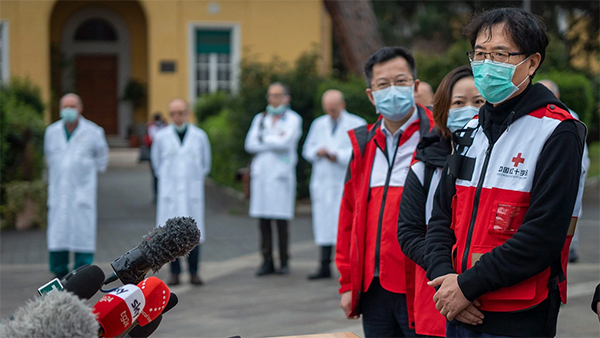
Now is the time to express our gratitude, show our solidarity, and share our experiences with other countries. To date, China has sent medical aid to more than eighty countries during this crisis. In the cases of Italy, Spain, and others, the Chinese government, in addition to sending medical equipment, deployed doctors and infectious disease specialists trained to address the pandemic. Just a few days ago, the Chinese ambassador to Argentina, Zou Xiaoli, met with President Alberto Fernández and offered assistance to jointly confront the COVID-19 crisis.
Since January, we have received numerous emails and messages from Latin American academics expressing their friendship, support, and solidarity. We have also received words of encouragement and support from friends and colleagues at CLACSO.
We wish to express our sincere gratitude and greetings to the academics of CLACSO. At the same time, we take this opportunity to emphasize the importance of reflection and critical thinking. There is no doubt that the COVID-19 pandemic will mark a turning point, representing not only a global health crisis but also an economic and social one. These are difficult times, but also times for observation and reflection.
In this era of globalization, national security is interconnected, meaning that COVID-19 affects everyone equally. No country can overcome the crisis solely through its own efforts, nor can it achieve stability by exploiting the turmoil in other nations. It is essential to recognize that no country is an island and that its development is linked to a peaceful international environment, a stable world order, and also to understanding, support, and solidarity among all nations.
This time of physical isolation is precisely the opportunity for international solidarity. Together we will overcome this crisis. Therefore, we must strengthen international cooperation against COVID-19, in the health, social, economic, political, cultural, and academic sectors.
If you would like to receive more information about CLACSO's training programs:
[widget id=”custom_html-57″]
to our email lists.

