
About Queer: a podcast to produce knowledge, memory and critical thinking from Central America
The CLACSO Working Group on Sexual Activisms and Citizenships: Interdisciplinary Dialogues invites students, researchers, and activists from the Latin American and Caribbean region to consult, disseminate, and raise awareness of the project "Sobre lo Cuir" (On Queerness), in which several colleagues from this Working Group participate. "Sobre lo Cuir" is an example of the collective and collaborative work of sexual and gender dissidents in Central America to articulate and dignify their legitimacy within 21st-century citizenship.
At a historical moment marked by the rise of authoritarian, fundamentalist, and neo-fascist projects in Latin America and the Caribbean, defending spaces for critical thought becomes an urgent and necessary task. In Central America, where profound structural inequalities persist and investment in research on sexual and gender diversity is scarce, supporting initiatives for the collective production of knowledge constitutes, in itself, an act of political and academic resistance.
Sobre lo Queir is a participatory and collectively created project that proposes a space for dialogue between academic research, activism, and community experiences. Its purpose is to build a sound archive of queer memories from Central America, Latin America, and the Caribbean, fostering a horizontal dialogue between researchers, activists, artists, and historically marginalized communities.
The project focuses on queer thought, understood not only as an identity category, but as a political and epistemic position that questions the hegemonic forms of knowledge production.
From this perspective, the podcast is committed to building situated knowledge, recognizing community memories, and recovering voices historically excluded from official narratives, contributing to the democratization of knowledge and the defense of cognitive justice.
"Sobre lo Cuir" is produced by Onda UNED and mediated and curated by Architect Luis Herra (Pherra Divancci), an academic researcher at the Center for Research in Culture and Development (CICDE) of the National Distance Learning University (UNED), Costa Rica. Architect Herra conducts research on archives, memory, heritage, and queer urbanism. Each episode of the project emerges from the dialogue between research processes, community experiences, and collective creation practices, understanding that knowledge is not produced solely in academia, but also in territories, social movements, and care networks.
The continuation of the project has been made possible thanks to the support of the Educational Development Program of the Vice-Rectorate for Extension and Territorial Linkage of the UNED and the Student Ombudsman of the UNED, whose support reaffirms the role of the public university as a space committed to human rights, inclusion, critical research and linkage with communities.
So far, the podcast has three seasons available:
Season One: Queer Studies in Costa Rica. It presents research, debates, and reflections that have contributed to the development of queer thought in the country, bringing the public closer to discussions on theory, critical methodologies, and knowledge production from sexual and gender dissidence.
Second season: Ballroom Culture in Costa Rica. It documents the history, knowledge, and practices of the Costa Rican Ballroom scene, recognizing it as a space for cultural creation, collective care, political resistance, and community building.
Third season: VIHsibles. This season recovers the memories of the community response to HIV in Costa Rica through the testimonies of activists, organizations, and individuals who have sustained networks of care and human rights advocacy. This season is part of a research process developed by CICDE-UNED on archives, historical memory, and community heritage related to HIV.
The fourth season, currently in production, focuses on the experiences of queer people who grew up in rural Costa Rica. Through their life stories, the project explores how rural territories shape particular ways of constructing identity, community, affection, and resistance, expanding the geographies from which queer knowledge is conceived and produced.
In a region where hate speech seeks to restrict academic freedom, censor diversity, and delegitimize critical epistemologies, Sobre lo Cuir (On Queerness) champions the value of research committed to communities and the collective creation of knowledge. More than a podcast, it constitutes a sound archive of memories, a tool for scientific dissemination, and a space for strengthening networks of critical thought between Central America and Latin America. From this conviction, the project invites listeners to engage in dialogue and collectively construct other ways of narrating our stories, recognizing that preserving queer memories also means defending the right to produce knowledge from our own experiences, territories, and ways of life.
We invite you to listen to the project About Queer , to share it and spread these stories and reflections.
Spotify: https://open.spotify.com/show/2l2ejlykSDoWj88T3UNF6K?si=jm4dF5b8S9COx5xdIo4QUA
Instagram: https://www.instagram.com/sobrelocuir/
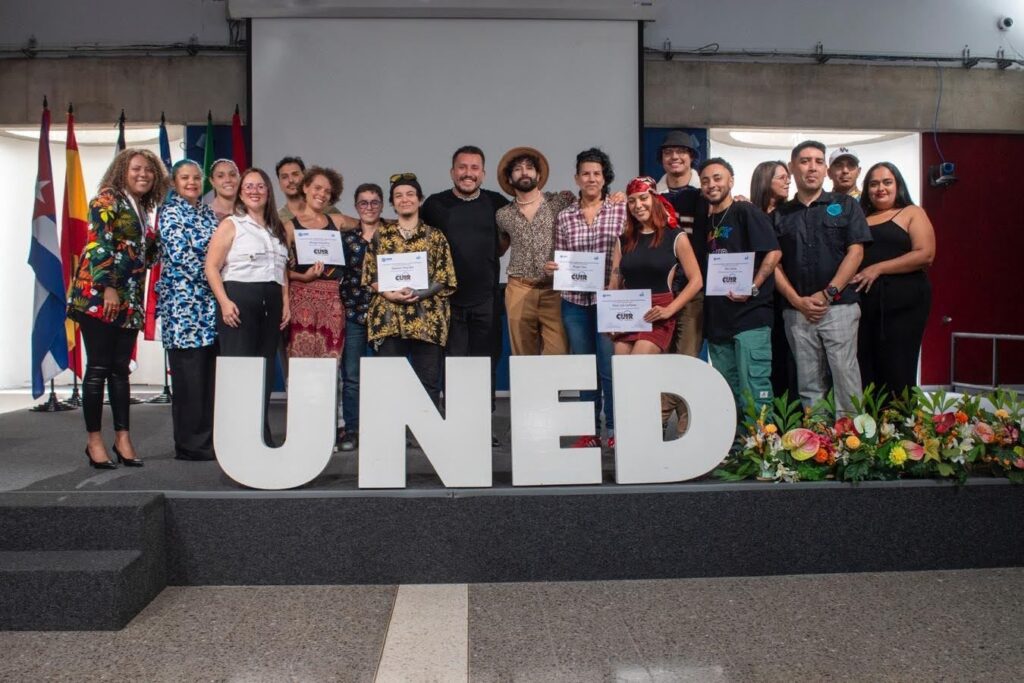
From the CLACSO Working Group “Activisms and sexual citizenships: interdisciplinary dialogues” we celebrate these types of academic initiatives that show the possible and necessary articulation between activism and the production of knowledge for the development and strengthening of projects that put sexual and gender dissidences, their problems and the horizons of possibility that they build collectively at the center of enunciation and discussion.
We urge universities in the region to maintain and strengthen this interest and commitment to generating scientific knowledge from a perspective of social justice that can stand firm against sociopolitical projects that attempt to build themselves on the basis of denial and social inequality in the region.

