
Sergio Rojas Ortiz lives on in the struggle of all indigenous peoples!
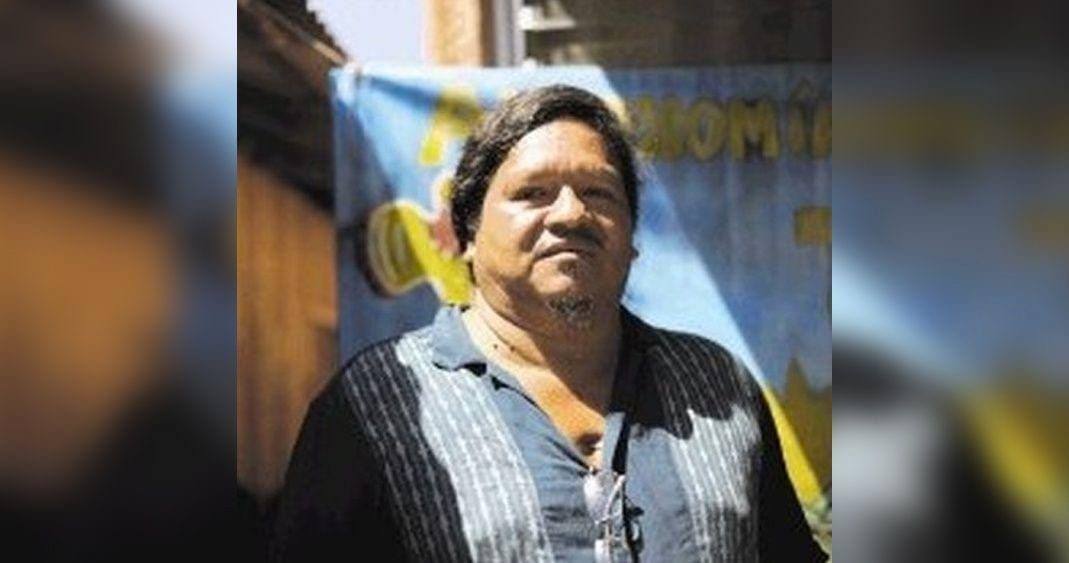
With deep indignation and sadness, the Working Group on the Central American Isthmus: Rethinking the Centers and the O Istmo Network inform the international community of the atrocious murder of the Bribri indigenous leader Sergio Rojas Ortiz, which occurred on March 18, 2019 in the community of Yeri in the Indigenous Territory of Salitre, canton of Buenos Aires, Puntarenas, Costa Rica.
Sergio Rojas had a long history of defending the rights of Indigenous peoples. He was president of the Salitre Development Association, coordinator of the National Indigenous Peoples' Front (FRENAPI), and a member of the Iriria Ditsö Ajkónuk Wakpa Council. His struggle and leadership placed Indigenous demands on the Costa Rican public agenda, confronting a state that for decades ignored not only the demands and proposals of Indigenous communities but also failed to comply with its own legislation regarding the protection of territories for the eight Indigenous peoples who inhabit the country. The state's ineffectiveness and inaction allowed the invasion and usurpation of already demarcated areas by non-Indigenous people, especially absentee landowners and ranchers.
Sergio Rojas, along with Bribri men and women, began actions in the Salitre Territory more than three decades ago that brought about substantial changes to the landscape. Initially, through administrative and judicial means, and then, after exhausting all possible avenues and enduring fruitless waiting, they initiated a landmark process of land recovery "de facto," which Sergio called territorial affirmation. Through this process, they managed to recover more than 10% of the area that was illegally occupied in seven years. This was not without these families suffering physical and property attacks, constant harassment, and threats, especially the Indigenous women who have been the courageous protagonists of the land recoveries. In September 2012, after numerous threats, Sergio Rojas survived a shooting, but his work did not cease.
Along with other Indigenous leaders from the region, they appealed to the Inter-American Court of Human Rights, which in April 2015 imposed precautionary measures on the Costa Rican State, still in effect, obligating it to provide protection to the Indigenous people of the Térraba and Salitre territories. This responsibility has clearly been ignored, disregarding the constant incidents of aggression and the complaints that continued to be filed before legal and administrative bodies.
The murder of Sergio Rojas is the culmination of a profound, revolutionary, and defiant Indigenous movement, something unacceptable in the regional context of Costa Rica's South Pacific, a region marked by racism and multiple forms of violence against its Indigenous inhabitants. The murder of Sergio Rojas is a political crime, motivated by economic interests, and a product of the impunity and indifference of the Costa Rican state and society.
But the legacy of Sergio Rojas LIVES on in the courage and strength of indigenous families who today in the territories of Salitre, Térraba, Boruca, Cabagra, China Kicha are recovering their lands, asserting their customary rights and will continue to do so with all the legal and administrative resources at their disposal and with new recoveries, until they recover all their territories.
Just weeks after the assassinations of Salomón and Juan Samael Matute, two Toluman Indigenous leaders in Honduras who were also under the protection of the Inter-American Court of Human Rights, and three years after the murder of Berta Cáceres in the same country, Central America has once again suffered the death of another Indigenous leader. From other countries in the region, there have been constant denunciations of the persecution, criminalization, and assassinations as part of the systemic and ongoing dispossession of resources and territories. With this latest event, the region bleeds once more, amplifying the tireless voices that cry out for justice for political prisoners and vehemently demand protection for Indigenous peoples and their leaders. The cycles of time once again bring to mind memories like those of the nine Indigenous and peasant leaders who were murdered between May and September 2018 in Guatemala: Luis Arturo Marroquín, José Can Xol, Mateo Chamám Paau, Ramón Choc Sacrab, Florencio Pérez Nájera, Alejandro Hernández García, Francisco Munguia, and the Indigenous leaders Juana Raymunda, tortured and murdered on July 28, and Juana Ramírez Santiago, on September 21, both in the municipality of Nebaj, Quiché. It also revives memories of the cruel torture and murder in 2013 of Daniel Pedro Mateo, a Q'anjob'al leader in Guatemala, as well as the disappeared and the dozens of Nicaraguan Indigenous people murdered for their ancestral lands on the Caribbean Coast of Nicaragua since the territorial demarcation process began almost two decades ago. Just like so many other indigenous people who were persecuted and murdered, whose memory deeply pains us, although we know they are today the seeds of hope and social transformation for their communities.
We see that these are not random situations; they are products of a Central America with a weakened political and legal system, dependent, extractive and unequal economies, and with countries going through deep political-democratic crises, high rates of crime and poverty, a scenario in which indigenous peoples are the most vulnerable population and threatened by racism, structural violence and because their territories are the forests and the best-preserved environmentally in the region.
This time, it is the murder in one of Latin America's most democratic societies that reveals that the rule of law and electoral institutions do not guarantee fundamental human rights as long as racism, social exclusion, and an unequal economic system persist. As long as Indigenous peoples in Central America cannot collectively exercise their autonomy and political self-determination as a condition of citizenship, there will be neither peace nor democracy.
We reject and condemn the cowardly and brutal murder of Sergio Rojas Ortiz. We strongly demand justice and an end to impunity. We demand that the State of Costa Rica provide comprehensive and permanent protection for the Indigenous families of the five territories that are now reclaiming their lands.
Sergio Rojas Ortiz LIVES on in the struggle of all indigenous peoples!
Red O Istmo and CLACSO Working Group The Central American Isthmus: Rethinking the Centers. And their collaborators:
Alliance of Indigenous and Afro-descendant Peoples of Nicaragua (APIAN), Nicaragua.
Fray Matias e Cordova Human Rights Center, Mexico.
Grupo de Pesquisa e Articulação Campo, Terra e Território (NATERRA), Brazil.
Research Group Social thought and epistemologies of knowledge in Latin America and the Caribbean.
Laboratory of Human Rights, Citizenship and Ethics. State University of Ceará, Brazil
Observatório das Nacionalidades, Universidade Estadual do Ceará, Brazil
March 2019
CLACSO Working Group
The Central American isthmus: rethinking the centers
This statement expresses the position of the members of the Working Group The Central American Isthmus: Rethinking the Centers and not necessarily that of the centers and institutions that make up the CLACSO international network, its Steering Committee or its Executive Secretariat.

