
Knowing what and knowing how: situating knowledge, feminisms and plants
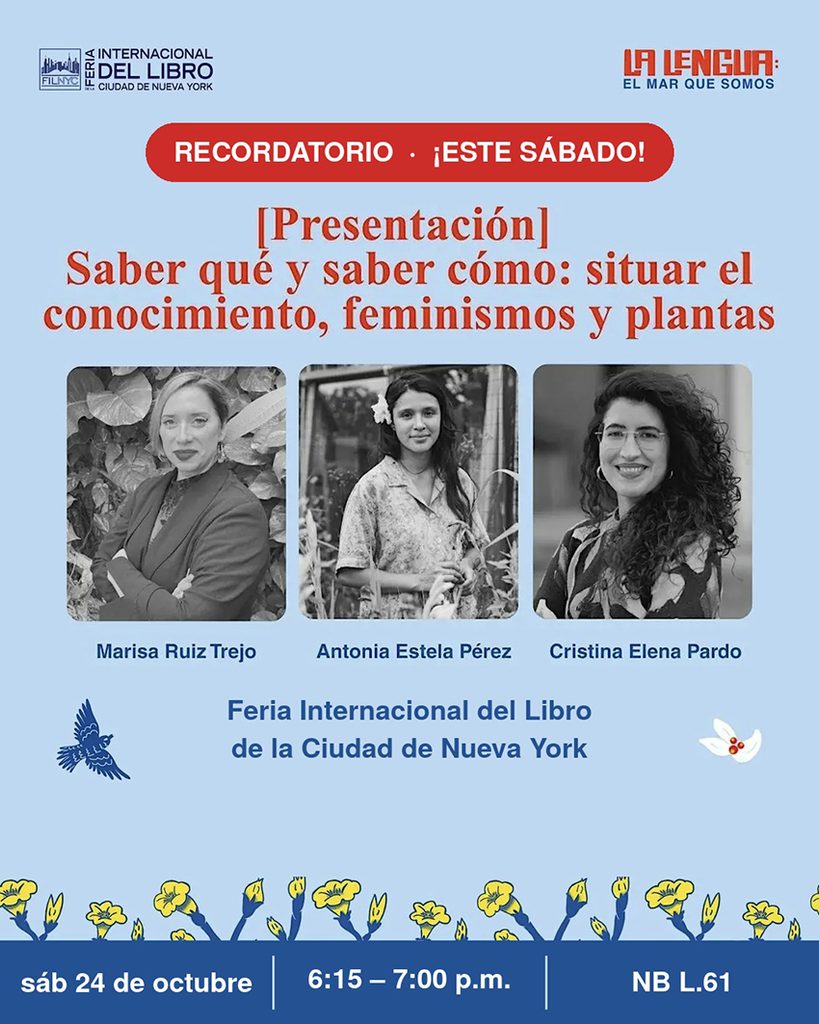
The panel and presentation " Knowing What and Knowing How: Situated Knowledge, Feminisms, and Plants " was held on Saturday, October 24, at John Jay College in New York City as part of the New York Book Fair . It focused on highlighting the pathways of knowledge and situated knowledge through a critical and feminist perspective.
Participants: Marisa Ruiz Trejo , Antonia Estela Pérez and Cristina Elena Pardo , moderated by Cristina E. Pardo.
In that context, researcher Marisa Ruiz Trejo presented her book “ Anthropologists and critical thinkers from the South. From pioneers to insurgent feminists and activists ” published by CLACSO and the Autonomous University of Chiapas (UNACH) in Mexico.
This book brings together the voices of twenty-eight anthropologists and critical thinkers from the Global South, whose diverse trajectories, marked by different ethical and political stances and life experiences, have shaped unique ways of doing anthropology and inhabiting the world. Through encounters, conversations, and interviews, the authors narrate their memories in the first person, evoke their childhood and youth, and share the decisive moments that shaped their paths, including those in which they faced risks, vulnerability, or felt their bodies more exposed. Throughout these pages, the interviewed thinkers reflect on their beginnings in anthropology, their first experiences of fieldwork, and the ways in which they built relationships with the people and communities with whom they worked. They also recount the ethics that guided their practices, based on respect, care, and responsibility toward the diverse women, men, non-binary people, children, and families with whom they worked in various settings. The book also recovers their sense of justice and memory, as well as the challenges they faced in their personal and academic journeys.
At 18:15 PM at John Jay College – In-person event
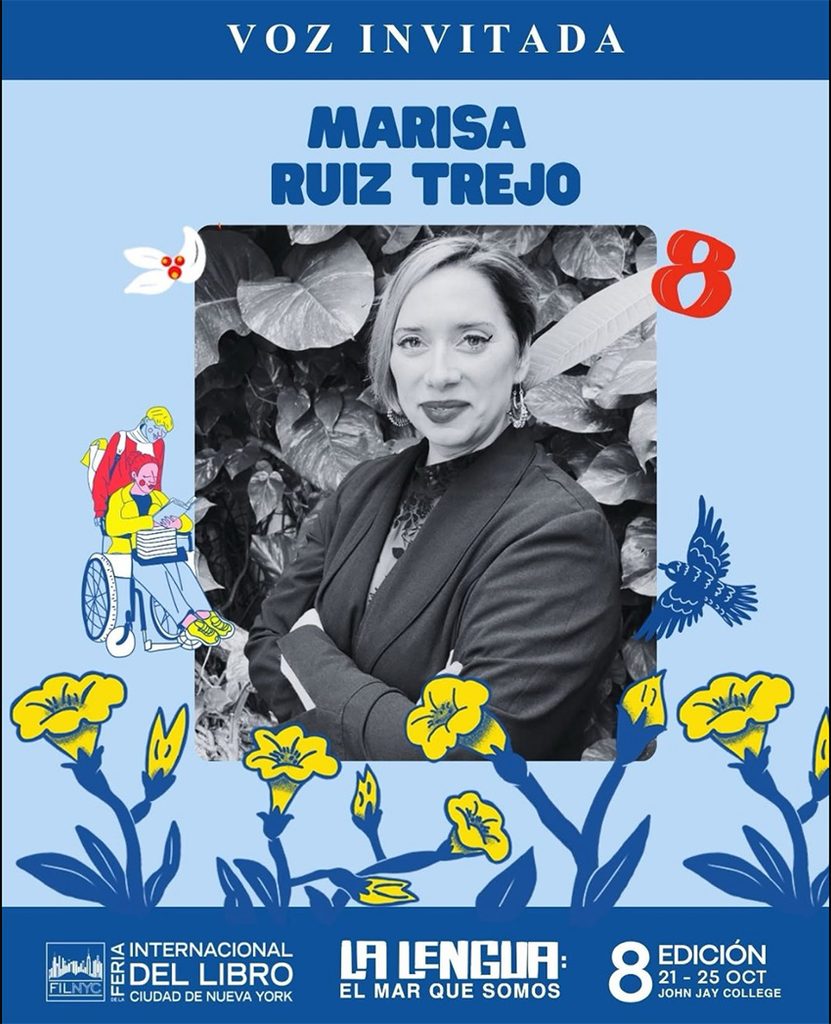
Marisa Ruiz Trejo is a feminist anthropologist, activist, and tenured professor and researcher at the Faculty of Humanities, Social Sciences, and Research (FCHDIS) of the Autonomous University of Chiapas (UNACH). In the fall of 2026, she will serve as the Edward Larocque Tinker Visiting Professor at the Institute of Latin American Studies (ILAS) and the Department of Anthropology at Columbia University. She contributed to the historical-anthropological analysis of the Sepur Zarco case (Guatemala), a landmark ruling on the sexual and domestic slavery of Q'eqchi' Maya women. She has received numerous awards, including CLACSO-CLAA fellowships , a Fulbright-García Robles scholarship (NYU), and appointments as an Edmundo O'Gorman Fellow (Columbia) and Visiting Heath Professor (Grinnell). She has published extensively on feminist anthropology, decolonial feminisms, academic freedom, and gender-based violence.
Marisa arrives at the 8th edition of FILNYC from October 21st to 25th at John Jay College. Other writers participating in FILNYC include Mayra Santos Febres, Cinthya Santos, Rita Indiana, Lía García, Carmen Boullosa, Claudia Cabello Hutt, Jacqueline Herranz Brooks, Minerva Reynosa, and Brigitte Vasallo, among many others.

