
Resistance, knowledge and survival
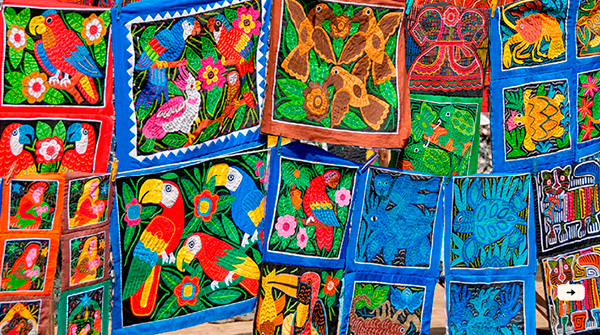
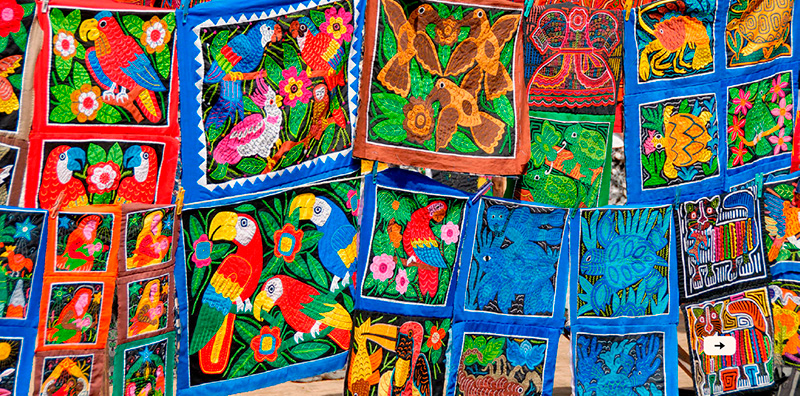
October 12, designated as “ Day of Respect for Cultural Diversity and Day of Indigenous Resistance ,” marks the continuation of a 533-year struggle for autonomy, territory, culture, and the defense of nature and life. Meanwhile, October 13, “ International Day for Disaster Risk Reduction ,” focuses on vulnerability and risk management.
Mentioning October 12th is impossible without remembering that for Indigenous peoples, October 11th represents the last day of freedom for Abya Yala, our Indigenous America. This marked the beginning of years, even centuries, of struggle and resistance by Indigenous peoples.
For many years, official history attempted to portray the events of October 12, 1492, as cause for celebration. However, this event was by no means an encounter or clash of cultures. What occurred was the subjugation of one supposed civilization by another, which simultaneously marked the beginning of a long and arduous struggle and resistance for the various Indigenous peoples of Latin America.
Therefore, these are not isolated dates: the historical resistance of Indigenous peoples is crucially manifested today in their role as guardians of biodiversity and experts in climate risk management. The struggle for territory is, inherently, a struggle for disaster reduction.
The dispossession of Indigenous lands is a major cause of environmental degradation (deforestation, monocultures, extractivism), which in turn increases vulnerability to disasters (floods, droughts, landslides). In contrast, ancestral knowledge about water cycles, weather patterns, and resilient agriculture are tools for climate adaptation and disaster reduction that, in many cases, surpass Western models. Examples include the use of polycultures and traditional water management to cope with droughts or extreme rainfall.
The concept of "Buen Vivir," or "Sumak Kawsay," embodies the Indigenous worldview, which conceives of nature—Pachamama—not as a resource to be exploited, but as a living being with rights. This ethic provides the ideological framework for genuine disaster reduction, focused on harmony and long-term sustainability.
Indigenous communities are often the hardest hit by disasters due to structural poverty and marginalization, with the climate emergency exacerbating pre-existing inequalities. And yet, Disaster Risk Reduction (DRR) and Climate Change Adaptation (CCA) programs promoted by international organizations have been imposed “from above,” ignoring local knowledge and the specific needs of Indigenous peoples.
Honoring the resistance of October 12th and acting on disaster risk reduction since October 13th are one and the same. Indigenous territorial autonomy is the most effective and cost-efficient disaster risk reduction measure in vast regions of Latin America and the Caribbean. Humanity's survival in the face of the climate crisis is intrinsically linked to the survival and autonomy of Indigenous peoples.
CLACSO has a wealth of production that reflects both the struggles of indigenous peoples and the defense of the environment, such as:
CLACSO Classroom: Migration due to environmental and climatic factors
Professor Erika Pires proposes a journey through migrations linked to the environment from a Latin American perspective.
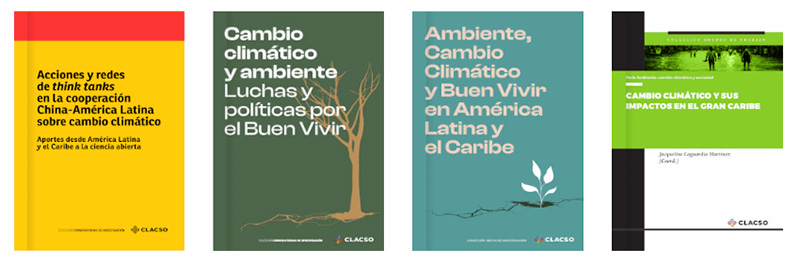
CLACSO publications on climate change in open access
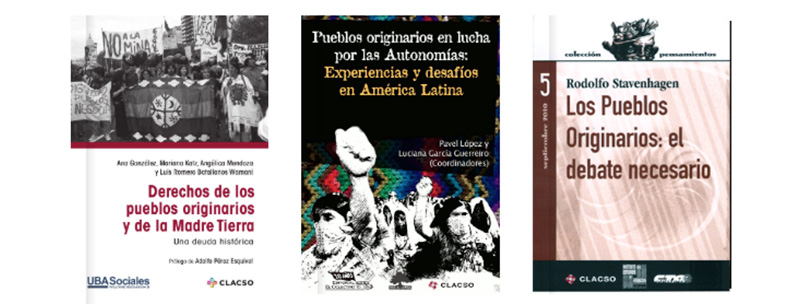
CLACSO publications on indigenous peoples
The mandate of Mother Earth: How to challenge extractivism and neocolonial logics from the perspective of the people and the social sciences?
InfoCLACSO of October 8, 2025
Impacts of extractivism on the knowledge of indigenous peoples and mechanisms of resistance from ancestral practices
Panel at #CLACSO2025 – Deisi Guainora, Javier Vega Ortiz, Ana Zema, Amado Ramos, Felipe Gómez Gómez, Morelia García, Taira Stanley and Álvaro Mena.
VI International Summit of Indigenous Women of Abya Yala - 12-10-2025
Brazil: The right of indigenous peoples to their lands
InfoCLACSO September 27, 2023 from Fortaleza, Brazil
Indigenous Peoples in Defense of Their Autonomy in Abya Yala
Panel at #CLACSO2025 – Javier Vega Ortiz, Janeth Liliana Calambás Calambás, Taira Stanley and Yuma Ima Milena Forero Rojas.
Indigenous peoples, territories and autonomies
Masterful dialogue at #CLACSO2022 – Esteban Emilio Mosonyi, Ailton Krenak, Ana Silvia Monzón, Elisa Loncón Antileo and Gladys Tzul Tzul
Latin America facing the climate crisis: eco-social pacts and alternatives from the perspective of Buen Vivir (Good Living)
Masterful Dialogue at #CLACSO2025 – Azael Carrera, Enrique Leff, Maristella Svampa and Tatiana Roa Avendaño
Political ecologies of the South: Climate change and alternatives to development in LAC
Masterful dialogue at #CLACSO2025. Carolina Robino, Arturo Escobar, Denisse Roca-Servat and Joan Martinez-Alier.
“Faced with climate change, the situation may be irreversible.”
Carlos Aguilar, head of Oxfam Climate Justice in Latin America, participated from September 29 to October 1 in Bogotá in the colloquium “Just Transitions in Latin America” organized by OXFAM Latin America, the Latin American Council of Social Sciences, the School of Human Sciences and the University of Rosario in Bogotá.
“There is a climate change caused by humans”
Orlando Rey Santos, Advisor to the Ministry of Science, Technology and Environment of Cuba, Cooperates as an expert with various organizations, including FAO, ECLAC and UNDP

