
Review of “Key Words of China: Traditional Cultural Traits”
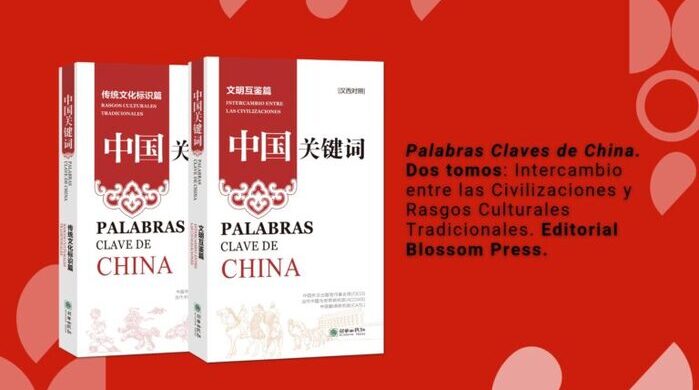
We share the review about Keywords for China: Traditional Cultural Traits, made for Pablo Vommaro (Academic Secretary CLACSO, UBA and CONICET) and Manuel Castillo Soro (Faculty of Social Sciences, UNC).
The review was originally published on the portal of Observatory of International Affairs and Foreign Policy OCIPEx.
We invite you to read it and share it: https://ocipex.com/grupos-de-trabajo/china/resena-palabras-clave-de-china-rasgos-culturales-tradicionales-2
Review of “Key Words of China: Traditional Cultural Traits”
Pablo Vommaro – Latin American Council of Social Sciences (CLACSO), University of
Buenos Aires and CONICET, Argentina.
Manuel Castillo Soro – Faculty of Social Sciences (FCS), National University of Córdoba (UNC), Argentina.
Key Words of China: Traditional Cultural Traits presents, in a solid, understandable, and systematic way, the core elements of China's diverse and ancient culture. It constitutes a fundamental contribution to understanding the various cultures, idiosyncrasies, worldviews, and values that comprise it. The editorial committee, led by Du Zhanyuan, seeks to reveal, from a multidisciplinary and comprehensive perspective, the philosophical and cultural foundations that have permeated the identity of this people. The thematic organization—encompassing ideology, literature, art, daily life, and cultural heritage—aims to provide the reader with a structured yet accessible view of a profound and
complex.
Currently, as sociologist Anthony Giddens explains1We are witnessing a process of disengagement, in which social relations are extracted from their local circumstances and rearticulated in undefined spatio-temporal regions. Faced with this new context of encounter between distant worlds, the book functions as a bridge of understanding through an comprehension of the Chinese value system and its relationship to national identity and international positioning.
The book delves deeper into the explanations of traditional symbols, concepts, and terms, such as taijitu or yin-yangwhich encapsulate a worldview about duality and balance in the universe. It also includes references to writings less well-known in the West, such as the Book of Changes (Zhou Yi), which reflects the ancient Chinese understanding of the universe: “Change is its essence, only change is eternal”Furthermore, religious elements that shape the thought, morality, and worldview of the Chinese people are explored, such as Confucian tradition, Taoism, and Buddhism. These concepts are not only relevant on a theoretical level but also manifest themselves in various daily practices, demonstrating their continued influence on modern life.
This work takes on particular importance in the current context, where China's growing relevance on the global stage means that the world must understand not only its geopolitical objectives but also the cultural and philosophical foundations that underpin them. This book invites us to rethink China's relationship with other nations, especially in terms of intercultural exchange, which can enrich global cooperation and diplomacy in the 21st century.
With an approach that highlights the universality of certain Chinese values, Keywords for China: Traditional Cultural TraitsIt becomes a key work for those seeking a thorough understanding of “Chinese wisdom” and the cultural underpinnings of its politics, economy, and social structure, with a growing influence on contemporary geopolitics.
- Giddens, A. (1998). The trajectory of the self. In Modernity and Self-Identity: The Self and Society in the Contemporary EraBarcelona: Peninsula. ↩︎
If you would like to receive more information about CLACSO's training programs:
[widget id=”custom_html-57″]
to our email lists.

