
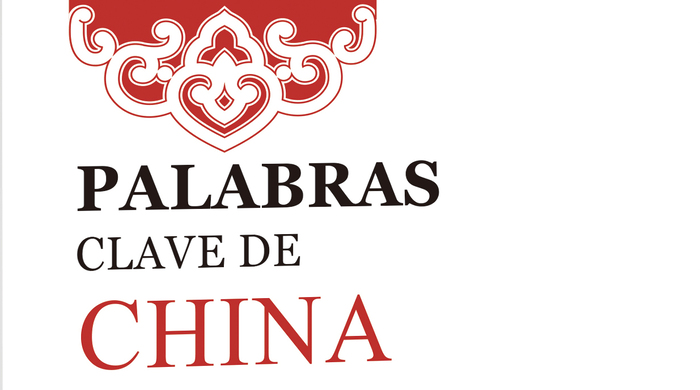
Book Review: Key Words of China: Exchange of Civilizations and Traditional Cultural Traits

By Dr. Gabriel Merino
Co-coordinator of the Working Group on China and the World Power Map
This book, published by Blossom Press, is an extraordinary, yet simple and brief, gateway to Chinese civilization, its historical relationship with other great cultures, and its current global political projection based on its fundamental traditions and socialist experience.
It offers an original journey through more than seventy key terms related to China, encompassing ethical principles, fundamental concepts of its political philosophy and culture, cities that played a pivotal role in world history, and cultural exchanges that shaped this ancient civilization and through which China has influenced the development of the West and humanity, such as its four great inventions: paper, printing, the compass, and gunpowder. It also presents current multilateral initiatives, major events and forums, and proposals for building a “Community with a Shared Future for Mankind.”
Each of the seventy-six terms forms a short chapter, written in both Spanish and Chinese. These are organized into three main sections. The first section groups together key terms that introduce and explain the spiritual values of Chinese civilization, revealing the foundations of its political philosophy and ethics, based on Confucian tradition. For example, its concept of popular sovereignty stems from the age-old principle that "the people are the foundation of the country, and the country will have peace if that foundation is solid."
“Benevolence and good neighborliness are a treasure of the State” is another of its historical principles, upon which the idea of peaceful dialogue between civilizations rests—a central message throughout the text, appearing in different forms. Clearly, there is a persistent message about peace, coexistence, harmony among nations, and shared development, which implicitly refers to…
The current challenging global situation seeks to contrast with new Cold War narratives or hegemonic pretensions.
There are also references to values from Chinese culture, such as "diligence and cooperation," which appear as conceptual pairs. The individual's dedication "body and soul," their commitment to work to continuously improve their professional skills—"constant self-improvement"—must be coupled with their integration into collective life and their collaboration toward the common goals of their community. These principles and their brief development introduce us to a worldview distinct from that of Western liberalism, where one of its founding ideas is that the pursuit of individual interest necessarily contributes to the general welfare.
Another key term is "frugality and self-control," central to understanding Chinese subjectivity. Also crucial is the principle of pursuing harmony, but not monotony—that is, unity in diversity and disagreement—which leads us to the principle of the dialectic of unity between opposites. Furthermore, references to the eight fundamental virtues are essential: filial piety, respect for one's siblings, loyalty to authority, trustworthiness of friends, ritual, justice, honor, and integrity. These last four are considered the four moral pillars that sustain the country.
The second part groups the key terms used to narrate the long history of exchanges between civilizations. A central idea emerges here: Chinese civilization developed as an open system. In this sense, the first term introduced in this section is the Silk Road, indicating that historically it was a point of constant convergence between “Eastern” and “Western” civilizations; a bridge for mutual learning that encompassed knowledge, technologies, food, and
cultural elements.
An interesting aspect of the text is its treatment of the introduction of Buddhism to China and the integration of Islam and Confucianism, as well as the spread of Christianity and Western ideas from the 16th century onward—processes that illustrate the dialectical development of culture in its interaction with others. The text also highlights China's influence on other civilizations, such as Western civilization, which is fundamental for a more comprehensive understanding of world history. Similarly, it addresses Marxism and socialism in China, and how these were interpreted and developed there based on its own philosophical and political traditions.
Another highlight is the geographical journey through the main cities that served as gateways or key logistical hubs in China's history. These include Chang'an (now Xi'an and one of the ancient great capitals of the world), Shangdu (where Marco Polo met Kublai Khan), and Quanzhou (the starting point of the Maritime Silk Road), among others.
The third part deals with mutual learning between contemporary China and other countries around the world. Here, the book's central message regarding the current challenging global situation is emphasized. If history shows that civilization is founded on reciprocal learning, dialogue, and inclusion, it is now crucial to identify and foster the development of values common to all humanity.
The first term in this final section is about “The creation of new forms of human civilization,” followed by “The persistence of taking the rest of the world into account” and “Respect for the diversity of the world’s civilizations.” The titles speak for themselves and clearly express China’s perspective on other major civilizations, opposing “cultural hegemony.”
The association of these ideas with the concept of multipolarity is inevitable, given the profound transformation of the world system. In this sense, the final terms or key words are the concrete initiatives through which China, along with other countries, is developing in practice the “Community with a Shared Future for Mankind” or building a new order: the Global Civilization Initiative, the Belt and Road Initiative, the Shanghai Cooperation Organisation, and the
BRICS, among others.
The book is undoubtedly a great contribution to understanding China and some of its fundamental proposals, perspectives and initiatives, in conjunction with its ancient culture, its traditions and its particular process of modernization and development.

If you would like to receive more information about CLACSO's training programs:
[widget id=”custom_html-57″]
to our email lists.

