
Social representations of care in Uruguay
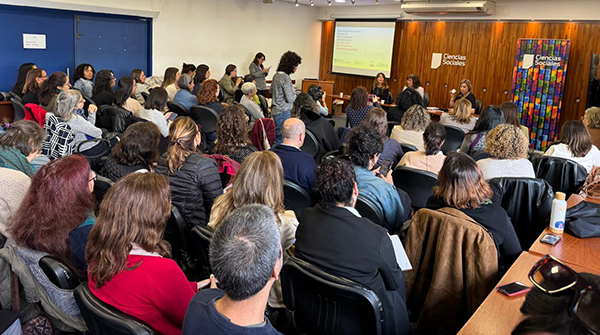

The “ Gender Sociology Research Group ” of the Faculty of Social Sciences and the “ Care System ” presented on Tuesday, April 29, the report “ Social representations of care in Uruguay: gender mandates in transformation? Comparative analysis 2011-2023 ”.
This is an investigation by the University of the Republic (UDELAR) with the support of UN Women and ECLAC, and the presentation included the participation of Karina Batthyány , professor and researcher at the Faculty of Social Sciences of UDELAR and Executive Director of CLACSO.
Events

Institutional opening session
· Carmen Midaglia, Dean of the Faculty of Social Sciences, UDELAR
· Cecilia Alemany, Deputy Regional Director of UN Women
· Raquel Artecona, Director of the ECLAC Montevideo Office
· Valentina Perrotta, Director of Care at the Ministry of Social Development (MIDES)

Presentation of the main results
· Karina Batthyány, professor and researcher at the Faculty of Social Sciences of UDELAR and executive director of CLACSO
· Sol Scavino, teacher and researcher at the Faculty of Social Sciences of UDELAR

Comments and closing remarks
· Susana MuñizNational Secretary for Care and Disability
· Monica Xavier, director of the National Institute for Women
In the Luisa Cuesta Conference Room – Faculty of Social Sciences – Constituyente 1502, Montevideo.
Uruguay was the first country in the region to create a national integrated care system (SNIC). Law No. 19.353 was approved by Parliament on November 18, 2015, and enacted on November 27 of the same year. Although it has been a pioneer and a benchmark in this area at the regional level, the implementation of the National Integrated Care System has faced challenges related to financial sustainability and coverage.
The overall objective of the National Integrated Care System (SNIC) is to guarantee the right of dependent persons to receive quality and equal care, promoting the development of their autonomy. This includes promoting a model of shared responsibility for care among families, the community, the State, and the market, and between women and men.
The System defined services, training, regulation, information management, knowledge, and communication as its core components. These components are all necessary, given that effective implementation requires a cultural transformation in how society perceives care and those responsible for it.
Almost a decade after its launch, the report "Social representations of care in Uruguay: gender mandates in transformation? Comparative analysis 2011-2023" is presented, which analyzes the changes in social perceptions of care before and after the implementation of the SNIC.
With funding from the University of the Republic through the Sectoral Commission for Scientific Research (CSIC) R&D 2022, with support from UN Women and ECLAC, and within the framework of the project “A decade of the SNIC in Uruguay: moving towards social and gender co-responsibility in the social representations of care?”, the Care System and the Gender Sociology Research Group of the Faculty of Social Sciences present the main results of the research based on a representative survey of the Uruguayan population in 2023.
If you would like to receive more information about CLACSO's training programs:
[widget id=”custom_html-57″]
to our email lists.

