
Reflections of structural racism in Brazil
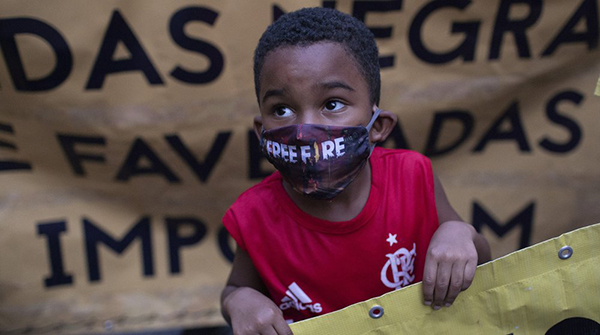
The people and traditional communities in the Covid-19 pandemic
Diana Anunciação Santos*
Carlos Alberto Santos de Paulo**
Leny Alves Bomfim Trad***
No Federal Decree No. 6.040/2007, which instituted the National Sustainable Development Policy of Traditional Peoples and Communities, these are described (art. 3, subsection I) as groups that “possess their own forms of social organization and that “occupy and use territories and natural resources as a condition for their cultural, social, religious, ancestral and reproduction.” economic” through “knowledge, innovations and practices generated and transmitted by tradition”.
Among the various categories included in the role of Traditional Peoples and Communities in Brazil, we highlight in this text the repercussions of the Covid-19 Pandemic for the Quilombolas or the remaining communities of quilombos, a term used in Brazil since the late 80s to refer to territories that will no longer be occupied by African peoples and their descendants from abolition of escravatura or that resists the escravização process. Embora these communities have been reconstituted as bearers of specific rights to be assured by the State from the Federal Constitution of 1988, they follow in a context of incomplete citizenship (LEITE, 1999), demarcated by structural racism (ALMEIDA, 2018).
In this sense, the new coronavirus pandemic has contributed to aggravating a pattern of social and health vulnerability that accompanies these communities, located mostly in rural areas, throughout their existence. The advent of Sars-Cov-2 unquestionably exposes the mazelas sociais decorrentes of the escravista process. It is necessary to highlight that even after 132 years of the official abolition, the reality of this segment remains unchanged, regardless of the socio-environmental and political conditions, due to structural racism, or the maintenance of racially identified groups in systematic conditions of discrimination (Idem).
The current government, even, has implemented a policy of attack on communities and traditional people, especially the remnants of quilombos and indigenous peoples, with the paralysis of land demarcations, as well as the denial of public policies and criminalization of the populations that make up these groups. It also highlights the strategies used to isolate these communities, in order to combat the proliferation of viruses, a condition that leads to the confinement of people without the minimum conditions of sanitary confrontation and maintenance of their (sub)existence, as well as the underreporting of two confirmed cases. of contamination and death of this population segment.
The context translates to the need for attention to the idiosyncrasies of these communities, not that it relates to the health conditions, the educational situations and therapeutic itineraries, which are necessary for the interactions with the formal and informed care systems. It is necessary to recognize that the health-doença-care complex involves, at the same time, two biological determinants, the social determinants (which encompass economic, social, cultural and environmental conditions in the lives of these populations), which are revealed to be decisive in the situation of education for Covid-19 and, Mainly, in the differences between beating doença or dying.
The poor and traditional communities in Brazil experience conditions of poverty that do not allow access to the minimum conditions and years that are essential to guarantee their health and well-being. However, it is necessary to understand that poverty is not only a lack of access to good materials, but rather a situation of vulnerability due to the absence of opportunities and possibilities of choosing between different alternatives. This is manifested in the lack of work and income, of decent housing, of adequate food, of education and of mechanisms of popular participation in the construction of public policies. It also reveals the absence of conflict resolution, which further aggravates violence in rural areas, as well as the precariousness of sustainable environmental relationships. All of these elements are intrinsically associated with different ways of living and dying.
Limitations of access and quality in health services are also evident, as well as a deficiency in the area of basic sanitation. According to the data of the National Household Survey (PNAD, 2018), the inequalities in the promotion of water supply services among the inhabitants of urban and rural areas are still serious, with 67,2% of the rural population still collecting water from sewers and wells (protected or not) directly from water courses without human treatment or from other alternative sources, generally unhealthy. This scenario contributes to the emergence of waterborne diseases, intestinal parasites and diarrhea, as well as the impossibility of adequate hygiene, as recommended by the World Health Organization (WHO), in this context of the Sars-Cov-2 pandemic.
In the specific case of remaining quilombo communities, there are also high rates of chronic diseases such as sickle cell anemia, diabetes mellitus, high blood pressure and other comorbidities, making them even more vulnerable to the impacts caused by Covid-19. According to the National Coordenação de Articulação das Comunidades Negras Rurais Quilombolas (CONAQ), in Brazil there are six thousand communities, estimated to have 16 thousand people, of this total 30% only of children. As of June 22, 2020, Brazil has still registered 826 confirmed diagnoses and 86 deaths from Covid-19 just among the remaining quilombo, there are also 02 deaths with suspicion, without confirmation of diagnosis and 192 cases in monitoring. The states of Alagoas, Mato Grosso, Rio Grande do Norte, Rondônia and São Paulo have records of contaminated cases, while the states of Amapá, Amazonas, Bahia, Ceará, Espírito Santo, Goiás, Maranhão, Pará, Paraíba, Pernambuco, Rio de Janeiro have counted, in addition to two contaminated cases, deaths.
It should be noted that the loss of a person for these groups implies a collective impact of great relevance, because together with the oldest people, everything is lost and the knowledge and traditional knowledge that surrounds the religious and cultural practices and the know-how of work in the land (roçado), in the forests (extrativism) and in the waters (seafood and fishing artisanal). And, moreover, the collective memory of the past time of the social organization of the group's own group is lost (BOSI, 2009).
In sum, the aggravation of the political crisis in the country, the socio-historical processes resulting from an abolition have not been concluded and the advent of the new coronavirus pandemic has allowed the survival of two traditional communities in Brazil. Destarte, to reach these groups in an adequate way and precise the implementation of intersectoral actions and interdisciplinary discussions considered essential so that the impact on the standard of living and health of the populations of the countryside, the forests and the waters remains minimal.
*Diana Anunciação Santos She is a Sociologist, PhD in Social Sciences and Adjunct Professor at the Health Sciences Center (CCS) of the Federal University of Bahia (UFRB). He is a member of the State Technical Committee on the Health of the Black Population of the State of Bahia. Researcher of the Núcleo de Estudos Ambientais e Rurais (NUCLEAR), as well as the Integrated Program of Research and Technical Cooperation in Community, Family and Health: Subjects, Contexts and Public Policies (FASA) of the Collective Health Institute (ISC), both of the Federal University of Bahia (UFBA). Member of the CLACSO International Health Work Group and health sovereignty.
** Carlos Alberto Santos de Paulo He is a Pedagogue, Professor of Social Policy and Adjunct Professor of the Health Sciences Center (CCS) of the Federal University of Bahia (UFRB). Currently, the Pro-Reitor of the Pro-Reitoria of Affirmative Policies and Student Affairs (PROPAAE) of the UFRB. He is a research member of the Integrated Research and Technical Cooperation Program in Community, Family and Health: Subjects, Contexts and Public Policies (FASA) of the Collective Health Institute (ISC), and of the Núcleo de Estudos Ambientais e Rurais (NUCLEAR), both of the Federal University of Bahia (UFBA). Member of the CLACSO International Health Work Group and health sovereignty.
*** Leny Alves Bomfim Trad é Psychologist, PhD in Social Sciences and Health (University of Barcelona, 1996). Full Professor of the Collective Health Institute – Federal University of Bahia where she coordinates the Integrated Research Program and Technical Cooperation of Community, Family and Health – Subjects, Contexts and Public Policies (FASA). Stock market PQ1d/ do CNPq. Member of the GT Racismo e Saúde of the Brazilian Health Collective Association – ABRASCO. Member of the CLACSO International Health Work Group and health sovereignty.
References
ALMEIDA, SL de.What is structural racism?Belo Horizonte: Letramento, 2018. (Coleção Feminismos Plurais).
BOSI, E. Memory and Society: hair lights. 15th ed. São Paulo: Companhia das Letras, 2009.
BRAZIL. Federal Decree No. 6.040, of February 7, 2007, instituted the National Policy for Sustainable Development of People and Traditional Communities — PNPCT. Brasília, 2007. Available in: http://www.planalto.gov.br/ccivil_03/_ato2007-2010/2007/decreto/d6040.htm. Accessed on: May 26th. 2020.
CONAQ. Conaq and ISA launch the 'Observatório da Covid-19 nos Quilombos'. Available in: http://conaq.org.br/noticias/observatorio-da-covid-19-nos-quilombos/. Accessed on: May 27th. 2020.
IBGE. PNAD – National Investigation by Amostra de Domicílios. 2018. Available in: https://www.ibge.gov.br/estatisticas/sociais/populacao/9127-pesquisa-nacional-por-amostra-de-domicilios.html?=&t=o-que-e. Accessed on: 26 May 2020.
LEITE, IB Quilombos e quilombolas: cidadania ou folclorização? Anthropological horizons, Porto Alegre, year 5, n. 10, 1999, p. 123-149.
If you would like to receive more information about CLACSO's training programs:
[widget id=”custom_html-57″]
to our email lists.

