
Reasons to reclaim that old sacred cow called school

Nicholas Arata1
Fifty years ago, the intellectual Ivan Illich, invited by Bolivian Minister of Education Mariano Baptista to inaugurate the National Pedagogical Congress, urged in his speech the closure of all schools in the Andean country. Addressing thousands of teachers, he challenged them, asking if they would be brave enough to liberate Bolivia from its school system. Deschooling society was the remedy Illich proposed to end the school once and for all, that “old sacred cow” that only produced “aspiring consumers.”
It wasn't Illich, but rather—half a century later—a virus, that sent all the teachers home. Some describe this event as the greatest migration in history. A migration from physical classrooms to virtual ones that, some even predict, hastens the end of school. What the detractors of school (far more interested in profiting from education than in reviving Illich's libertarian ideals) take for granted are the complex processes that take place in schools and the enormous difficulties in recreating even a portion of what happens in the classroom, using the format offered by a screen and internet connectivity.
In this context, it is necessary to ask again: what makes a school a school? The answer would seem obvious. School is the institutional space where children and young people attend to learn a set of essential skills for living in society. However, we know that school is much more than that, or at least that its tasks are not limited to a learning environment or to the age group comprised of minors who make up a society.
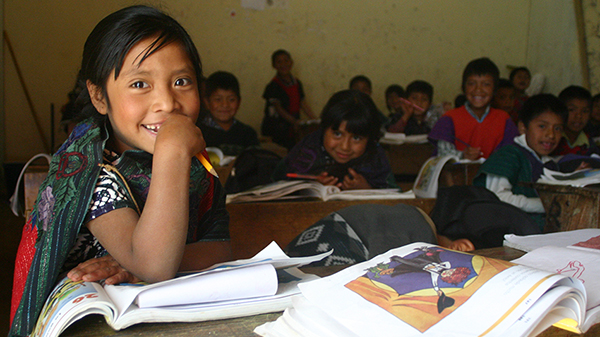
The first thing to say is that there isn't "one" school, but rather multiple schools (plural): the schools in large cities are not the same as those in small towns; nor are those located in major urban centers the same as those in rural Latin America. Schools operate within social and cultural environments that permeate them, shape them, and imprint their specific and unique characteristics. The network of schools is as complex and varied as the society that serves them.
What about the needs of the populations it serves? According to ECLAC data, around 85 million children in the region receive breakfast or lunch at school. This means that more than 12% of the people living on our continent also go to school in search of something to eat (the percentage would rise significantly if we limited it to children and young people). In any case, the question is not so much whether or not it should be the school's responsibility to provide food, but rather what happens to that very large percentage of the population when schools are not the ones guaranteeing the right to basic food.
The school is also the workplace of teachers and a meeting place for individuals, where people with diverse knowledge, ways of knowing, socialization experiences, and life paths interact and learn to live together. The purpose of this work is to teach students how to interpret the world and to awaken interest in knowledge selected for exploration through intergenerational dialogue.
While it's certainly possible to develop educational approaches outside of schools, the specific conditions for collaborative teaching and learning, as well as the relationships that develop around it, are not so easily replaced, much less overnight. In other words, schools are spaces where countless unique relationships are formed, and without them, millions of people would lack any possibility of accessing the most basic cultural, political, and social rights and resources that a democratic society can offer.
What about the classroom? The classroom is the device that has hegemonized our idea of how knowledge is transmitted. The classroom as an enveloping dome, a small and confined space where teacher-guided learning takes place, is the result of a long history of projects and interventions surrounding the material culture of the school.
Preparing a class requires time and, when done with dedication and perseverance, is one of the greatest acts of research one can undertake. Through readings and note-taking, a body of knowledge is constructed using complex associative processes, which will then be the subject of an equally complex task of transmission. Teaching is about creating bonds and communities through the creative work of articulating differences of all kinds (cultural, generational, etc.) so that knowledge can emerge. To successfully construct knowledge from the world, it is essential to preserve that time and space—a time "in between"—apart from the rest of daily tasks.
The shift from the traditional classroom to a screen-based learning environment (and I emphasize "screen-based" because it is definitely not a face-to-face encounter) implies transformations that go far beyond a change in the platforms and the way assignments are structured. Other factors come into play: access to connectivity, having a computer, and also the fact that participants are conditioned by the information overload that comes both from the screens themselves and from the home environment where the class takes place. If anything defines the traditional classroom, it is that it becomes a space-time where society, in a way, remains on the sidelines, where "students are taken out of their world and thrust into another," as Masscheleinn and Simons argue. In this sense, and with all the difficulties that the school may have, it is marked by a task that is none other than to become a threshold to allow a different kind of work, says Inés Dussel, a passage that is intellectual, political and affective.
Does the above imply abandoning the possibility of continuing to teach through screens? Absolutely not. But the important thing is to ensure that the classroom retains one of its defining characteristics: engaging students and generating curiosity, posing good questions, and teaching them to think against their own certainties and “truths.” If the great enemy to overcome in classrooms is the bureaucratic flattening of pre-established knowledge, then with screens the challenge is to set aside the obsession with assignments and grades and focus efforts on building a connection around worthwhile learning. In this sense, it is essential to grant teachers autonomy so they can develop appropriate strategies.
Hence, the question of the classroom is also a question of how we see ourselves as teachers (our work and our social role). Teachers must be valued for the existential possibilities they create and foster, or for those they obstruct and thwart. A teacher is a force that summons the intelligence and awakens the sensitivity of their students to act in a coordinated manner and think about problems together. The State must guarantee the best material conditions for this to happen and convene social forces (unions, social movements, etc.) to participate and promote public dialogue about what should be taught.
The historical development of schools has been long, and there is no reason to believe they will disappear anytime soon. If anything, it will not be a virus but a new neoliberal wave that will attempt to erase schools from the landscape, attributing excessive costs to them or warning of their supposed obsolescence. Defending schools is defending one of the structural pillars of the democratic project: the guarantee of the right to education. Fifty years ago, Illich called for abandoning schools because they were at the service of major international interests. Today, schools are an irreplaceable space from which to combat the consumer paradigm designed by global centers of power. To do so, teachers must position themselves as public intellectuals, drawing on their professional knowledge as much as on the political and pedagogical task entrusted to them.
1- Director of Training and Editorial Production of CLACSO / University of Buenos Aires / National Pedagogical University
If you would like to receive more information about CLACSO's training programs:
[widget id=”custom_html-57″]
to our email lists.

